
Every Plant Is a Promise: Designing Low-Maintenance Landscapes for Real Life in Middle Tennessee
A Middle Tennessee garden designer on the true, long-term cost of a landscape, and how to design a low-maintenance garden that still fits your life in twenty years.
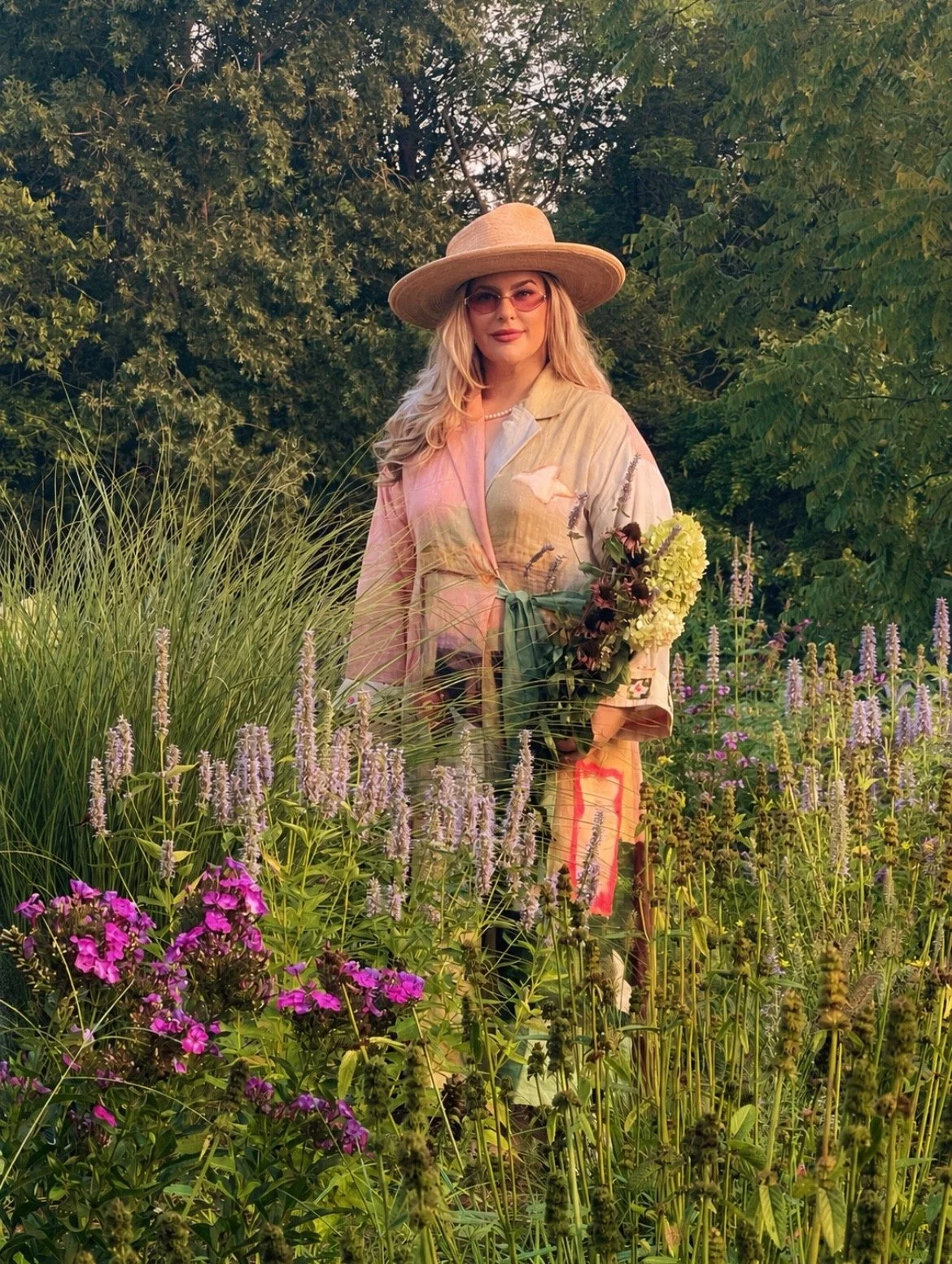
Clare Horne on her limestone-shelf farm land in Middle Tennessee.
I live alone on a farm that sits on a limestone shelf in Middle Tennessee, and the land here has a blunt way of teaching. When I put a tree in the wrong place, no crew arrives the following spring to fix it for me. No partner splits the digging, and when the irrigation gives out in an August drought, mine is the only name on the bill. If I plant a shrub that wants shearing three times a summer, I have hired myself for that job every summer it lives. The consequences of my decisions arrive on my own calendar, at the scale of serious farm acreage.
Beneath much of this farm is solid limestone. Where the bedrock runs close to the surface, which is most places, a planting hole comes out of the rock with a jackhammer before a single tree can go in. That is a useful thing to feel in your shoulders before you approve a planting plan. The ground charges a real price for a careless answer, and it sends the invoice to me.
Living on acreage has taught me something residential landscape design rarely says out loud. Every plant is a promise. The day it goes in the ground you make an agreement with a future version of yourself, and that agreement is about far more than how the property looks next spring. It is about what the plant will ask of you in ten years, and whether you will still want to give it.
Most homeowners do not live on large farm acreage, and most will never stand over a hole wondering whether it hits a twenty-inch rock before it reaches the depth a tree needs. But, every homeowner signs the same contract anyway. The flowering shrub someone has to prune. The hedge planted two feet too close to the walk, the one a person spends the next twenty years cutting back so it stops crowding everyone who uses the path. The Bradford pear that looked perfect in 1998 and now costs serious money to take down. By the time those bills come due, the designer has moved on, the installer has moved on, the inspiration photo is long gone, and the person left standing in the yard is whoever owns it.
That is why I have grown less interested in whether a plant is beautiful. Beauty is the easiest part of my job. The harder and more honest question is what kind of life a plant is asking you to live, and whether that life is the one you actually want to have.
Most Landscapes Are Designed For a Life No One Lives Anymore
The most common design failure I see has almost nothing to do with plant choice. People are living with gardens built for a life they no longer have. Most families do not run the way they did thirty years ago. There are two careers where there used to be one, children with schedules that would exhaust a logistics company, aging parents to help, longer commutes, steeper unstable costs, and less unclaimed time than any generation before them. A landscape that assumes somebody is free every Saturday to fertilize and prune and spray and edge and drag hoses across the yard was designed for a person who has largely stopped existing.
Homeowners care as much as they ever did. The problem is upstream, in an industry that learned to judge a landscape by how it looks the day it goes in: fresh mulch, full nursery pots, every perennial blooming on cue. A garden can photograph beautifully at install and become an expensive obligation five summers later, and plenty do. We celebrate the reveal, but people spend their actual lives on the thirty years that follow, and that is the stretch I design for.
What a Landscape Actually Costs You
There is a stubborn belief that the expensive part of a landscape is putting it in. But, I promise you, the expensive part is living with it. When people budget for a garden, they look at the estimate in front of them. Those are the visible numbers, but the numbers that matter more show up slowly over the years that follow.
A Saturday lost to pruning. A summer spent moving hoses or replacing irrigation leaks. A fungicide the hydrangeas need because they never wanted to live where they were planted. An arborist called because the tree that fit the spot fifteen years ago has outgrown it. None of that appears on the original proposal, and all of it is real money. Often it is the larger bill. What you are really buying is a relationship, and every relationship comes with running costs.
This matters more now than it did twenty years ago, because the running costs are all climbing at once. Labor is more expensive and skilled crews are harder to book. Water costs more. Plants, fuel, and materials cost more. Summers are hotter and storms less predictable. A landscape that needs constant intervention gets more expensive every year it exists. A landscape that works with its site gets easier and more valuable every year. Two gardens, and the choice between them is made at the design table, long before anyone picks up a shovel.
What "Low-Maintenance" Really Means in Middle Tennessee
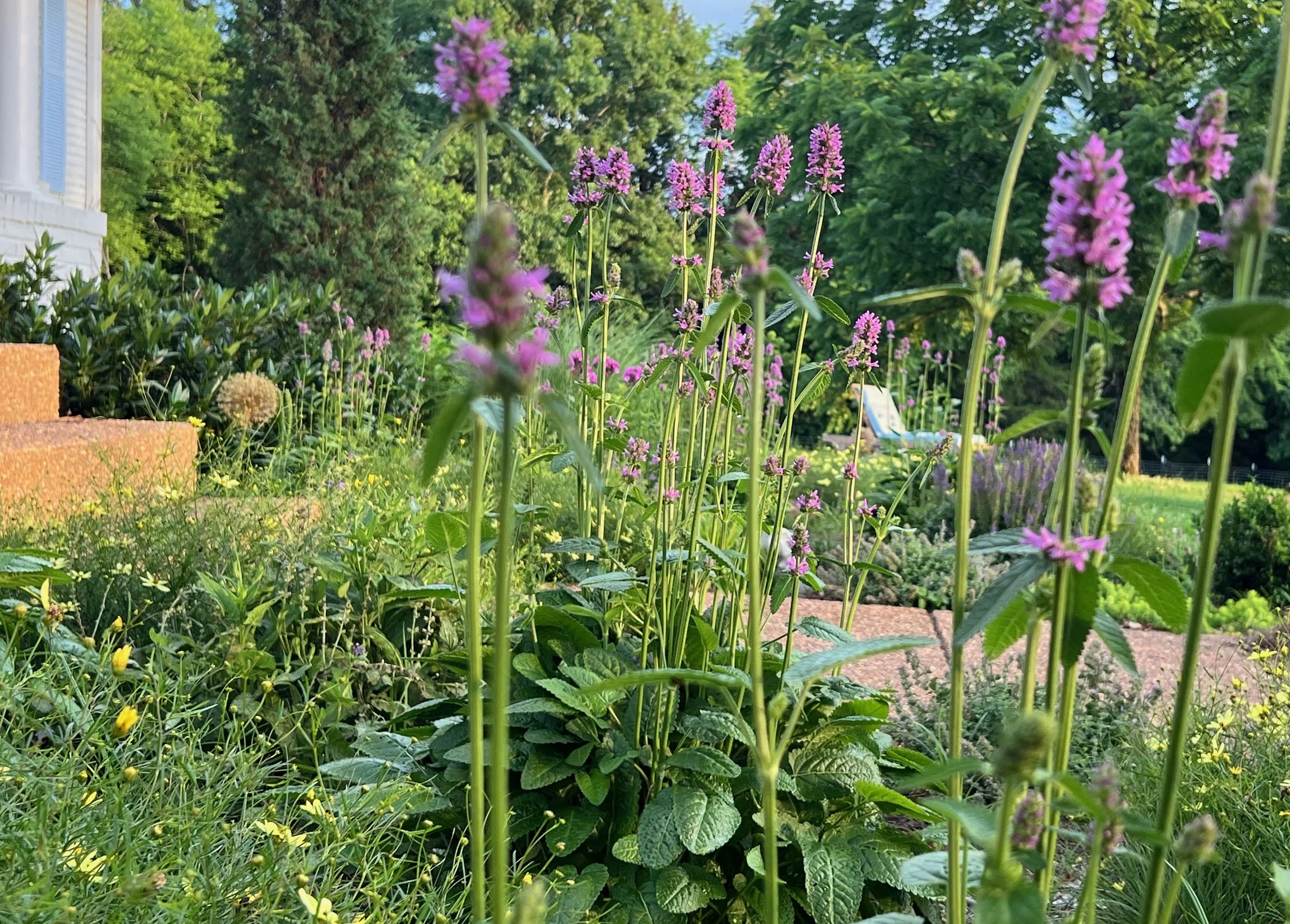
This garden has not been watered since the two weeks after it was installed.
People ask me for low-maintenance landscaping constantly, and they usually mean they would like their weekends back. The phrase gets used as if it named a style, something with gravel and three ornamental grasses and a boulder. A low-maintenance landscape is one whose needs line up with the life of the person responsible for it. For a homeowner who loves an hour in the garden every morning, an ambitious rose border can be low-maintenance. For someone who travels three weeks a month, a native meadow that asks for almost nothing after establishment is the honest answer. The plants could not be more different, and both are correct.
The perfect fit is easier to find here once you accept where "here" is. Middle Tennessee sits on limestone, which makes our soil alkaline and, across much of the Highland Rim and the Nashville Basin, heavy clay. That clay sets up like pottery in a drought and holds water like a bowl after a spring flood. We take roughly forty-seven inches of rain a year through humid summers, and a Tennessee spring can swing from a frost warning to eighty degrees inside a single week. The plants that thrive through all of that do it by long adaptation to exactly this place. Whether a plant coasts here or needs nursing usually comes down to whether its ancestors already lived through our weather. (If you want the deeper soil-and-what-grows walkthrough, the specifics of our pH and drainage and the transplant mistakes I see most, I wrote a separate New to Nashville homeowner's guide for exactly that.)
The old advice to put the right plant in the right place gets repeated so often it has gone soft, but it is doing more work than people think. A plant sited well does more than survive. It behaves. It grows into its natural shape, needs less pruning, less water, fewer chemicals, less of your attention across the board, because it is not fighting the site and you are not fighting the plant. Most of what gets called a low-maintenance plant is a well-placed one.
This is also why I rarely show up with a truckload of compost to fix the clay, which surprises people. Clay has an unfair reputation. It is hard to dig, I know that in my hands better than most, and it drains poorly in the wrong spots. It also holds moisture through a brutal August, anchors trees against wind, and grows many of our best natives without complaint. Most of the time my job is choosing plants that already know how to live in it, rather than rebuilding the soil to suit plants that never should have come here. Every time we force a plant to live somewhere it does not belong, we sign up for another watering schedule, another spray, another replacement, and another bill.
The same discipline means resisting whatever low-work trend has floated in from somewhere that looks nothing like here. Every few years it is rows of gravel and desert succulents, or a lush English border built for cool summers and soft rain. Neither one has met a Middle Tennessee July. A garden that belongs somewhere looks like it belongs there, and that starts with designing for this place instead of a photograph taken two thousand miles away.
I Read the Land Before I Choose a Plant
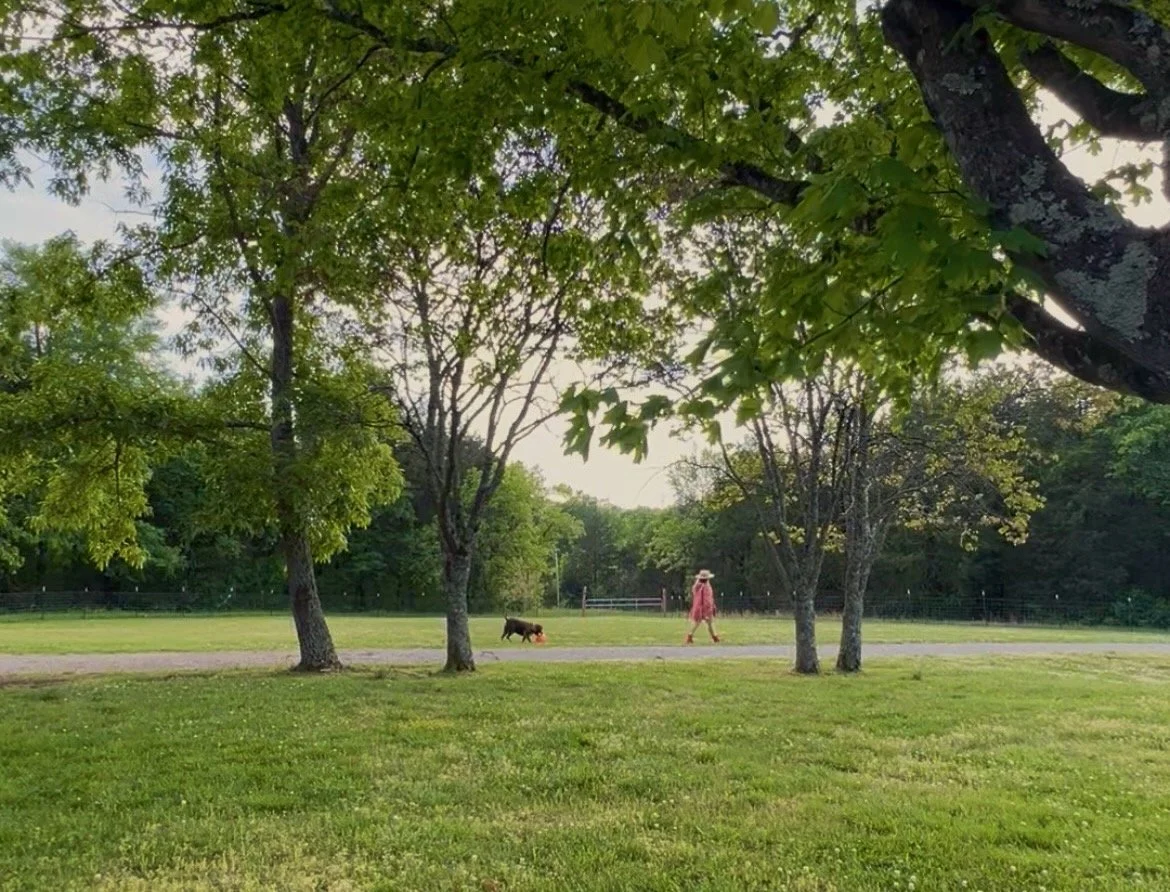
Lots of walking and watching. Often with dogs.
People imagine design starts with inspiration, a photograph or a favorite flower. Great garden design starts with attention. Before I think about color or bloom times, I spend real time asking the property quieter questions. Where does water want to go, and where does it refuse to leave? Where does the July afternoon sun turn punishing? Where does frost sit longest in spring? What already looks settled here, and what looks like it is fighting to hold on? The land has usually been answering all of this for years. My work is mostly noticing. I have a name for this way of working, and a longer piece on it, called Land Portraiture.
One of the most expensive habits in residential landscaping is trying to win an argument with a property. Every site has opinions. Some ground wants woodland, some wants meadow, some wants open lawn, some wants very little planted at all. When we insist a place become something it plainly resists, we pay for that insistence again and again, in water and chemicals and replacement plants and hours of labor. The better work is finding what a property is already trying to become and helping it get there faster.
What I Plant Here, and Why
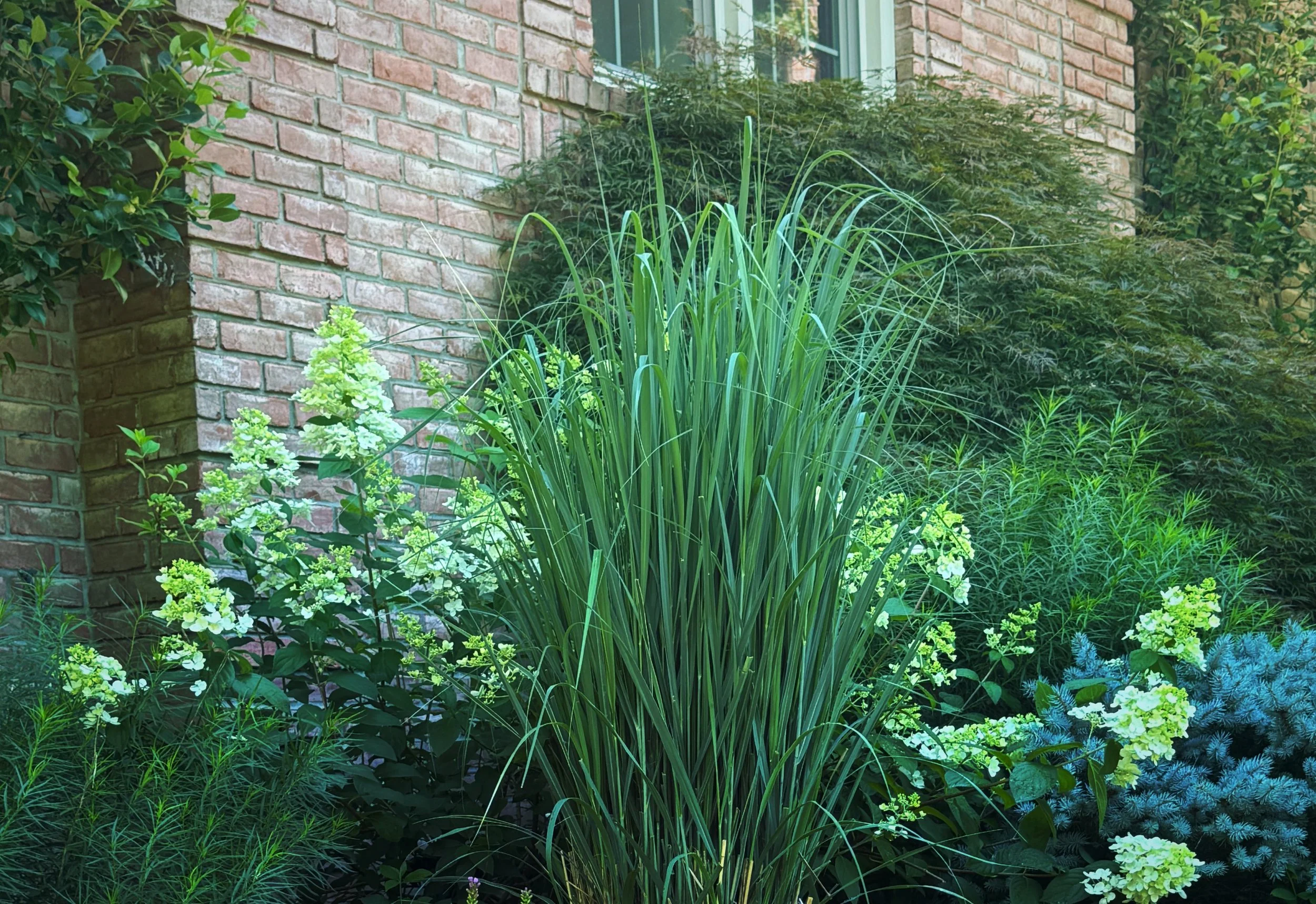
‘Totem Pole’ Switchgrass filling out perfectly in its fourth year at this Lebanon, Tennessee garden.
A plant list without context is how people spend thousands correcting healthy plants that never belonged where they went. What I can offer is the shorter, more honest thing: what I come back to, year after year, because it has earned my trust by living through Tennessee as Tennessee actually is: June floods, weeks of ninety-eight degrees before noon, ice storms, clay you could throw a pot with, and the odd year the weather forgets which season it is running. (For the cultivar-level version, chosen from real properties rather than a national database, I keep a Nashville clay-soil plant guide.)
Trees are where the costly mistakes cluster, almost always because we forget that a tree does not stay nursery-sized. A tree is the longest promise in any landscape, so I choose it in decades rather than on delivery day. The ones I return to have already proven they belong here: white oak and Shumard oak, black gum for its honest fall color, Kentucky coffeetree, American beech where there is room for it, eastern redbud tucked under a taller canopy, and flowering dogwood set where the afternoon sun will not scorch it. None of these will impress anyone for being unusual. They will still be standing long after we are, which matters to me far more than fast growth and instant effect.
For everything at eye level and below, I lean on plants that settle in and become part of the place instead of demanding a standing appointment. Coneflower, baptisia, little bluestem, switchgrass, aromatic aster, mountain mint, golden ragwort, buttonbush, and blue mistflower where there is moisture to give it. (Most of these live on my Tennessee pollinator plant list, sorted by bloom season.) Once established, these ask for very little: no weekly coddling, no monthly feeding, no collapse in August because a watering got missed. They are handsome, and they are honest about what they need, which is most of what people are really after.
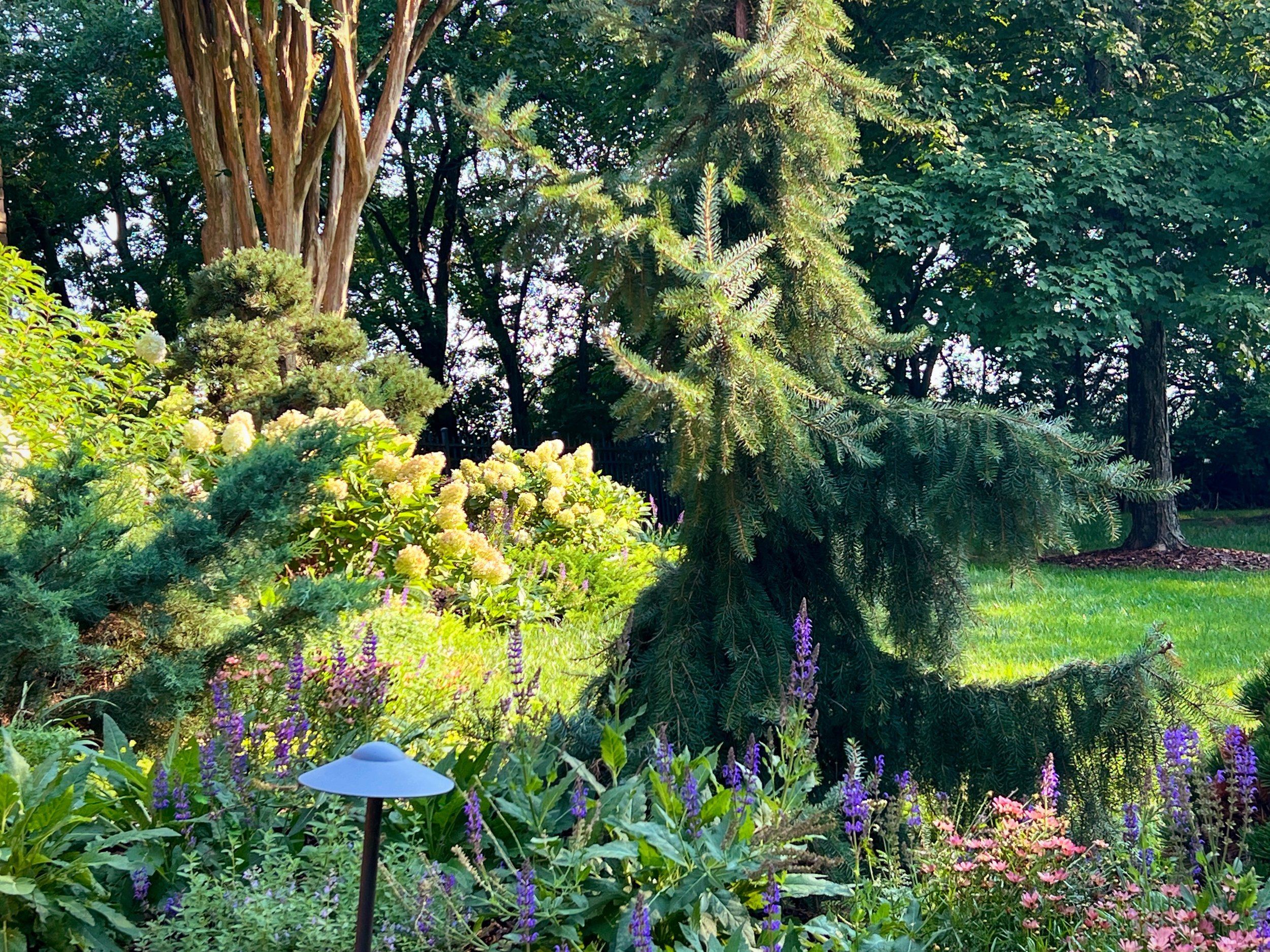
With shrubs, the finest compliment I get is when someone assumes a planting has been carefully shaped and it has never been touched. That is the goal. A well-chosen shrub should look mostly like itself, rather than like a plant I have spent years arguing into a green cube. Getting there means respecting mature size before planting, which sounds obvious and remains the single most common mistake I see. It is everywhere in the landscapes of new builds all around Franklin, Nashville, and Lebanon right now. Builders are not gardeners. Most landscapers aren’t either. Someone sets a Schip laurel shrub that means to reach twelve feet under a four-foot window, and the homeowners will spend the next two decades apologizing for it with hedge trimmers.
A word on irrigation, because it is where a great deal of money leaks out of a landscape. It earns its keep while plants establish, in certain gardens, and when it protects a real investment. When a whole landscape depends on endless supplemental water just to survive where it was planted, I start questioning the plan long before I question the sprinklers. My work here is to plant the things that studied this climate a long time ago and decided to stay, which spares the trees and the homeowner a great deal of grief.
Questions Worth Answering Before Anything Goes in the Ground
If you take one habit from all of this, let it be a short list of honest questions asked before you buy a single plant. These are the ones I run through on every project.
What will this look like in twenty years, at full size, and does the spot still work then? Nearly every regret starts with planting for this spring instead of for maturity.
If I leave for two weeks in August, what happens? When the honest answer is that everything dies, something in the plan needs to change.
What will this plant ask of me every year, in pruning, water, spraying, or replacing? Read the terms before you sign them.
Does this plant belong here, or can I merely keep it alive? Those are different questions, and only one of them leads to a low-maintenance garden.
Am I choosing this because I love it, or because it looked beautiful in a photograph? The photograph is not of your property and will not be here in August. You will.
Would this design still make sense if labor costs doubled over the next decade? Mine would, and that is on purpose.
If I could not water at all next year, what in this garden would live? The answer tells you how much of the design is leaning on the hose or irrigation.
Is this landscape getting more beautiful as it matures, or more dependent on me? That is the line between stewardship and maintenance.
Will I be glad I planted this in twenty years? When you cannot answer yet, wait. A little more time watching the site tends to make the right choice obvious.
The Future You Are Really Designing
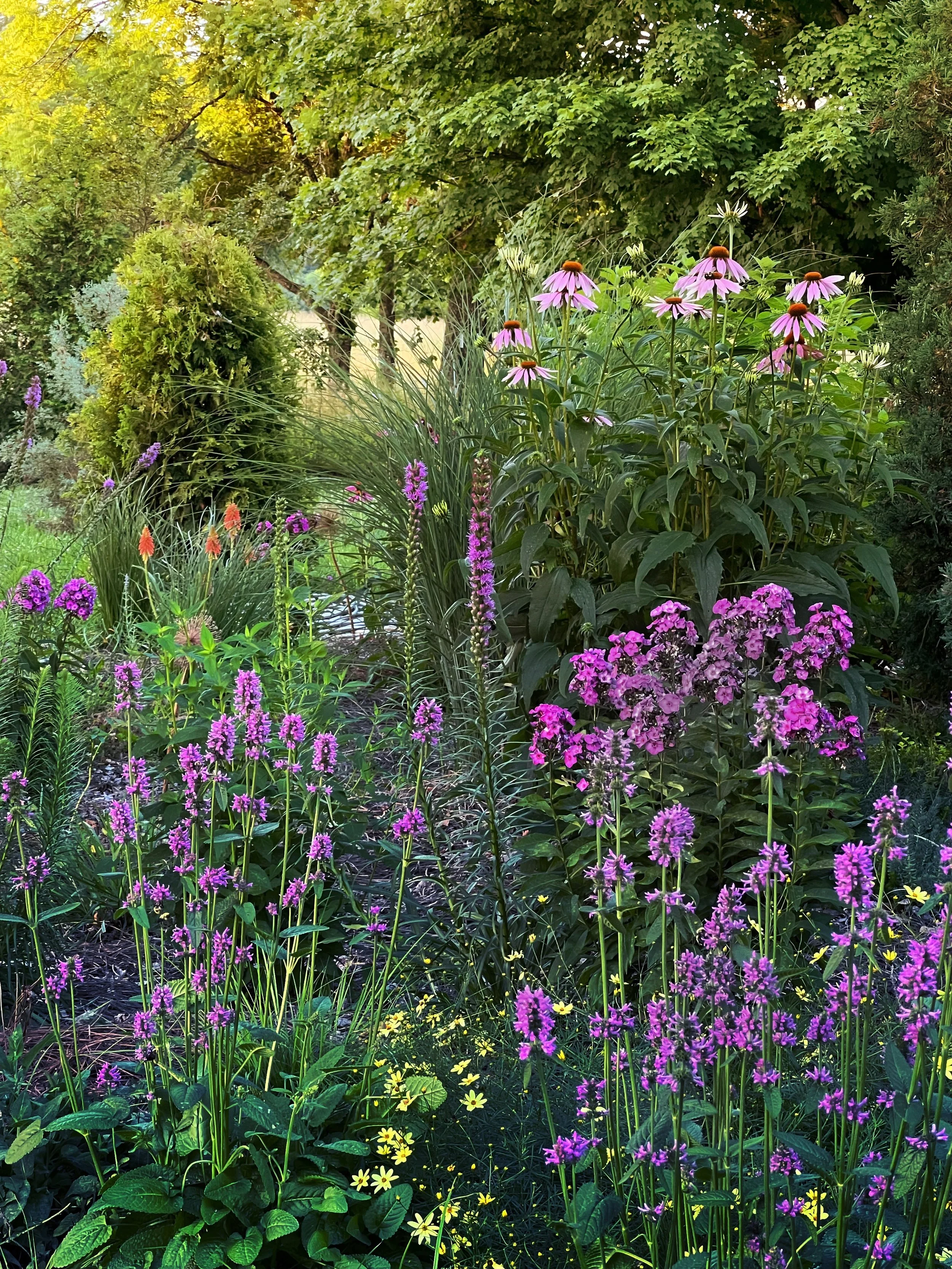
This photo was taken at the end of July after two weeks of 98-degree + temperatures. It was designed for a life that values beauty, but doesn’t have the time to water every day.
Most of my work is the arrangement of a future. Every choice made today writes instructions for the person who will inherit it, whether that is you a decade older, your children, the next family to buy the place, or all of them in turn. Good design tries to be generous to every one of them. It is the thinking behind a framework I call Inhabitation Design, designing a garden around the hours you will actually live in it.
A landscape tells its truth on an ordinary Tuesday in July, long after the reveal and the magazine photograph have faded from memory. Nobody is watching. The weeds are either manageable or out of hand. The trees are either sitting comfortably where they were placed or swallowing the house. The garden is either a refuge or one more chore waiting at the back door, and which one it becomes was mostly decided years earlier, at the design table. That Tuesday is the one I design for.
If you would rather not sign those promises blind, that is exactly what a design consultation is for: making the decisions on purpose, before the jackhammer, before the invoice, before the July that reveals what you chose.
Frequently Asked Questions
How much does landscape maintenance cost in Middle Tennessee? Routine lawn and garden care runs most homeowners several hundred dollars to over a thousand a month, and it climbs with property size and add-ons like irrigation service, chemical programs, tree work, and seasonal cleanups. Those costs have risen across the whole industry on the back of higher materials, labor, and water prices, which is why designing to lower inputs from the start saves far more over time. If you are having a landscape designed by a full-service (irrigation, maintenance, etc.) company, I beg you to deeply consider if the design they create serves their continuous monthly maintenance fee or you?
What are the lowest-maintenance plants for Middle Tennessee? Regionally adapted natives ask the least once established. Strong performers include coneflower, black-eyed Susan, baptisia, little bluestem, switchgrass, aromatic aster, mountain mint, golden ragwort, and eastern red cedar for evergreen structure. Native trees that handle our clay include white oak, Shumard oak, black gum, Kentucky coffeetree, redbud, and dogwood.
How do I reduce how much I water my landscape? Shrink the lawn, choose drought-tolerant natives, sort plants into zones by their water needs, not their aesthetics, and water deeply on a long interval so roots grow down and become self-sufficient. After the first year, most native plantings need little to no water from you.
What is the most common low-maintenance landscaping mistake? Ignoring a plant's mature size and its fit to the site. Most of what people call high-maintenance is a plant set in the wrong place: too large for the bed at maturity, too thirsty for the soil, or too close to the house, which turns every future season into corrective labor.
How do I landscape a large property or acreage in Tennessee affordably? Design for consequence at scale. Match plants to the soil and drainage you already have, lean on native trees and grasses that live without irrigation, keep trees well clear (25 feet +) of buildings and utility lines, and mow only the turf you genuinely use. On acreage, every decision multiplies, so choosing low-input, site-appropriate plantings pays back hardest exactly where the temptation to overplant is strongest.
Does low-maintenance landscaping help resale value? Yes. A healthy, well-designed, visibly cared-for landscape supports resale value, and the lower water, chemical, and labor costs carry straight over to whoever owns the property next.
Work With Me
See the ways in: Garden Commissions. Large-Property and Acreage Design.
Contact me directly here: Tell me about your property.