
Inhabitation Design: Why the Hour, Not the Bed, Is the True Unit of Garden Design
A Nashville garden designer on the framework that changed how she thinks about every property she touches, and why most gardens fail not because of the wrong plants, but because of the wrong question.
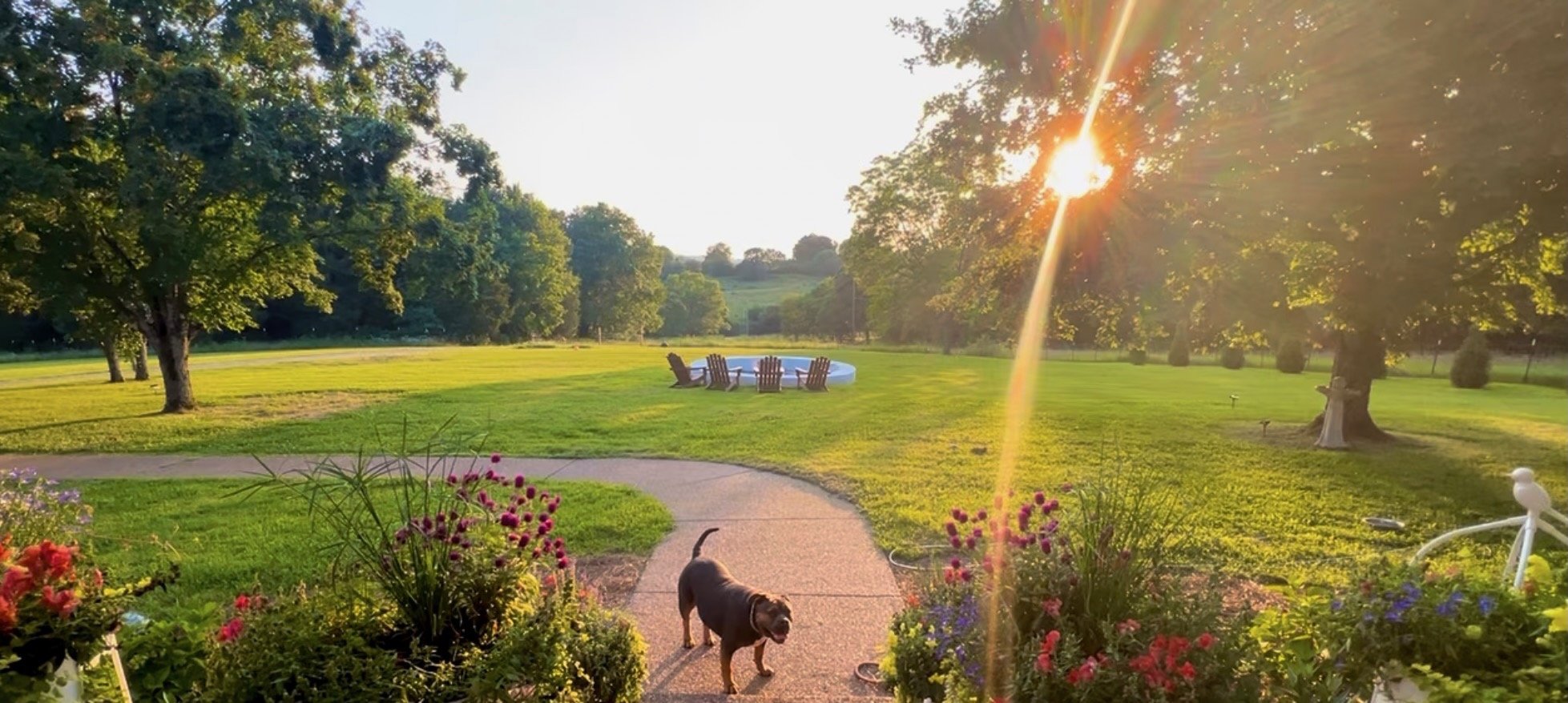
The view from the front porch. Same property, every hour, every season.
Most garden design starts with space. Where does the sun hit? How big is the bed? What goes in the back, what goes in the front, what fills the middle? The whole process is organized around the garden as a physical object; a thing you build, a composition you arrange, a layout you draw on paper and then install in the ground.
I used to design that way. I know better now.
My love for my mom and her love for hummingbirds assure me of that. When my mom stays over at my farm, I know we generally find our way to the front porch, not the back porch, by 10am. I first had pink Encore azaleas (Rhododendron) attracting the hummingbirds to the back porch, but you can't be two places at once. I designed the front porch with dense blazing star (Liatris spicata), 'Monaco Orange' snapdragons (Antirrhinum majus), 'Pink Flame' phlox (Phlox paniculata), 'May Night' salvia (Salvia nemorosa), giant anise hyssop (Agastache foeniculum), and catmint (Nepeta faassenii), and now when my mom and I make our 10am front porch appointment, the hummingbirds look at us like we're late to a party they've clearly been hosting for hours.
The shift happened on my farm in Smith County, not on a client property. I had been living there for three years before I planted anything; three years of watching, which is the practice I call Land Portraiture. And what I realized, after all that watching, is that I didn't experience my land in terms of space. I experienced it in terms of time.
Morning coffee on the porch, 8:00am, late June. The hummingbirds are already holding a meeting with the snapdragons. The light is gold and coming from the east, which means the garden beds have three more hours in full shade. The dew hasn't burned off. The liatris hasn't started humming yet. That's a completely different garden than the one that exists at 2 p.m., when the sun is overhead, the heat is brutal, everything is buzzing, and the shade under my covered porch is the only place my mascara and my dignity can afford to be.
Same property. Same plants. Two entirely different experiences separated by six hours.
That realization changed everything about how I design. I stopped asking "what should go in this bed?" and started asking "what is happening on this property at 7 a.m.? At noon? At dusk? At 9 p.m. in August when you're finally outside because the heat has broken?" The hour became my primary unit of design. Not the bed. Not the border. Not the zone. The hour.
I call this framework Inhabitation Design.
What Inhabitation Design Actually Means
Here's the simplest way I can explain it: Inhabitation Design is a time-based approach to garden and landscape design that organizes every decision around how a person lives their actual, not idealistic, life on their land, hour by hour, season by season. Instead of starting with a site plan and filling in plants, it starts with the rhythms of the people who live there and designs the landscape to meet them where they already are.
Which means it asks very different questions than conventional design.
Conventional design asks: What's the focal point of this garden? Where do we need screening? What's the color palette for this border? How do we handle the slope?
Instead, I ask: Where are you standing at 7 a.m. with your coffee? What do you see from the kitchen window while you're cooking dinner? Where do your kids play after school, and what's surrounding them when they do? Where are you when the sun goes down? When you come home from work in the dark in January, what does the path to your front door feel like? Where do you eat outside, and what's the light doing at that hour, in that season? If you aren't eating outside, why not?
The first set of questions produces a beautiful garden. The second set produces a beautiful life. They're not the same thing.
The Problem with Spatial Design
I want to be clear: there is nothing wrong with spatial design as a tool. I use it. Every designer uses it. I'm not writing this to say other designers are doing it wrong. They're not. You need to understand sun exposure, drainage, soil conditions, sight lines, scale, proportion. Those are non-negotiable. My entire approach to reading a property depends on spatial observation.
But spatial design, used alone, has a blind spot. It produces gardens that are designed to be looked at, not lived in. Gardens that photograph beautifully from one angle at one moment but don't account for the twenty-three other hours of the day when the light is different, the temperature is different, the mood of the person is different, and the needs of the garden's inhabitants, human and otherwise, are different.
I see this constantly in Nashville. I walked a property in Williamson County last year where a client had a marble patio with a beautifully designed border around it. It looked stunning. But they never use it because it faces south/west, and from May through September, it's in direct sun at exactly the hours they'd want to be outside, 5 to 8 p.m. Nobody designed for the hour. They designed for the space.
Or a property with an incredible front garden. Massed natives and ornamental grasses, great structure, year-round interest. The homeowner sees it for thirty seconds a day, walking to their car. The back of the house, where they spend every evening, has a lawn and a fence and nothing else. The design budget was spent on the space that faces the street instead of the time where the real living happens.
Designing for time doesn't make those mistakes because it doesn't start with the plan view. It starts with the clock.
Designing by the Hour
Let me show you what this looks like on the ground. I'll use my farm, because it's where everything I'm about to describe was learned the hard way, but the same approach can apply to a half-acre lot or a suburban yard practically anywhere.
Dawn to Mid-Morning: The Arrival
This is the most intimate hour of the garden. You're waking up. You're not entertaining. You're not performing. You're standing at a window or sitting on a porch with a cup of coffee, and the garden is doing its first work of the day.
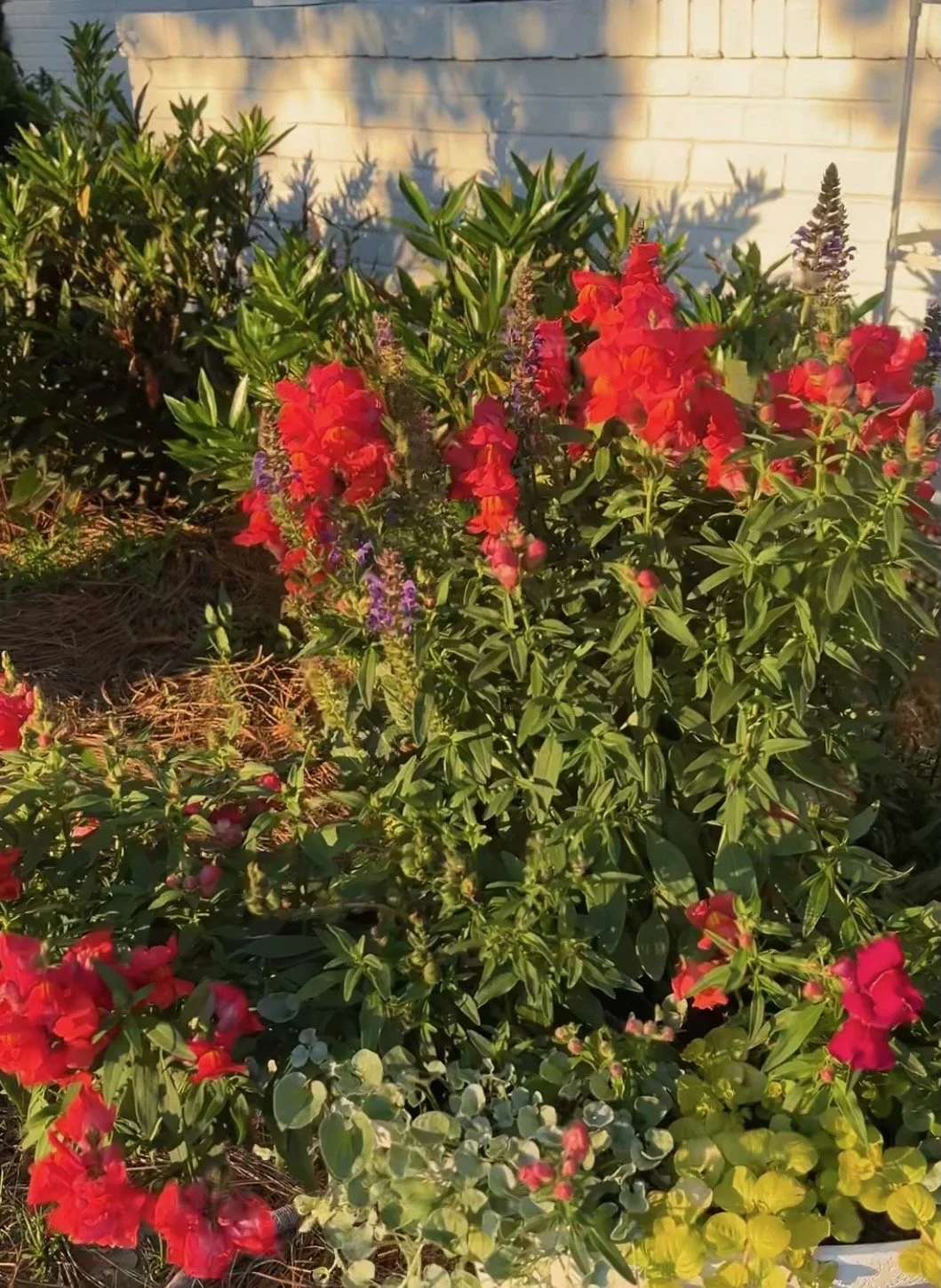
The snapdragons and salvias planted next to where I sit every morning. Designed for this hour.
On my farm, I designed the pollinator beds to wrap around the front porch specifically for this hour. The snapdragons and the salvias are planted right next to where I sit. The hummingbirds come to it before I've finished my first cup. The Boston ivy (Parthenocissus tricuspidata) covering the face of my home gives shelter in the winter and shade in the summer to the insects and lizards. It's a living wall of hide and seek that entertains me when I look up from checking my morning emails on my laptop and my eyes need a break.
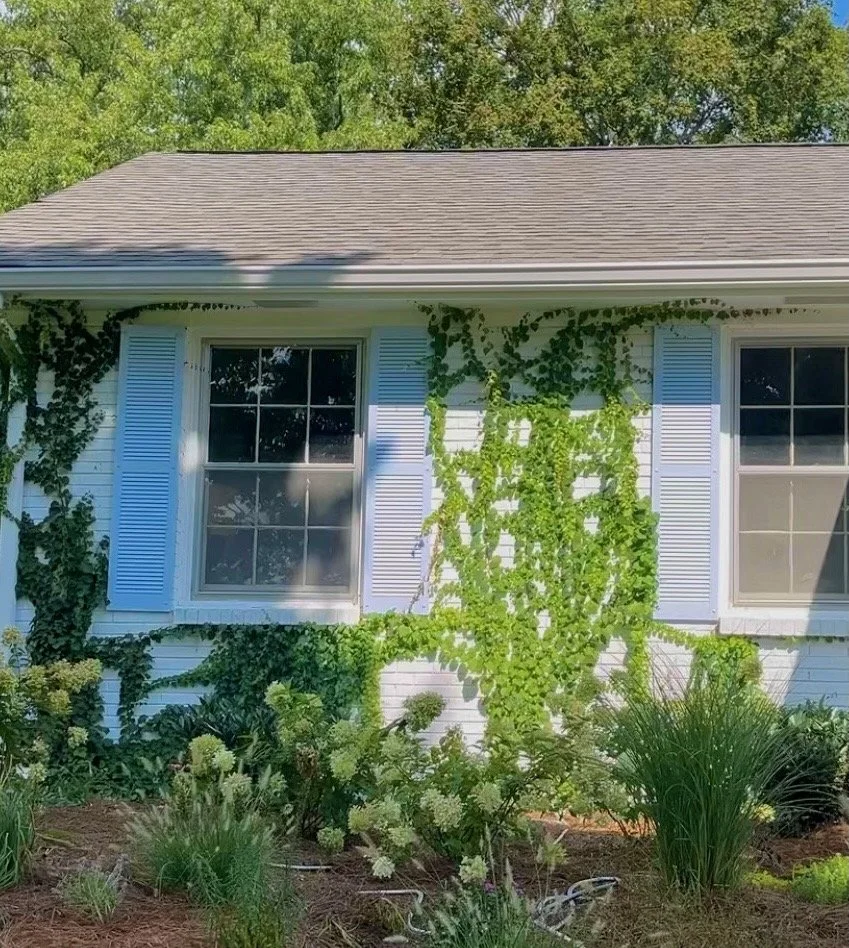
The Boston ivy covering the face of my home. A living wall of hide and seek.
For clients, I ask: where is your morning coffee? Inside or outside? What window are you looking through? What direction does it face? What do you want to see at that hour; movement, color, stillness? Do you want birds? Because if you want birds at 7 a.m., I need to design a habitat that feeds them, not just a garden that looks nice.
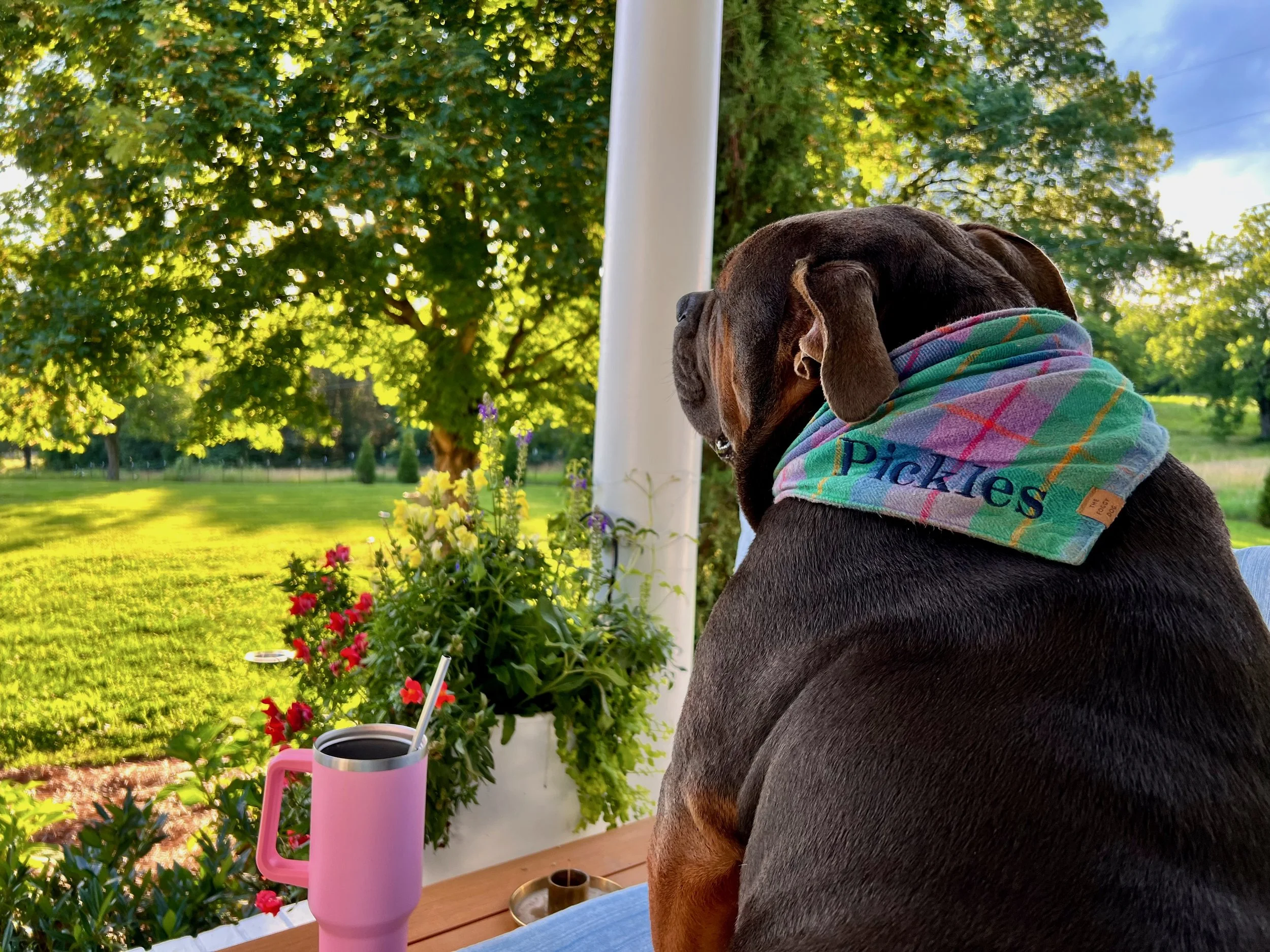
Pickles on the front porch. He has opinions about the hummingbirds.
Midday: The Working Hours
Most residential gardens are empty from 9 to 5. The humans are at work or inside. But the garden isn't empty. Step outside at noon in July and it hits you; the heat, the noise, the sheer volume of life happening without you. Bees shoulder-deep in coneflowers. Wasps patrolling the mountain mint like air traffic controllers. A swallowtail the size of your hand drifting through on a route it flies every single day. The garden at midday is working harder than a bobby-pin in a convertible.

Pickles, mid-shift.
This approach accounts for the garden even when no one is watching. A garden that goes quiet at midday because nothing was planted for full-sun peak performance is a garden that's failing its non-human inhabitants during their most critical hours. The pollinator plant list I published was built around this principle; the high-summer section exists specifically because a garden that peaks in spring and fades by July is abandoning the ecosystem when it needs support most.
But midday also matters for the humans who are home. If you work from home, if you're retired, if you have young children, midday is when you need shade. Deep, real shade. Not a decorative tree. A canopy. An oak, a tulip poplar, a grove of redbuds that creates a room you can actually inhabit when it's 95 degrees and humid. In Nashville, designing for midday shade isn't optional. It's survival. For you. For your guests. For your hair. For your self-respect.
Late Afternoon to Dusk: The Golden Hours
This is where most of the living happens on most properties. People come home. Kids spill out the back door. Someone starts dinner. Someone opens a bottle of wine and sits outside for the first time all day. The light goes gold, then amber, then pink. The temperature drops from unbearable to beautiful in the span of an hour. My dog, Pickles, has conjured the energy to chase sounds only he can hear again.
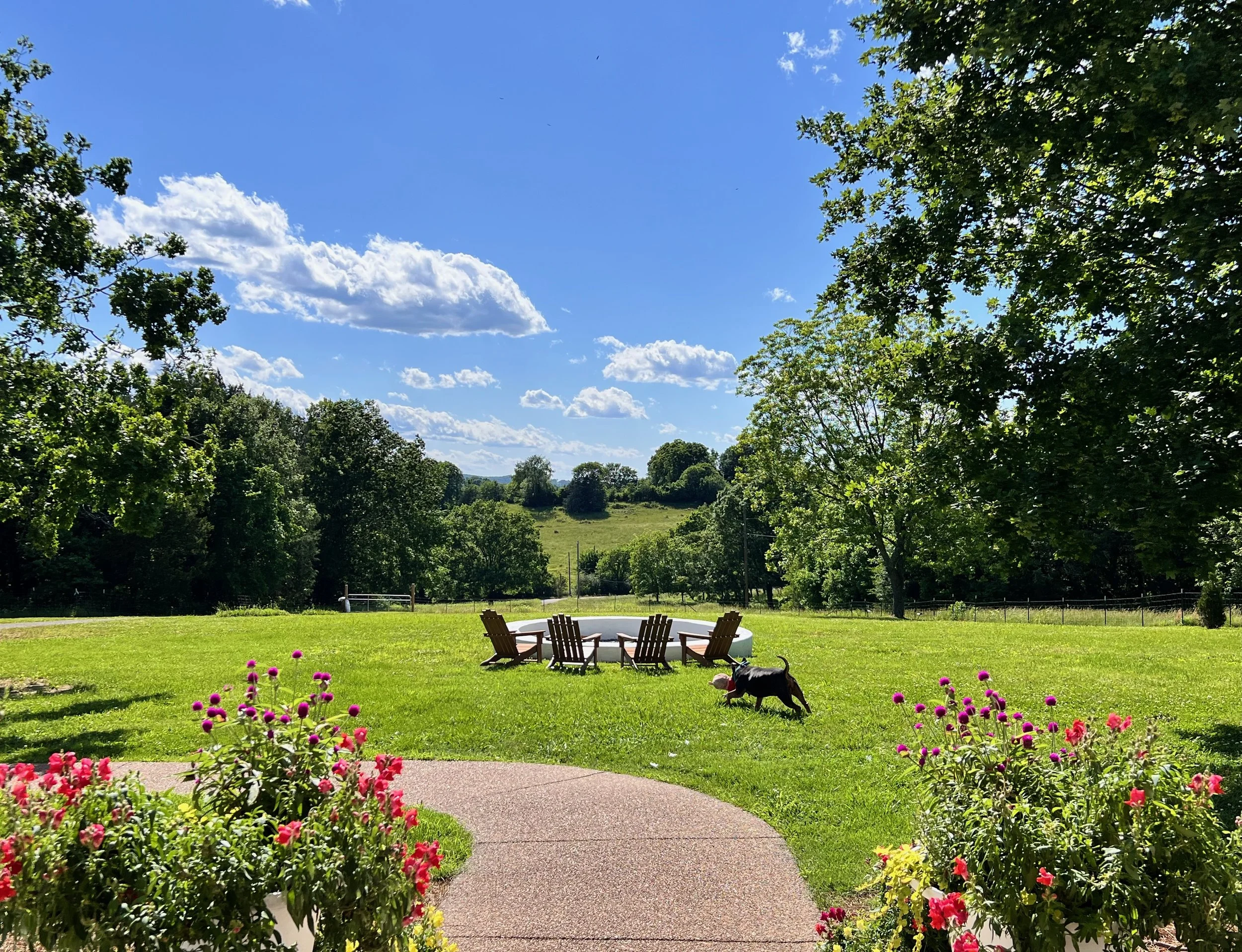
The fire pit at 2 pm.
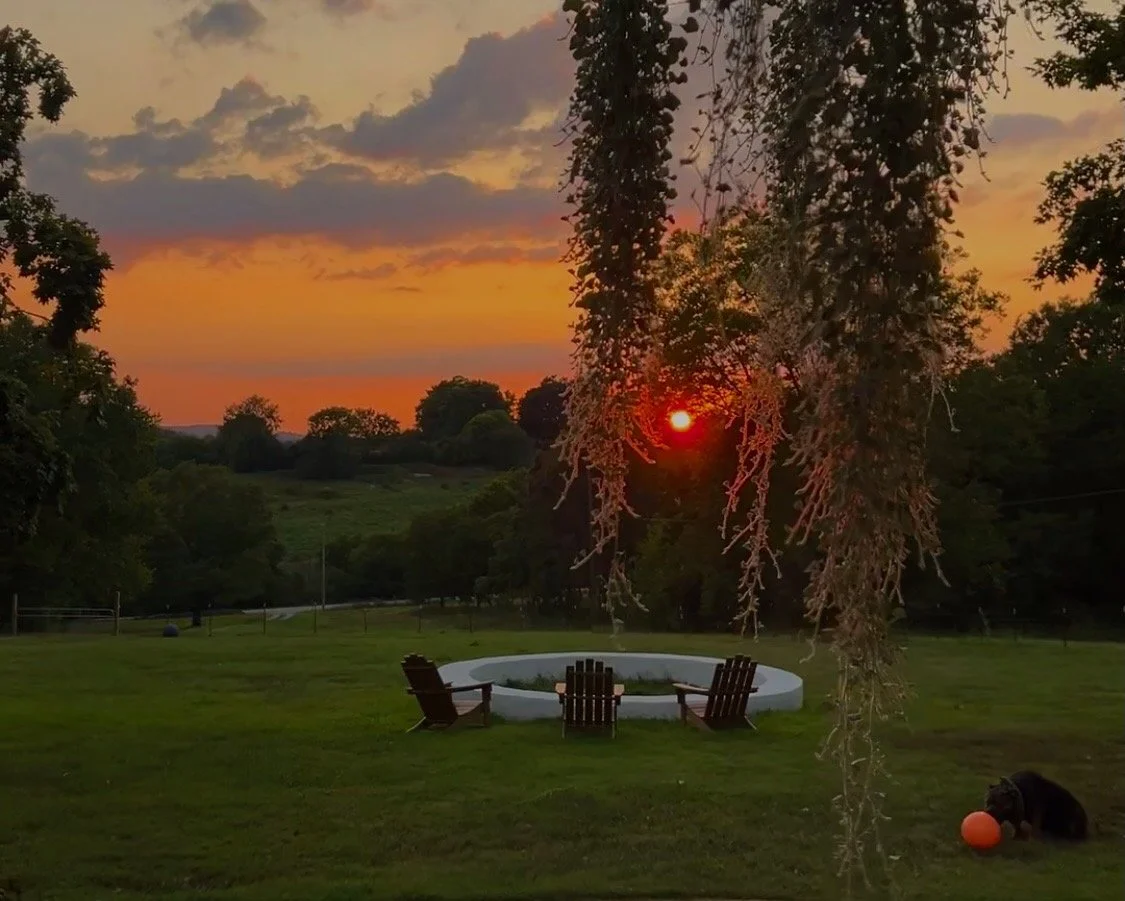
The same fire pit at dusk.
This window, roughly 5 p.m. to 8:30 p.m. from May through September, is the single most important design window for most Nashville residential properties. And it's the one that gets the least attention because conventional design doesn't think in time.
I design for this hour obsessively. What direction does the evening light come from on your property? Where does it land? What plants catch it and glow? Little bluestem turns copper and gold in evening light; if it's positioned where the western sun hits it, it's breathtaking. If it's on the east side of the house, you'll never see it do that.
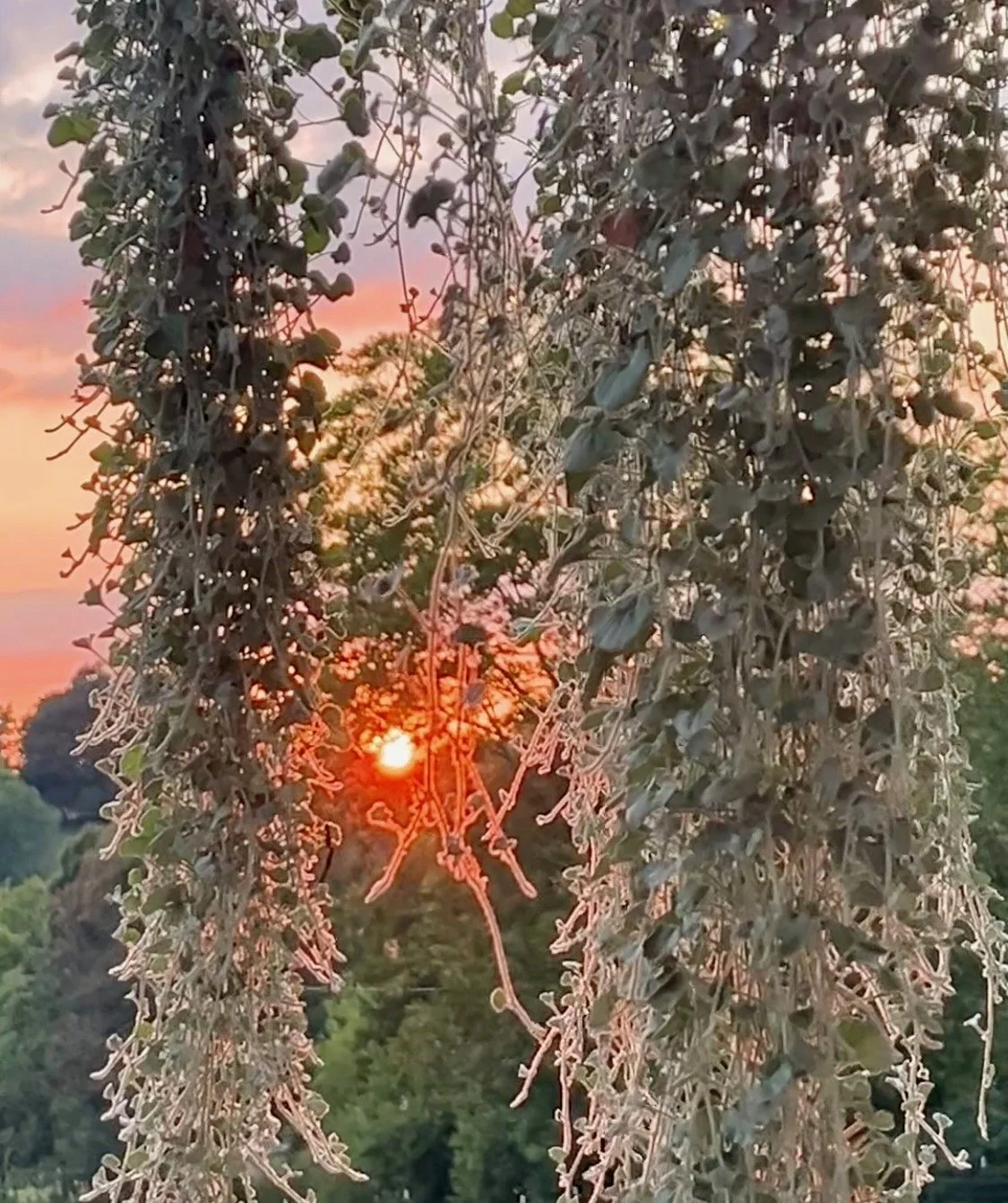
Evening light through Dichondra argentea 'Silver Falls'. This is the hour I designed for.
By 7 pm, I've stopped working and joined Pickles outside. The cows on the hill facing the front of my property have made their way across the slope to finish the day out grazing. The sound barrier trees I planted frame the scene and lower the sounds of the city drivers making their final stretch home from the day's final rush hour. My front porch faces roughly southwest-west. The evening light comes directly through the hills and hits the garden beds at an angle that makes everything glow. I didn't get lucky. I watched for three years and then I designed for the hour I knew I'd be sitting there.
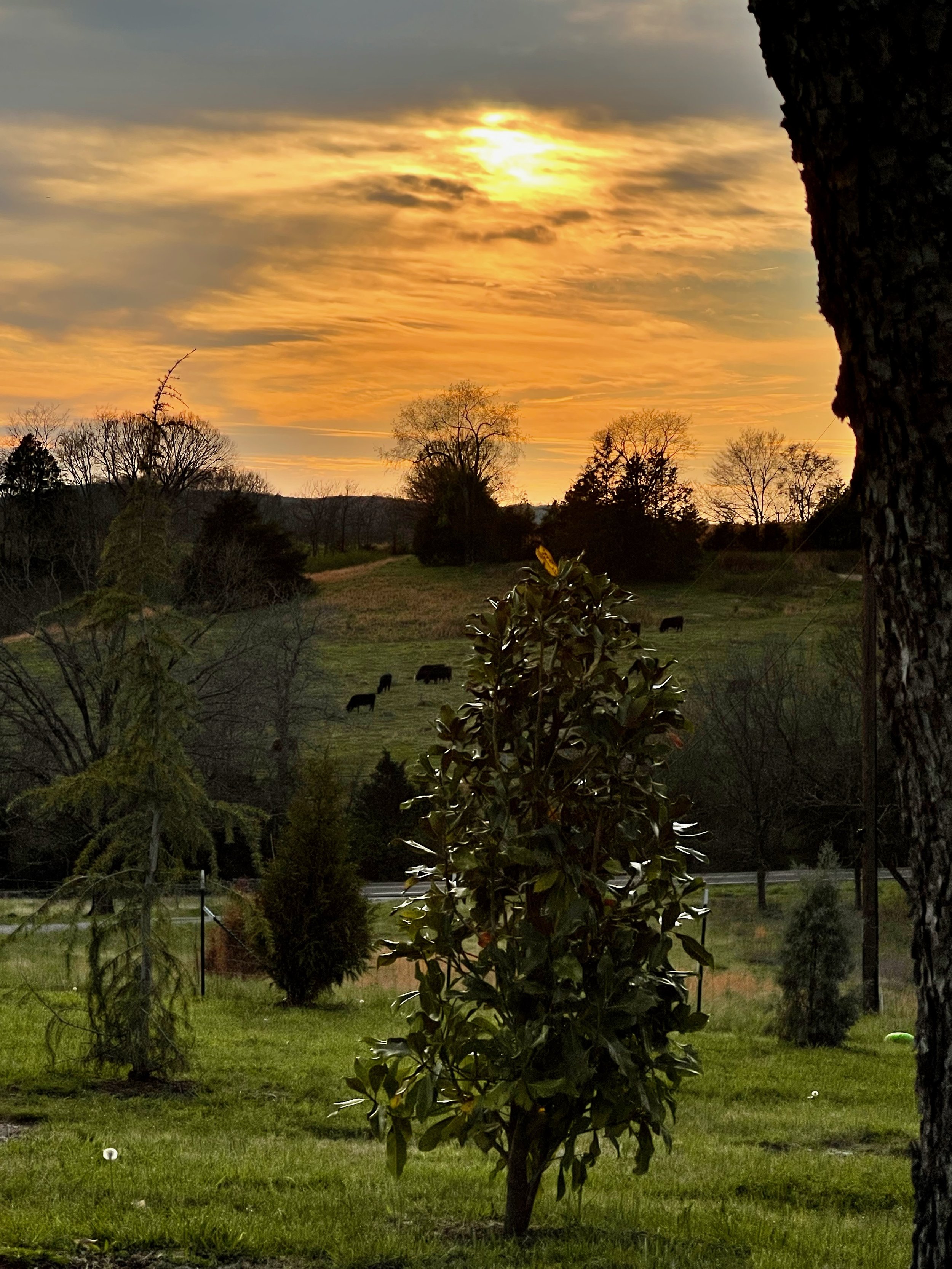
The cows finishing the day on the hill. The sound barrier trees frame what I see and soften what I hear.
Dusk to Dark: The Forgotten Garden
Almost nobody designs a garden for what happens after sunset. This is the biggest missed opportunity in residential landscape design.
A garden at dusk is a completely different sensory experience. Color fades. Shapes and silhouettes become characters all of their own. Fragrance intensifies; most fragrant plants, like Nepeta x faassenii 'Walker's Low', release more scent in the cool evening air. Sound changes. The daytime pollinators humming and buzzing have seemingly hurried off to their comfy beds and the nighttime orchestra begins.
Crickets and katydids. Coyotes laughing in the distance. The frogs and owls celebrate under the moon as intensely as the butterflies and the birds dance under the sun.
White and pale yellow flowers become luminous at dusk. Oakleaf hydrangea, white coneflowers, 'Moonbeam' coreopsis, white phlox; they catch the last light and seem to glow when everything else has gone dark. I plant white flowers along paths and near seating areas specifically for this hour. They become natural wayfinding in the garden after dark. The pale yellow petals on the blooms of 'Moonbeam' coreopsis reveal why its name is so deserved only after dusk.
Reflections on water, whether in a pool or in the bowl of a fountain, catch the moonlight and it feels ghostly and magical and spiritual all at once.
Lighting matters enormously here, and most landscape lighting is terrible. Overlighting a garden kills the dusk experience. You don't want to eliminate the dark. You want to shape it. A single low light on a path. An uplighted tree trunk in a distant corner; just enough to assure you there is no monster lurking in the garden corner at 10pm. That's inhabitation. A garden lit up like a car dealership is not.
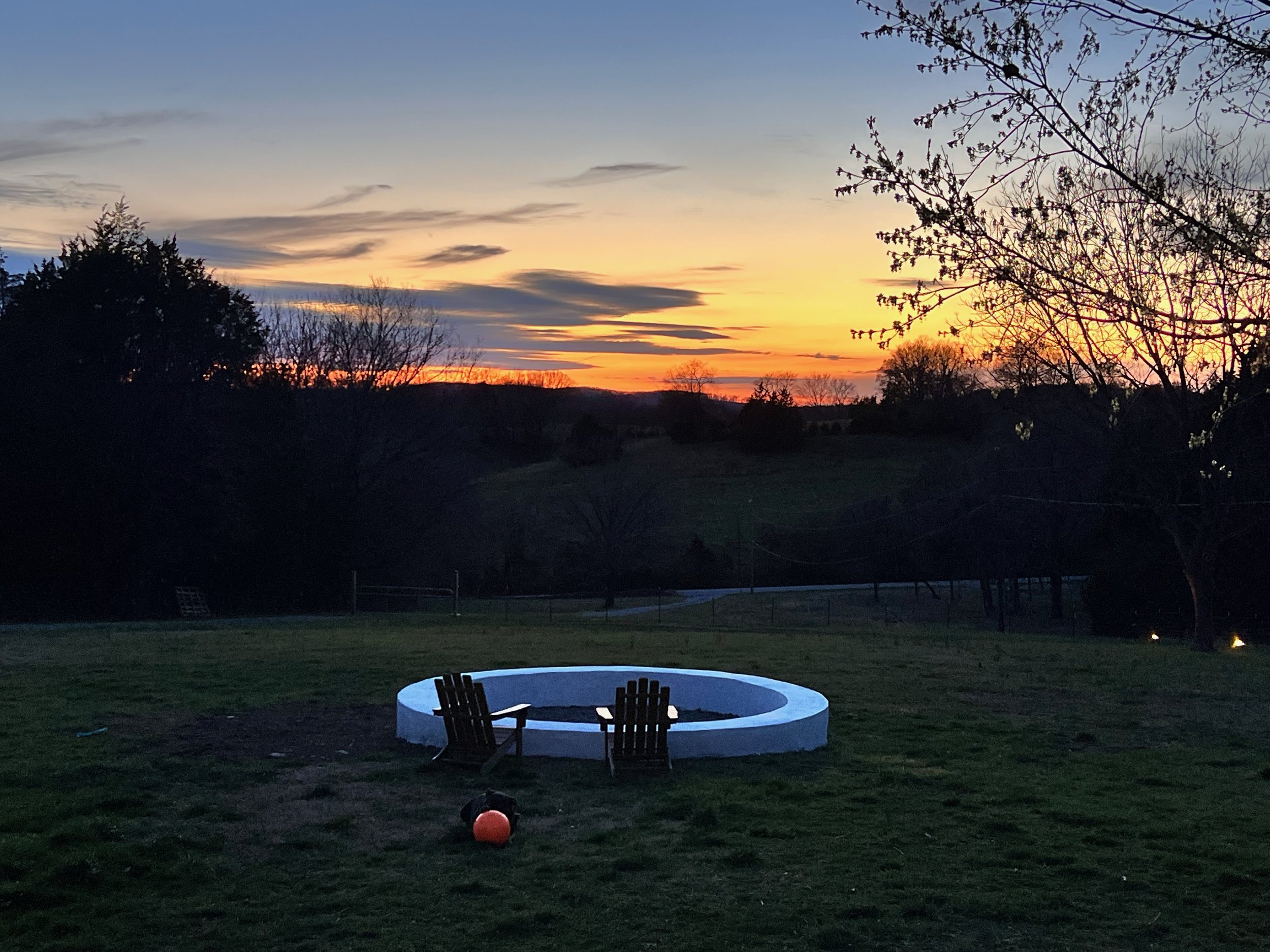
The fire pit after dark. The white stucco catches the last light and reflects the sky. Pickles' ball waits for morning.
The Seasonal Clock
Time operates at two scales; the daily clock and the seasonal clock. A garden that's designed only for summer is failing its inhabitants for seven months of the year.
I design for January. What does the garden look like from the window on a grey Tuesday in February? If the answer is "dead and brown," the design didn't account for the season. Evergreen structure, hollies, cedars, boxwood, mountain laurel, holds the composition through winter. The bark of crape myrtles, the persistent seed heads of coneflowers and grasses, the red berries of winterberry holly; these are winter design elements that exist specifically for the hours you spend looking at the garden when nothing is blooming.
I design for the shoulder seasons. October, when the little bluestem has turned copper and the goldenrod is still blazing and the asters are carrying the garden into November. March, when the bloodroot and Virginia bluebells are the first signals that the world is coming back. These transitional months are where a garden earns its reputation for being "beautiful all year." They're not accidental. They're designed. And they're designed for the specific hours and light conditions of those seasons.
How This Changes Client Conversations
When I sit down with a new client, I don't start with "show me your property." I start with "walk me through your day."
When do you wake up? Where do you go first? Do you eat breakfast inside or outside? When do your kids get home from school? Do you ever sit and work outside? Where do they go? Where do you cook dinner? Can you see outside while you're cooking? Where do you sit in the evening? Do you go outside after dark? What time do you go to bed in summer versus winter? Do you enjoy sitting outside when it rains?
These questions feel personal. They are personal. A garden designed for living has to know the people living in it. It can't be generic. A garden for a couple who eats dinner outside at 7 every night is a fundamentally different design than a garden for a family with three kids who are in the backyard from 3:30 to dark. The plants might overlap. The spatial arrangement might be similar. But the priorities around time, what the garden needs to be doing at which hours, are completely different.
This is also where Land Portraiture and Inhabitation Design connect. Land Portraiture is how I learn what the property is already doing at every hour; where the light falls, how water moves, what wildlife is present, what the wind does, what sounds carry. Inhabitation Design is how I layer the human experience onto what the land is already doing. The land has its own clock. The people have their own clock. My job is to synchronize them.
This Isn't Just Philosophy. It's Practical.
I can hear the skepticism. This sounds abstract. Theoretical. Nice in an essay, hard in a yard.
It's not. It's the most practical framework I've ever used because it solves the problem that actually plagues most gardens: they look good but don't get used. And they don't get used because they don't feel good. They were designed to look pretty; they weren't designed for the actual life happening within them.
Every designer has had the client who spent $50,000 on a landscape they don't sit in. The harsh concrete patio bordered only by sod and satan's direct sun rays, seemingly directed only at you. A garden with the best effort and intentions that faces the complete wrong direction. The fire pit that's too far from the house to bother with on a weeknight. The pool surrounded by nothing but concrete, or what I call the the maximum security pool design special (not special; very common for many, if not the majority, of pool landscape designs).
And here's the thing. The designer probably did good work. The plants are right. The composition is sound. It's not a failure of skill. It's a failure of the question that was asked. Nobody asked what hour the space needed to serve, and so the space serves no hour at all.
This framework prevents that by anchoring every decision to a moment in the client's actual life. The fire pit isn't placed where it looks best on the plan. It's placed where the family will actually use it on a Tuesday in October. The shade tree isn't placed for visual balance. It's placed where the shadow falls at 5 p.m. in July, which is when the homeowner wants to be outside. The fragrant plants aren't scattered randomly. They're concentrated along the path from the car to the front door, because that's the moment of arrival, the transition from the world to home, and that moment deserves to smell like jasmine in June.
The Farm as Proof
My farm is my laboratory, and this framework was developed here by living inside the experiment.
I know exactly where I stand at every hour of the day. I know which bed catches the first light, which corner stays in shade until noon, where the breeze comes from at dusk, what I hear from the porch at 10 p.m. in August. I know that Teddy, my front porch's resident box turtle, takes up residence under the mountain laurel every June because the shade and the moisture, and his favorite food buffet converge there at the hour and season he needs them. Now I didn't necessarily design that scenario specifically for Teddy, nor did I intentionally invite him to my front porch garden. But he's here. Every June. And it's perfect for him. And me, too.
I designed my pollinator garden to wrap around the house not because it looks best from the road, it doesn't, but because it's where I live. Morning, afternoon, evening. I am inside the garden at every hour, and the garden was designed for every hour I'm in it. The bird that nests on my porch every spring chose that spot because the garden I designed gave it a reason to be there; insects to feed its young, shelter from predators, proximity to water. That's not a coincidence. That's the design working exactly as it should. My porch belongs to the birds as much as it belongs to me. I designed for it the same way I design for the human; by asking what it needs at what hour and making sure the garden provides it.
Why This Matters Now
We're in a moment where people are rethinking their relationship to their outdoor spaces. The pandemic started it. Remote work continued it. And then somewhere along the way, the screens won. People stopped going outside because nothing outside was asking them to. The growing awareness that our homes and our land can either pull us back into the world or let us disappear further into a couch, is what's driving this shift.
But most of the design industry hasn't caught up. Most garden design still starts with the plan view. Top down. Spatial. Here's the bed, here's the path, here's the tree. It produces beautiful plans that win awards and photograph well and sometimes, often, don't get used the way the designer intended because nobody asked the question about time.
Inhabitation Design is my answer to that gap. It doesn't replace spatial design. It completes it and adds the dimension that was always missing; time. And it produces gardens that don't just look right. They feel right. At 8:00 in the morning with coffee and hummingbirds celebrating your upcoming great day. At noon in the shade with a glass of water and curious bees. At dusk with a glass of wine, a sleepy dog, the world slowing down and the lightning bugs starting up. At every hour, in every season, for the rest of the time you live on that land.
That's what I design for. The life.
This Approach Requires Honesty
I should be upfront about something: Inhabitation Design only works if you're willing to be honest about how you actually live.
Not the version of your life that looks good on paper, where you host outdoor dinner parties every weekend and practice yoga on the lawn at sunrise and use the fire pit three to five times a week.
How you actually live. Which might mean admitting that you never eat dinner outside because the mosquitoes are unbearable, and you haven't addressed that. Or that the beautiful reading garden you asked for will never get used because you actually read in bed. Or that the reason you don't go outside after work is because there's nothing out there worth going to, and that's the problem the design needs to solve.
I ask clients questions that sometimes make them pause. "Do you go outside after dark?" Long silence. "No." "Why not?" Longer silence. "I don't know. There's nothing out there." That "nothing out there" is the design brief. That silence is where the garden begins.
If you want a designer who will hand you a plan based on your Pinterest board, there are plenty of talented people who will do that beautifully. If you want a designer who will ask you when you go to bed and what you do to feel grounded at the end of a work day, and then design a garden around those honest answers, that's what I do.
What People Ask Me About This Approach
What is Inhabitation Design?
It's a time-based approach to garden and landscape design that organizes every decision around how you actually live on your property, hour by hour, season by season. Instead of starting with a site plan and asking "what goes where," it starts with your daily rhythms and asks "what should be happening here at 7 a.m.? At noon? At dusk?" The hour is the primary unit of design, not the bed or the border.
How is this different from regular landscape design?
Conventional landscape design starts with space. Inhabitation Design starts with time. A conventional designer looks at your property from above and asks where to put the beds, the paths, the focal points. I look at your property from inside your life and ask where you're standing at 6 p.m. on a Tuesday and what the garden should be doing for you at that moment. Both approaches care about beautiful plants and good composition. Mine also cares about whether you'll actually use the space at the hours that matter to you.
Can you apply this to a small yard?
Absolutely. In some ways it matters more on a small property because you have less room for things that don't earn their place. On a half-acre lot, every plant, every tree, every design decision has to serve the hours you actually spend outside. There's no room for a beautiful border nobody sees or a patio nobody sits on. Inhabitation Design on a small lot is ruthlessly practical; every square foot is designed for a specific moment in your day.
What if I don't spend much time outside right now?
That's the most common starting point, and it's not a problem. It's the design brief. If you're not going outside, there's a reason: it's too hot, there's no shade, there's nothing to look at, there's no comfortable place to sit, it doesn't feel private. Inhabitation Design identifies those barriers and removes them. Most people who tell me they're "not really outdoor people" become outdoor people once the outdoor space is designed for their actual life.
How does this relate to Land Portraiture?
Land Portraiture is the observation practice; Inhabitation Design is the design framework. Land Portraiture is how I learn what your property is already doing at every hour, how light moves, where water collects, what wildlife is present, where the wind comes from. Inhabitation Design is how I take that knowledge and layer your life onto it. One is listening. The other is composing. You can't do the second well without doing the first.
Do I need to be home all day for this to matter?
No. Even if you leave for work at 7:30 a.m. and return at 6 p.m., those bookend hours, the morning departure and the evening return, are design opportunities that most landscapes ignore completely. What do you see walking to your car? What greets you when you pull into the driveway after a long day? What does the path to your front door smell like in June? Those brief daily moments accumulate into your entire experience of your home from the outside. They deserve design attention.
What's the first question you ask a new client?
"Walk me through your day." Not "show me your property." Not "what's your budget." Walk me through your day. Because until I understand when you wake up, where you go, where you linger, and what you see out every window, I can't design a landscape that fits your life. The property tour comes second. Your life comes first.
Where to Start
If you're thinking about your own property through this lens for the first time, start with one question: where are you, and what time is it, during your favorite moment during the day on your land?
Maybe it's Saturday morning on the back porch. Maybe it's the walk from the car to the front door after a long day. Maybe it's closing your laptop for the day, turning on your favorite playlist, and joining your dog outside to watch the sunset like mine is. Whatever it is, that's your design anchor. That single moment, that single hour, is where the garden should begin.
Everything else radiates outward from there.
If you want to understand the observational practice that precedes all of this, the deep listening to a property that I believe has to happen before any design decisions are made, read Land Portraiture. If you want to see how this way of thinking about time applies to specific plant choices, the Nashville plant guide and the pollinator plant list were both written with Inhabitation Design as the organizing philosophy, even before I had a name for it. If you have large land or acreage and want to know the how and why for designing for it, read: Large Property Landscape Design: How to Plan a Farm, Estate, or Acreage Before You Build Anything.
And if you want help designing a landscape around the actual hours of your life, around when you wake up, where you stand, what you see, what you hear, and how your property changes from dawn to dark and January to December, I'd love to hear from you.
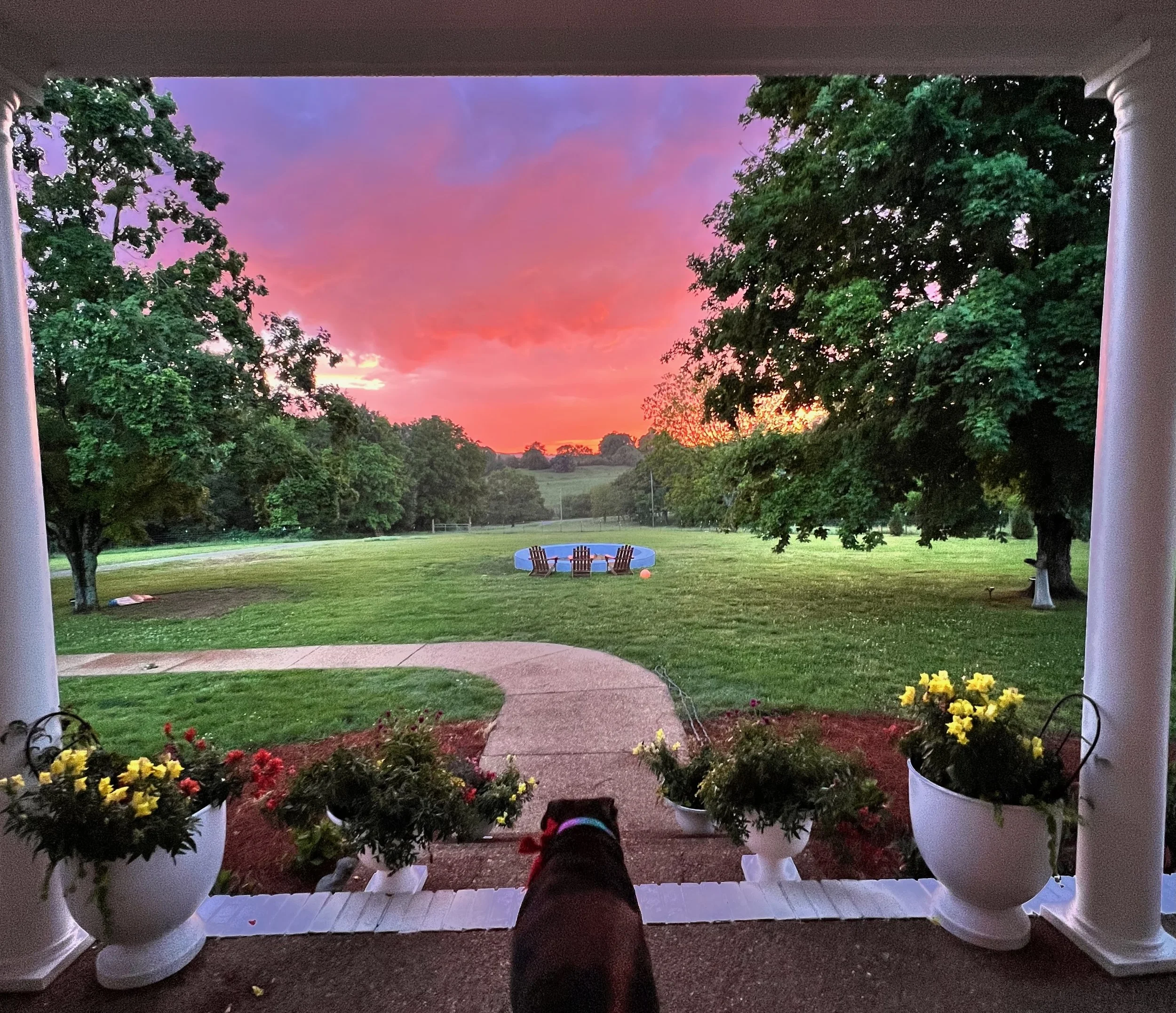
The front porch. Dusk. The hour this was all designed for.
Clare Horne is the founder of The Grass Girl, a fine garden design studio based outside Nashville, Tennessee. She designs residential gardens for clients in Tennessee and across the United States.