
Best Plants for Nashville’s Clay Soil: A Designer’s Honest List for Zone 7a / 7b
A designer’s honest plant list for Middle Tennessee: what actually performs, what quietly dies, and why the cultivar matters more than the common name.
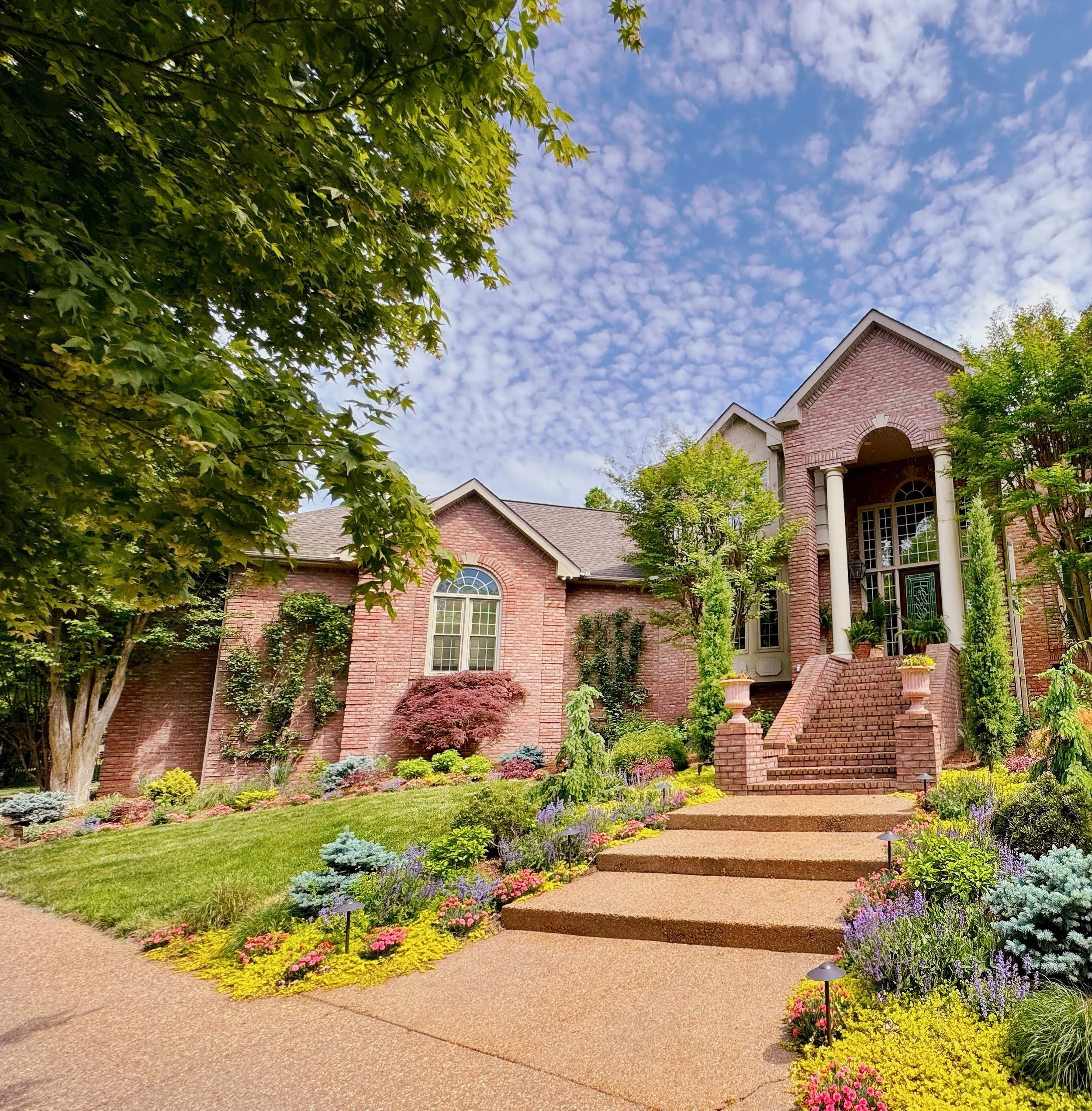
I'm going to save you some money and some heartbreak.
If you've ever bought a gorgeous plant from a nursery, followed every instruction on the tag, and watched it slowly give up on you anyway, it probably wasn't your fault. It was probably the soil. And if you're gardening anywhere in the Nashville basin, Wilson County, Williamson County, Davidson, Sumner, Cheatham, your soil is most likely heavy clay. That one fact changes everything about what you can plant, where you can plant it, and which specific varieties will actually reward you for trying.
This isn't a generic Zone 7a / 7b list copied from a national gardening website. It's what I've planted, maintained, and watched perform on real properties across Middle Tennessee, including my own farm in Smith County, where I test everything before it goes into a client's ground. Some of these picks are Tennessee natives. Some aren't. I choose plants that do a job and do it well in our specific conditions, our clay, our humidity, our ice storms, our brutal Julys. If a non-native outperforms a native in a particular role, I'll tell you. If a beloved plant has a habit of quietly dying here, I'll tell you that too.
And I'm going to give you cultivar names, not just common names. Because "plant a hydrangea" is not advice. Which hydrangea? It matters.
If you're looking for a pollinator-specific planting guide organized by bloom season, I wrote that here. This is the broader list; every category of plant you might need for a Nashville property, organized by what it does in your landscape.
First: Stop Treating Clay Like a Problem
Every gardening article you'll find about clay soil starts the same way. "Clay is challenging." "Clay is difficult." "How to overcome your clay." As if the ground beneath your feet is an adversary you need to defeat before anything good can happen.
I'm going to tell you something different. Nashville's clay is one of the most nutrient-rich growing mediums in the country. It holds moisture through droughts that would kill plants in sandy soil. It anchors root systems so deeply that mature trees in Middle Tennessee withstand winds that would topple the same species in looser ground. The native plants that evolved in this clay, and there are hundreds of them, didn't evolve in spite of it. They evolved because of it. The clay isn't the enemy. Misunderstanding it is.
The problem isn't that clay is bad. The problem is that most gardening advice is written for the Northeast and the Pacific Northwest, where the soil is acidic and well-drained and nothing like what we have. When a national magazine tells you to "amend your soil with peat moss and plant lavender," they're writing for someone else's dirt. When a plant tag says "well-drained soil," it's describing conditions that don't exist on most Nashville properties without significant intervention. The advice fails you before you've even picked up a shovel.
Here's what clay actually needs from you: understanding. Not conquest. I spent three years on my farm learning to read the ground before I planted a single thing, and the single biggest lesson was this: the soil already knows what it wants to grow. Your job is to listen to it and then choose plants that agree with it, not fight it.
That said, clay does have real characteristics you need to account for. When you dig a hole in Nashville clay and backfill it with nice amended soil and a pretty plant, you've essentially built an in-ground flower pot with no drainage hole. Rain fills the amended pocket, can't escape through the surrounding clay walls, and the roots sit in water. They drown. This is the number one way plants die in Nashville landscapes: drowning in soil that won't let go of water.
The soil also varies more than people expect across our area. Williamson County tends to hit limestone bedrock surprisingly shallow, sometimes 18 inches down. Wilson County often gives you a better layer of loam over clay. Davidson County changes block to block, especially on properties where construction has scraped away the native topsoil and left compacted subsoil behind. This is why you can't plant from a list alone. You have to read the specific piece of ground you're working with.
Before you plant anything: Get a soil test through the UT Extension Soil, Plant and Pest Center. It's inexpensive and tells you your pH, nutrient levels, and what amendments you actually need. Don't guess. Don't assume your soil is the same as your neighbor's. Test it. This $15 test is the most important thing in this entire post.
How This List Is Organized
Most plant lists are organized by type, trees, then shrubs, then perennials. That's how a nursery thinks. I'm organizing this by what the plant does in your landscape, because that's how I think as a designer. Every plant in a good design has a job. Structure. Screening. Seasonal color. Texture. Groundcover. Anchoring a view. Softening an edge. If you know what job needs doing, you can find the right plant. If you're just shopping by what's pretty at the garden center in April, you're going to end up with a yard full of strangers that don't know how to live together.
I also think about plants in terms of time. Not just what they look like when you install them, but what they're doing in January when nothing is blooming, what they're doing at dusk when the light changes everything, what they're doing at the hour you're actually outside looking at them. I designed my entire approach around this idea, and it shapes every plant choice on this list. A plant that's beautiful at noon but invisible at 7pm, when you're actually sitting on your porch, is a plant in the wrong spot.
The Bones: Trees That Give Your Landscape Structure
These are the plants that define the shape of your property for decades. They create the canopy, the shade, the vertical rhythm that everything else lives under. Get these right and the whole landscape holds together. Get them wrong and no amount of beautiful perennials will fix it.
A tree is also a commitment to time. I tell clients: you're not planting for this summer. You're planting for the summer ten years from now, when that canopy has filled in and the shade it creates has changed every other planting decision on the property. Think of a tree the way you'd think about the bones of a house. Everything else hangs on them.
For Shade and Canopy
Red Maple (Acer rubrum) Native. Tolerates clay and occasional wet feet better than most maples. Brilliant red fall color that earns its name. Fast-growing for a hardwood, which means you'll actually see shade within a few years instead of a decade. Full sun to part shade. One of the most reliable shade trees for Nashville properties. On my farm, the red maples are the first trees to signal fall; the color starts in September and peaks in October. If you position one where the evening light hits it in autumn, it practically glows.
White Oak (Quercus alba) Native. Slow-growing, and absolutely worth every year of patience. Adapts to clay, becomes drought-tolerant once established, and will outlive everything else you plant. The Tennessee Division of Forestry and UT Extension are actively encouraging white oak planting through their reforestation initiative. If you have the space and the long view, this is the legacy tree. The acorns feed everything; deer, turkey, squirrels, blue jays. A white oak is not just a tree. It's an entire food system with a trunk.
Shumard Oak (Quercus shumardii) Native. One of the best oaks specifically for Nashville's heavy clay; it tolerates both wet and dry conditions and grows faster than white oak. Reliable red-orange fall color. Less commonly planted than red maple, which means your property won't look like every other property on the street. This is my most-recommended large shade tree for Nashville. It deserves far more attention than it gets.
For Year-Round Structure
Deodar Cedar (Cedrus deodara 'Karl Fuchs'); Not native, but one of the most beautiful evergreen trees you can grow in Nashville. Graceful, pyramidal form with soft blue-green needles and an elegant weeping habit at the branch tips. 'Karl Fuchs' is the cultivar to look for; it's significantly more cold-hardy than the straight species and handles our Zone 7a winters reliably. Wants decent drainage, so amend the planting area in heavy clay. Give it space. This tree earns the room it takes. I use it in screening designs where I want something that feels architectural rather than just functional. Paired with a solid green hedge behind it, the blue-green foliage creates a layered privacy screen that's infinitely more interesting than a wall of identical conifers.
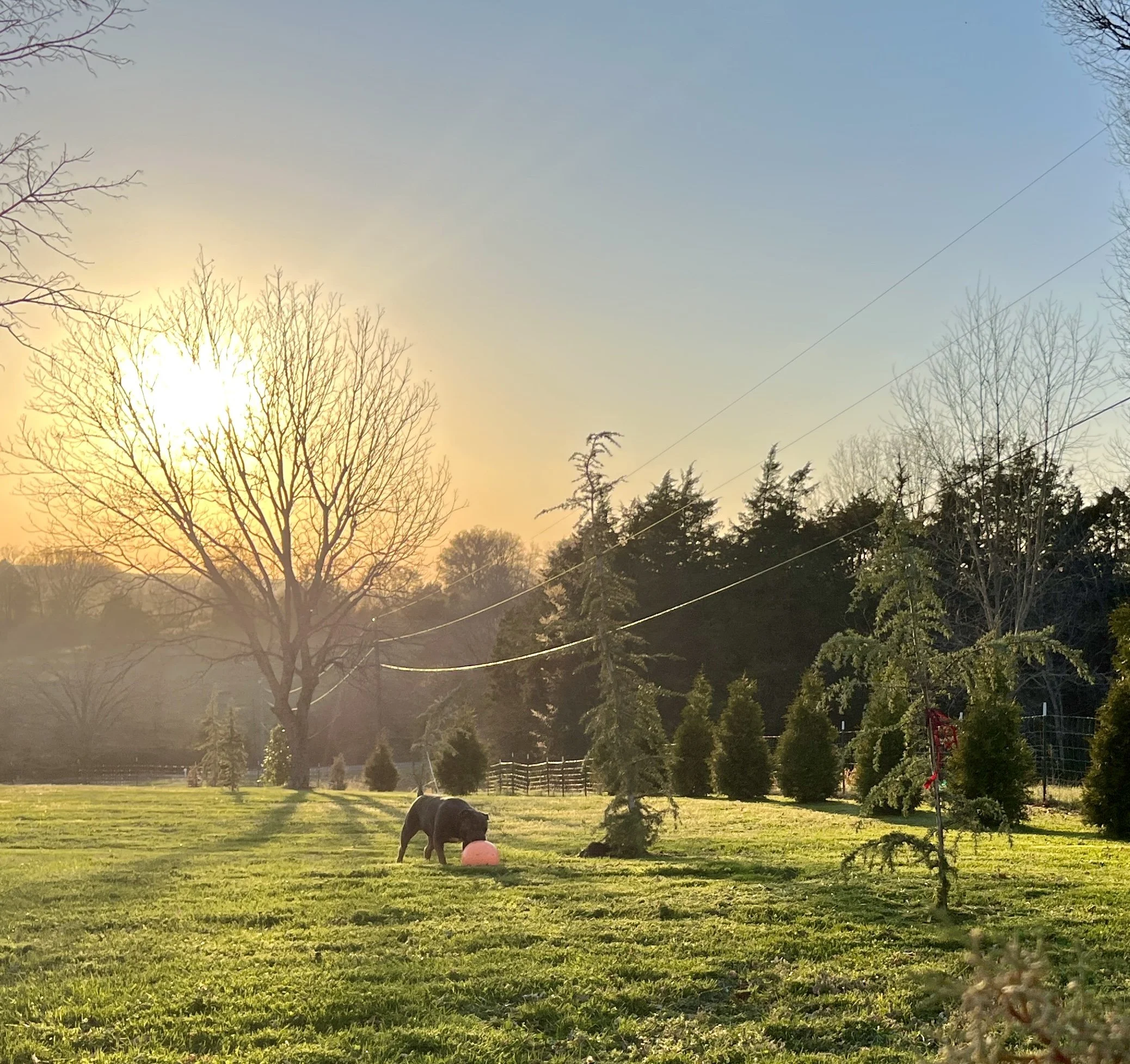
On my own farm, I have Deodar Cedar ‘Karl Fuchs’ and ‘Kashmir’ triangulated in front of a back screen of Thuja ‘Green Giant’ trees. They’re still growing, but when they reach maturity, they whimsy forms will be absolutely magical.
Arizona Cypress 'Blue Ice' (Cupressus arizonica 'Blue Ice'); Striking silvery-blue foliage on a fast-growing, upright evergreen. Drought-tolerant once established and surprisingly tough in Nashville clay with adequate drainage. This is not a tree you see in every yard, which is part of its value in a design; it gives you structure and color that's distinct from the standard green wall of conifers.
Juniper 'Taylor' (Juniperus virginiana 'Taylor'); Native species, columnar cultivar. Tight, narrow form that works beautifully as a vertical accent; flanking an entry, framing a view, or providing structure in a border without taking up much lateral space. Handles Nashville clay without complaint. Drought-tolerant. Disease-resistant. Deer-resistant. One of the most useful structural plants in this climate. I use it more than almost any other evergreen because its narrow footprint solves problems that wider trees can't.
Southern Magnolia 'Bracken's Brown Beauty' (Magnolia grandiflora) This specific cultivar is the one to grow in Nashville. It's more cold-hardy and compact than the straight species, handles our Zone 7a winters reliably, and still gives you that classic glossy evergreen presence with fragrant white blooms. Needs some soil amendment in heavy clay. The leaf litter is real; big, leathery leaves drop year-round. Worth it for the architecture of the tree. On my farm, I have a young magnolia positioned where I can see it from the porch at sunset, and the glossy leaves catch the evening light in a way that nothing else does. That's not accidental. I watched for three years before I placed it.
For Small Spaces and Understory
Vitex 'Shoal Creek' (Vitex agnus-castus) Not native, but a phenomenal performer in Nashville heat. Trained as a small tree form with a clear trunk, it gives you a vase-shaped canopy with lavender-blue flower spikes from midsummer into fall, right when most other things are just trying to survive July. Blooms on new wood, so you prune it hard in late February and it comes back strong. Handles clay, handles drought, handles neglect. Pollinators lose their minds over it. One of my most-used plants. If I could only bring ten plants to a Nashville property, Vitex would be on the list every time.
Eastern Redbud (Cercis canadensis) Native. One of the most reliable small trees for Nashville. Tolerates clay, handles part shade, and every spring it's covered in those pink-purple blooms before the leaves even emerge. Relatively short-lived (20 to 30 years) but fast-growing and beautiful the whole time. Heart-shaped leaves and good yellow fall color. This is the tree that tells every Nashville neighborhood spring has arrived. If you don't have one, you're borrowing the experience from your neighbor's yard.
Flowering Dogwood (Cornus florida) Native. The classic Middle Tennessee understory tree. Stunning spring bloom, red fall color, berries for birds. But dogwood anthracnose has been an issue in Tennessee, so choose disease-resistant cultivars, plant in part shade with good air circulation, and avoid full afternoon sun in heavy clay. When it's happy, nothing is prettier. When it's struggling, it breaks your heart. This tree needs you to put it in the right spot. Don't guess. Read the shade patterns on your property across seasons before you plant it.
Serviceberry (Amelanchier spp.); Native. Multi-season value: white spring flowers, edible berries in early summer that birds fight you for, orange-red fall color. Works as a single trunk or multi-stem. An underused tree that deserves far more attention in Nashville landscapes. The berries ripen in June and the cedar waxwings descend on them like they've been tracking the calendar. If you want a tree that creates a genuine wildlife event on your property every summer, this is it.
Screening and Privacy: What to Plant Instead of Your Instincts
Let's talk about the elephant in the landscape. When someone calls me and says "I need privacy," they almost always mean "I want to block my neighbor's view of my yard." The first instinct is always a wall. A solid green row of the fastest-growing thing available, planted tight, growing tall, blocking everything.
I understand that instinct. But I want to push back on it, because privacy screening is one of the most misunderstood concepts in residential landscape design.
Privacy screening does not mean a bunker. The design approach should be invitation, not cancellation. Visually or through sound. The goal isn't a space that shuts the world out. It's a space so alive, and so clearly made by someone who gave a damn, that the world, just for a moment, just in that one spot on that one block, quietly gives way.
That means screening isn't just about blocking a sight line. It's about creating something worth looking at instead. A mixed planting of evergreens at staggered heights with ornamental grasses in front and a flowering understory below it; that does more for your sense of privacy than a solid wall of Green Giant arborvitae, because it gives your eye a reason to stay inside the garden. You stop noticing the neighbor because the garden is more interesting than whatever's behind it.
On my farm, I planted sound barrier trees along the road frontage. Not because I wanted to pretend the road doesn't exist, but because the birdsong and the insect noise and the wind through the leaves needed to be louder than the cars. The trees shifted the ratio. More life, less machine. That's screening. Not cancellation. Invitation.
Now, let's talk about the trees that actually do this well.
But first: stop planting Leyland Cypress. If you're searching "privacy trees Nashville," every other list will tell you Leyland Cypress. Here's the truth: Leyland Cypress is one of the most overplanted and problematic trees in Middle Tennessee. It grows fast, which is why people love it. But it's shallow-rooted, prone to bagworms, and susceptible to Seiridium canker, a fungal disease that is widespread in our area and has no cure. When one dies in a row of them, you're left with a gap that takes years to fill. I have walked onto too many properties where half the "privacy screen" is brown and dying. Fast growth isn't worth disease susceptibility, shallow roots, and the cost of replacing them in five years.
Here’s what I’d plant instead:
Green Giant Arborvitae (Thuja 'Green Giant'); Not native, but it performs. Fast-growing, disease-resistant, deer-resistant, and doesn't have the canker problem. Gets 40 to 60 feet tall and 12 to 18 feet wide, so give it room. Tolerates clay with decent drainage. This is probably the most reliable fast-growing evergreen screen for Nashville right now. But please, don't plant it in a single-file row and call it a day. Stagger it. Mix it. Give it companions.
Juniper 'Taylor' (Juniperus virginiana 'Taylor'); Already mentioned above, but it works beautifully in a staggered row for screening. Native, bulletproof in clay, tight columnar form. It won't grow as fast as Green Giant, but it won't die on you either. And its narrow footprint means you can plant it closer to property lines.
American Holly (Ilex opaca) Native. Slower than the conifers but dense and evergreen year-round with red winter berries. Works as part of a mixed screening planting with other species for a more layered, designed look, rather than a monotonous green wall. The winter berries are one of the most important food sources for overwintering songbirds. Your privacy screen can also be a habitat.
A note on screening design: A single-species row is the most vulnerable approach. If disease or a bad winter takes out one, it takes out the row. I prefer mixed-species screens; combining different evergreens at staggered intervals with understory shrubs and grasses in front. It's more visually interesting, more resilient, and more forgiving. It also does something a green wall can never do: it changes with the seasons. The grasses turn copper in fall. The holly berries glow red in December. The redbud at the corner blooms pink in March. Your screening isn't just blocking a view. It's providing one. I wrote a full essay on privacy screening design if you want to go deeper.
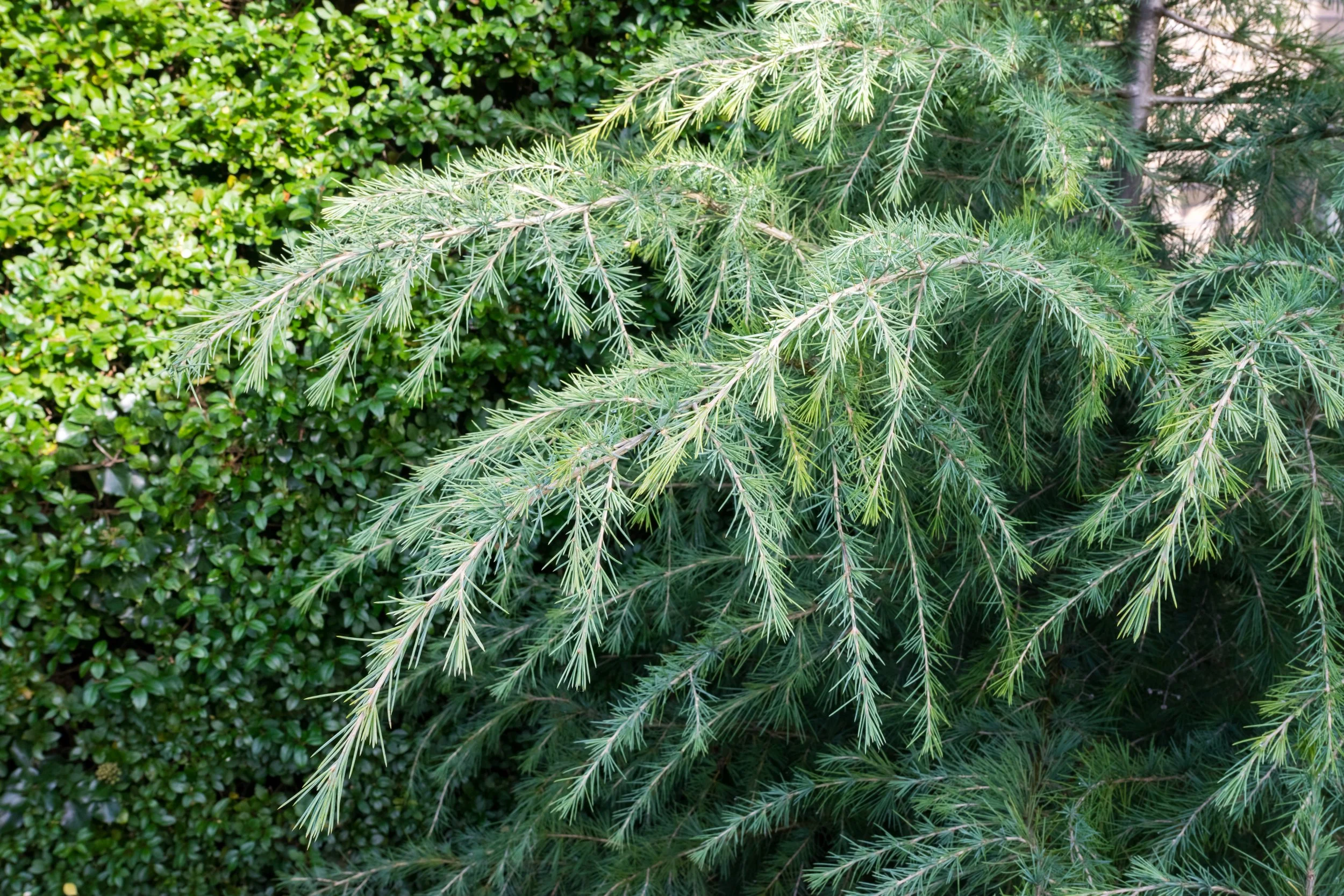
The blue hues of Deodar Cedar ‘Karl Fuchs’, paired with solid green privacy hedging, create a far more interesting privacy screen than repeating the same privacy tree in a row.
The Workhorses: Shrubs That Do the Heavy Lifting
These are the bones of your planting beds. They give you year-round structure, define spaces, and, chosen well, they mostly take care of themselves after the first couple of years. A garden without good shrubs is a garden that disappears every winter. These are what hold the composition together when the perennials go dormant and the trees are bare.
Evergreen Structure
Hollies, and why the cultivar matters; I use hollies constantly, but not all hollies are the same plant. Ilex crenata 'Hoogendorn', 'Steeds', and 'Compacta' give you different forms; mounding, pyramidal, and dense globe. Burford Holly ('Burfordii Nana') gives you a tidy, compact evergreen with minimal fuss. Dwarf Yaupon (Ilex vomitoria 'Nana') handles heat and clay and barely asks to be watered once it's established. These are the plants that hold a design together through January when everything else has dropped its leaves. Pick the cultivar that fits the job and the space, not just "a holly." This is the difference between a landscape that was designed and one that was filled in.
Distylium 'Vintage Jade' (Distylium spp.); This plant is quietly earning its place in Nashville landscapes. Evergreen, compact, disease-resistant, and genuinely unfussy about clay, heat, humidity, and drought. It stays low and billowy without constant shearing. It's becoming a smart replacement for boxwood in situations where boxwood struggles, which in Middle Tennessee is more often than people want to admit. I've been using it on client properties for the last three years and every single one is thriving. Not "surviving." Thriving.
Japanese Plum Yew 'Duke's Garden' (Cephalotaxus harringtonia) Not native, but extremely well adapted. Evergreen, deer-resistant, and handles heavy shade and clay; a combination that eliminates most other plants. This is one of the best choices for shady Nashville foundations where azaleas struggle and boxwood gets blight. It grows slowly, so be patient with it. And be careful pruning; what you cut off takes years to come back. Think of this plant as the quiet one at the party who ends up being the most interesting person in the room.
Otto Luyken Laurel (Prunus laurocerasus 'Otto Luyken'); Glossy, dark green, low and spreading. Works as a foundation hedge or a layered mid-border plant. It's slower-growing and less forgiving of heavy pruning than hollies, so give it the space it needs at planting rather than hacking it back every year. Over time, a row of these grows together into a low, tidy evergreen hedge that looks intentional.
Deciduous Shrubs with Multi-Season Interest
Oakleaf Hydrangea 'Ruby Slippers' (Hydrangea quercifolia) Native to the southeastern U.S. and the hydrangea I reach for first in Nashville. Four seasons of interest: white cone-shaped blooms in summer that age to rose-pink, bold burgundy fall foliage, and interesting peeling bark in winter. Handles clay. Handles part shade to full sun. 'Ruby Slippers' stays compact, about 3 to 4 feet, which makes it far more useful in residential landscapes than the larger oakleaf varieties. Blooms on old wood, so don't cut it back in February. Just remove dead or crossing branches and save any size reduction for after it flowers in midsummer. At dusk, the white blooms are the last things you see in the garden. They seem to hold the light after everything else has gone dark. I plant white flowers near seating areas specifically for this reason.
Virginia Sweetspire 'Henry's Garnet' (Itea virginica) Native. Fragrant white flower spikes in late spring that drape the arching branches, followed by deep garnet-red fall color that holds late into the season, sometimes into December. This plant tolerates wet clay better than almost any other flowering shrub, which makes it a genuine problem solver on Nashville properties with drainage issues. It's a rain garden plant by nature. Suckers gently to fill in, which is usually what you want it to do. Part shade to full sun.
American Beautyberry (Callicarpa americana) Native. Nothing else in the landscape looks like this in October. Electric magenta-purple berry clusters wrap around arching stems, and they're so vivid they almost look artificial. Over forty species of songbirds eat the berries. The flowers are small and subtle in summer, but pollinators find them immediately. Tolerates clay, part shade, and heat. Loose, informal habit; not a hedge plant. Use it where you want something with genuine personality and real wildlife value. You can cut it to 12 inches in late winter for a more compact shape, and it comes back and fruits on new wood. The first time a client sees beautyberry in their garden, they always ask me what it is. Nobody plants it and nobody can believe it's native. That's the plant equivalent of a well-kept secret.
Fothergilla (Fothergilla major) Native. One of the most beautiful and underused shrubs available for Nashville gardens. Honey-scented white bottlebrush flowers in early spring, before the leaves emerge. Then spectacular multi-colored fall foliage, yellow, orange, and red, often on the same plant. The UT Extension's Tennessee Smart Yards program lists Fothergilla major as tolerant of poorly drained silty clay soil, which is exactly what most Nashville properties have. Grows 6 to 10 feet tall. Full sun for the best flowers and fall color, but handles part shade. This is a designer's shrub; four-season interest, native, clay-tolerant, and almost nobody is planting it.
The Hydrangea Conversation
Everyone in Nashville wants hydrangeas. Let me save you the confusion, because the type you choose determines whether you're delighted or frustrated for the next decade.
Oakleaf (H. quercifolia): Best choice for Nashville clay. Native. Four-season interest. 'Ruby Slippers' for compact spaces. Blooms on old wood, so do not prune hard in late winter; you'll cut off your flowers. Already covered above.
Panicle (H. paniculata 'Limelight'): The other hydrangea I use constantly. Blooms on new wood, so you prune it in late February; remove dead and weak stems, reduce the rest by about a third to a strong outward-facing bud. It comes back and blooms reliably every single year. Tolerates full sun and handles clay better than bigleaf types. The blooms start lime-green, age to white, then blush pink as fall arrives. Hardy and forgiving. If you want a hydrangea that performs without drama in Nashville, this is the one.
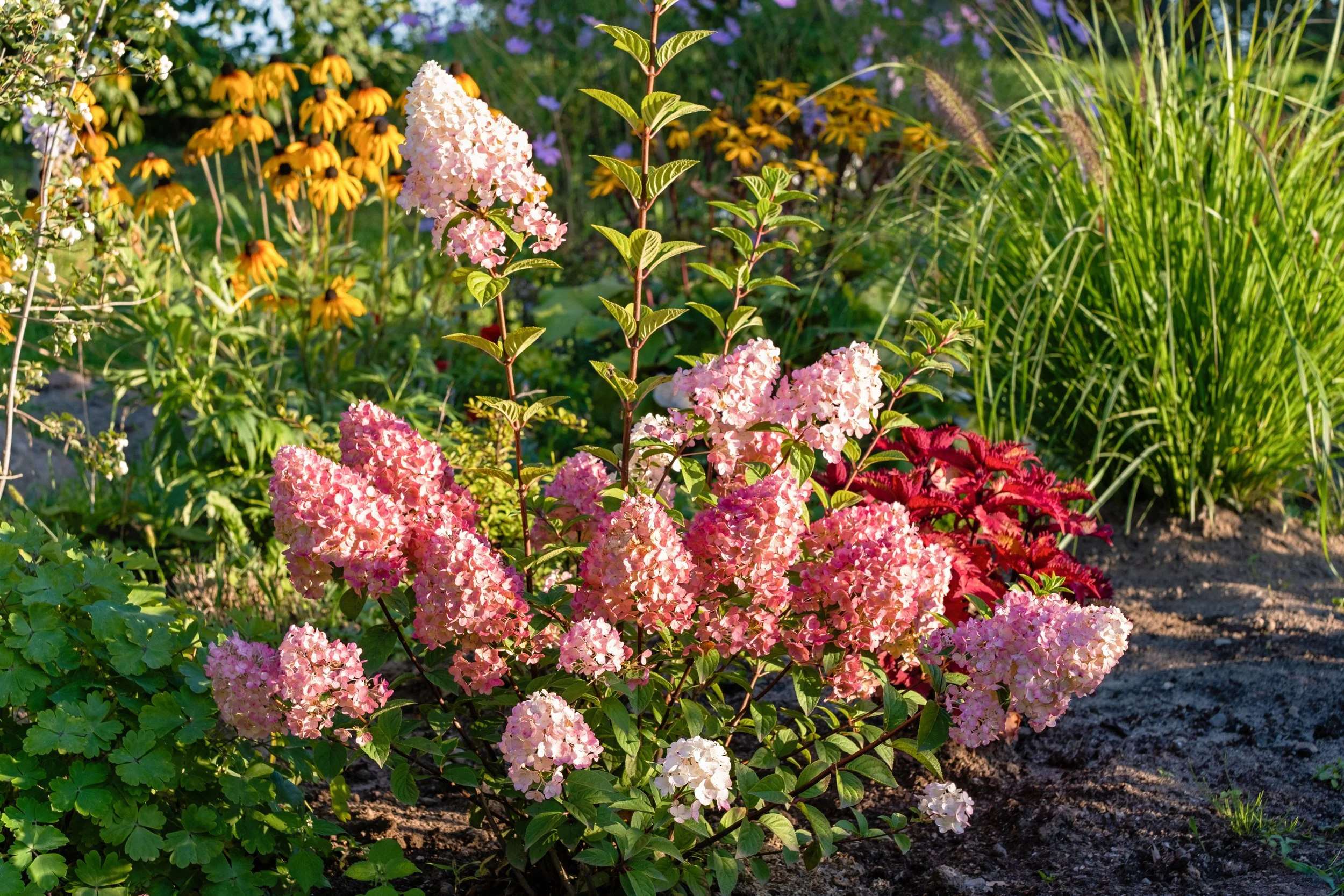
Many panicle hydrangea varieties, such as ‘Firelight Tidbit’ (above) and ‘Limelight’, begin as white and change to shades of pink as the seasons progress.
Smooth (H. arborescens 'Annabelle'): Native. Big white globes in early summer. Extremely clay-tolerant. Blooms on new wood. The stems can flop under heavy blooms after rain; 'Incrediball' has stronger stems if that bothers you. Reliable and low-maintenance.
Bigleaf / Mophead (H. macrophylla): This is the one everyone pictures; the big blue or pink globes. Here's the truth: they're fussy in Nashville. They need consistently moist but well-drained soil, which our clay rarely provides. They bloom on old wood, so a late frost can wipe out your entire season of flowers. They need morning sun and afternoon shade. They can work here with real babysitting, but they need more from you than most people expect. And Nashville's alkaline soil pH tends to push them pink regardless of what the tag promised. If you want blue, you'll be acidifying the soil around each plant with aluminum sulfate indefinitely. That's an ongoing relationship, not a one-time amendment. If you want a hydrangea that works without the battle, go oakleaf or panicle and spend your energy on something that wants to be here.
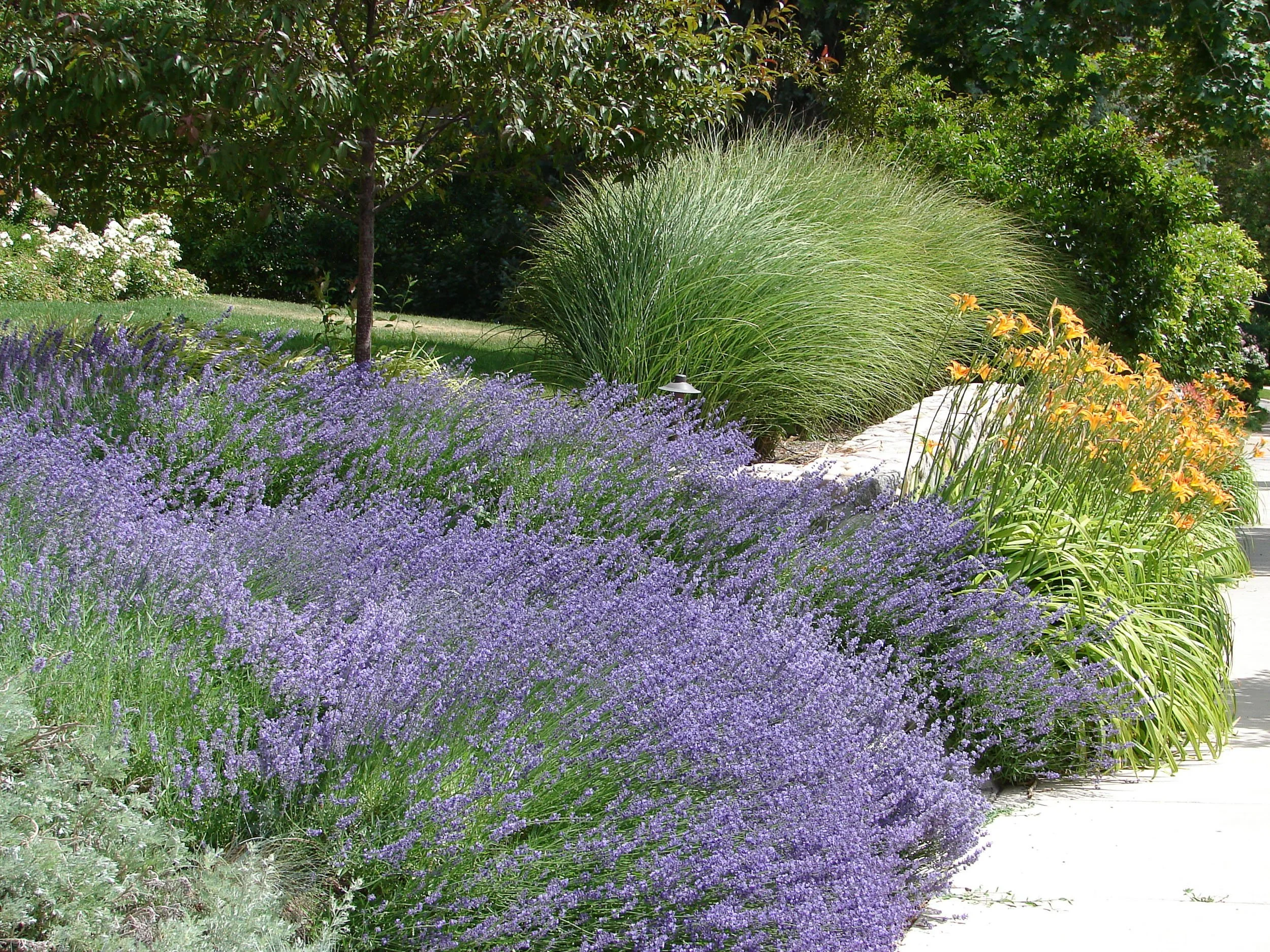
The Color: Perennials That Come Back and Actually Thrive
This is where most people start shopping, and where most of the heartbreak happens. A perennial listed as "tolerates clay" in a national database might still struggle here because our clay is paired with our specific heat and humidity. These are the perennials I plant and maintain on Nashville-area properties, including my own farm. I'm giving you cultivar names because they matter; a generic "coneflower" recommendation isn't the same as telling you which coneflowers I've watched thrive for seasons.
Full Sun Performers
Echinacea, multiple varieties (Echinacea purpurea) Native genus. This is the backbone of Nashville perennial gardens and the backbone of every pollinator garden I design. I use 'Magnus' (the classic large purple coneflower), 'Tiki Torch' (warm orange, a real standout), the Kismet series in yellow and red, 'Rainbow Marcella' (coral-pink), and Echinacea pallida (the pale native species with drooping petals that's elegant in a more naturalistic planting). They bloom June through September, attract pollinators, tolerate clay and drought once established. Leave the seed heads up in fall; goldfinches eat them and they give you winter texture. Plant them in drifts of seven or more. One coneflower is a specimen. Seven is a statement.
Black-Eyed Susan 'Goldsturm' (Rudbeckia fulgida) Reliable, cheerful, and virtually indestructible in Nashville clay. Spreads to form nice colonies. Blooms mid-summer to fall when everything else is flagging in the heat. One of the best perennials for filling space with honest, bold color. In evening light, the golden petals catch the sun and the whole drift seems to glow. This is a plant that earns its place at the hour most people are actually looking at their garden.
Catmint 'Junior Walker' (Nepeta x faassenii) A sterile, compact form of the award-winning 'Walker's Low,' which means it puts all its energy into flowers instead of reseeding everywhere. Low, mounding habit covered in lavender-blue flower spikes from late spring into fall. Shear it back after the first flush and it blooms again. Drought-tolerant once established. Deer-resistant. Aromatic gray-green foliage. One of the best edge-of-bed plants for Nashville; it softens a border beautifully while handling full sun and clay. About 14 to 16 inches tall and spreading to 30 inches. At dusk, the fragrance intensifies in the cool evening air. Most fragrant plants do this, and it's one of the reasons I concentrate them near seating areas; the scent reward comes at the hour you're most likely sitting outside.
Russian Sage 'Little Spires' (Perovskia atriplicifolia) Silvery, aromatic foliage with lavender-blue flower spikes from midsummer into fall. Cut it back hard in late February to a low framework of 6 to 8 inches; this keeps it upright and prevents the woody, floppy mess it becomes if you're timid with the pruning. Prefers lean soil. If your clay is rich, go easy on fertilizer or skip it entirely. This plant wants to be a little hungry.
Baptisia 'Burgundy Blast' (False Indigo, Baptisia) Native genus. Gorgeous burgundy flower spikes in spring on a shrub-like perennial that gets 3 to 4 feet tall. Once established, it's essentially indestructible; deep roots, drought-tolerant, clay-tolerant. Don't divide it. Don't overfertilize it (it'll get floppy). After year two or three, you can stop feeding it entirely. The seed pods are attractive and rattle in winter wind. This is a "plant it and trust it" perennial. The kind of plant that rewards patience more than intervention.
Penstemon 'Husker's Red' (Penstemon digitalis) Native species. Dark burgundy-red foliage with white flower spikes in late spring. The foliage alone earns it a spot in the design; it provides color contrast even when it's not blooming. The way I use it: I place 'Husker's Red' where I need a dark value to anchor a section of the bed, the same way a dark tone anchors a painting. It does compositional work that green-leaved plants can't.
Dense Blazing Star (Liatris spicata) Native. Unusual vertical purple flower spikes that open from the top down. Blooms mid to late summer. Pollinators love it. Handles clay and heat. Works in mass plantings or mixed into a border for that unexpected vertical punch against softer, mounding forms. I planted it on my front porch and the hummingbirds found it within a week. They treat it like a drive-through.
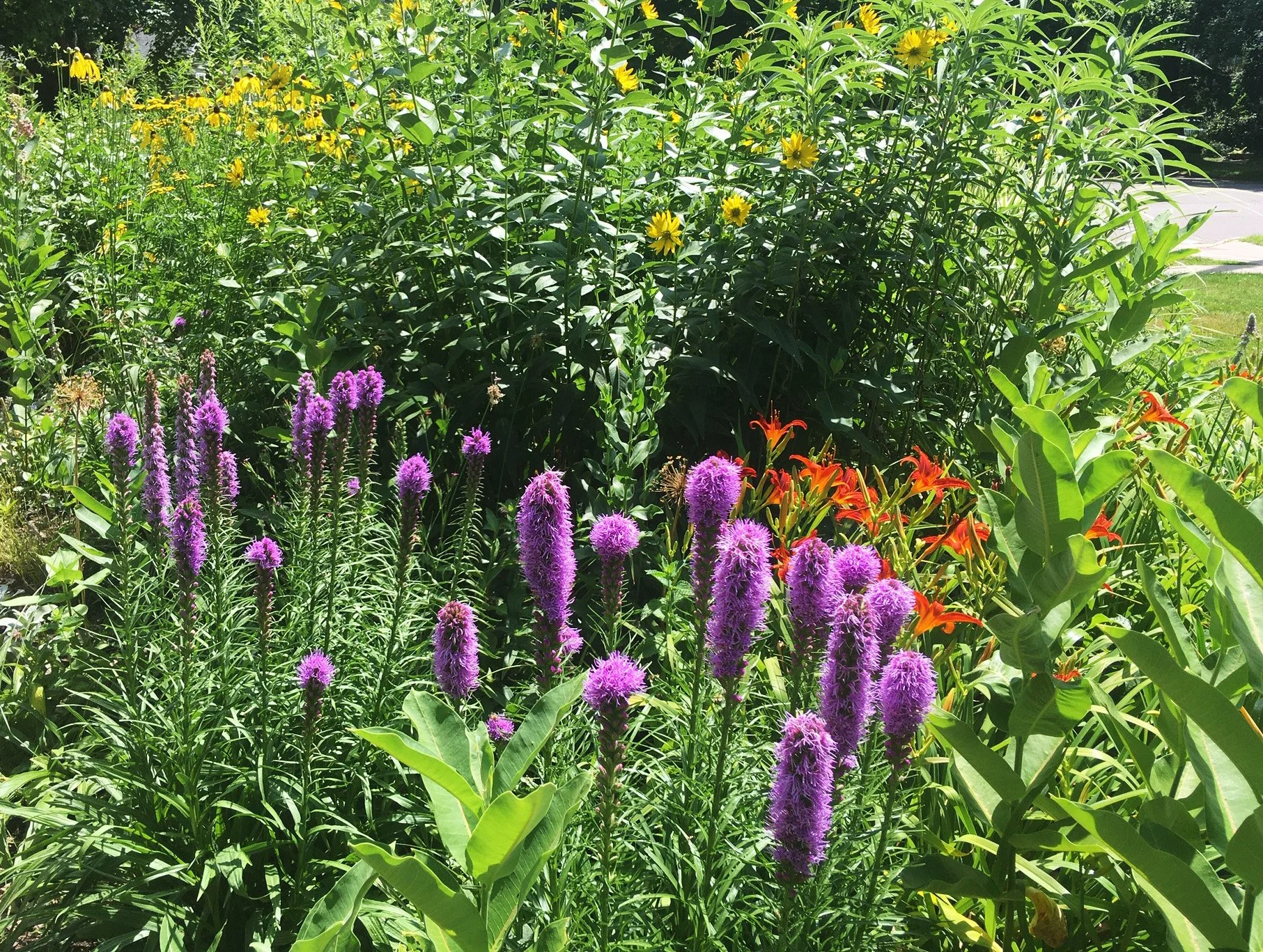
Liatris stealing the show in the front of the garden.
Butterfly Weed (Asclepias tuberosa) Native milkweed. Critical for monarch butterflies. Bright orange clusters in summer. Extremely drought-tolerant; its taproot goes deep. Don't try to move it once it's planted (that taproot doesn't forgive transplanting). Slow to emerge in spring; mark it so you don't accidentally dig it up thinking it died. It didn't die. It's just slow. Prefers lean, well-drained conditions, so it's better on a slope or berm than in a low, wet clay pocket. For more on milkweeds and the full pollinator ecosystem, the pollinator plant list goes deep.
Red Hot Poker (Kniphofia 'Fire Dance' and Poco 'Orange'); Not native, but a sculptural favorite. Tall, torch-like flower spikes in red, orange, and yellow. Don't cut the foliage flat like a grass; just remove dead or damaged leaves and leave the green skirt arching naturally. Needs decent drainage in clay. When it blooms, hummingbirds show up within hours. Literally hours. They have some kind of internal alert system for these things.
Silver Mound Artemisia (Artemisia schmidtiana 'Silver Mound'); Low, mounding, soft silvery foliage that contrasts beautifully against greens and purples. It's a texture plant, not a flower plant. Needs good drainage; it'll melt in wet clay. Use it on slopes, berms, or raised bed edges where water moves through. When it's happy, it looks like a little silver cloud at the front of the bed.
Part Shade to Shade
Hellebore / Lenten Rose (Helleborus) Semi-evergreen. Blooms in February and March when nothing else is showing color. I use the Ice N' Roses series, 'Red' and 'Carlotta,' for strong, saturated flower color. Cut last year's foliage to the base in late January before the new blooms open, so the flowers aren't hidden under old leaves. Tolerates clay, shade, drought, and deer. One of the most valuable shade perennials in Nashville because it gives you color when the rest of the garden is still asleep. When you're looking out the kitchen window in February wondering if winter will ever end, this is the plant that answers.
Heuchera / Coral Bells (Heuchera spp.); Native genus. The foliage is the star. I use 'Glitter', 'Guacamole', and the tougher H. villosa 'Caramel'; the villosa types handle Nashville's heat and humidity better than some of the showier hybrids. Tiny flower spikes attract hummingbirds. Part shade. Avoid full afternoon sun; the foliage scorches. In early spring, just remove dead or mushy leaves; don't shear the whole plant.
Grasses, Sedges, and Texture Plants
Grasses are the plants that make a garden feel alive even when nothing is blooming. They catch wind. They catch light. They move. At dusk, when the evening sun hits a drift of little bluestem or switchgrass at a low angle, the whole planting transforms. This is one of the most powerful design tools in Nashville and one of the most underused. A garden without grasses is a garden without motion.
Switchgrass (Panicum virgatum 'Northwind'); Native. 'Northwind' is stiffly upright; a strong vertical line in the garden. It tolerates clay, drought, and wet conditions. Cut to 4 to 6 inches in late February before new growth emerges. Leave it standing through winter; it’s beautiful in frost and provides overwintering habitat for beneficial insects.
Little Bluestem (Schizachyrium scoparium 'Standing Ovation'); Native. This is the grass that turns copper and gold in fall and holds that color through winter. 'Standing Ovation' stays upright instead of flopping. In evening light, when the western sun hits it at an angle, it's one of the most beautiful things in any Nashville garden. I use it constantly. It's doing double duty; wildlife habitat and design element. The seed heads feed juncos and sparrows through winter.
Fountain Grass (Pennisetum alopecuroides 'Little Bunny' and 'Cassian'); 'Little Bunny' is a miniature, about a foot tall, perfect for edges and rock gardens. 'Cassian' is larger and fuller. Both produce soft, bottlebrush flower plumes in late summer that catch the light. Cut back to 3 to 4 inches in late February. In Nashville, these are warm-season grasses, so they're late to wake up in spring. Don't panic.
Carex 'Everillo' (Carex oshimensis) Not native, but incredibly useful. Chartreuse-gold, fine-textured, evergreen sedge that brightens shady spots and bed edges. Don't scalp it; just comb out dead blades with gloved hands in late winter, or at most shear the top third. It provides year-round color and texture, which is harder to find than you'd think.
Holding the Ground: Groundcovers That Work in Clay
Bare soil is an invitation for erosion and weeds. These plants fill in, hold the ground, and look good doing it. A good groundcover does the work that mulch does but adds color, texture, and habitat. Over time, a well-chosen groundcover reduces your maintenance load because it outcompetes the weeds that would otherwise own that space.
Sedum 'Lemon Ball' (Sedum rupestre) Low, creeping mat of chartreuse-gold succulent foliage. Shear lightly in late February to even the mat and encourage dense new growth. Handles full sun and lean, well-drained conditions. On slopes, it's excellent for covering ground quickly while looking intentional.
Creeping Phlox (Phlox subulata) — Native. Carpets of pink, purple, or white flowers in early spring — one of the first things to bloom in Nashville and it puts on a genuine show. Evergreen foliage. Handles clay and slopes. Full sun.
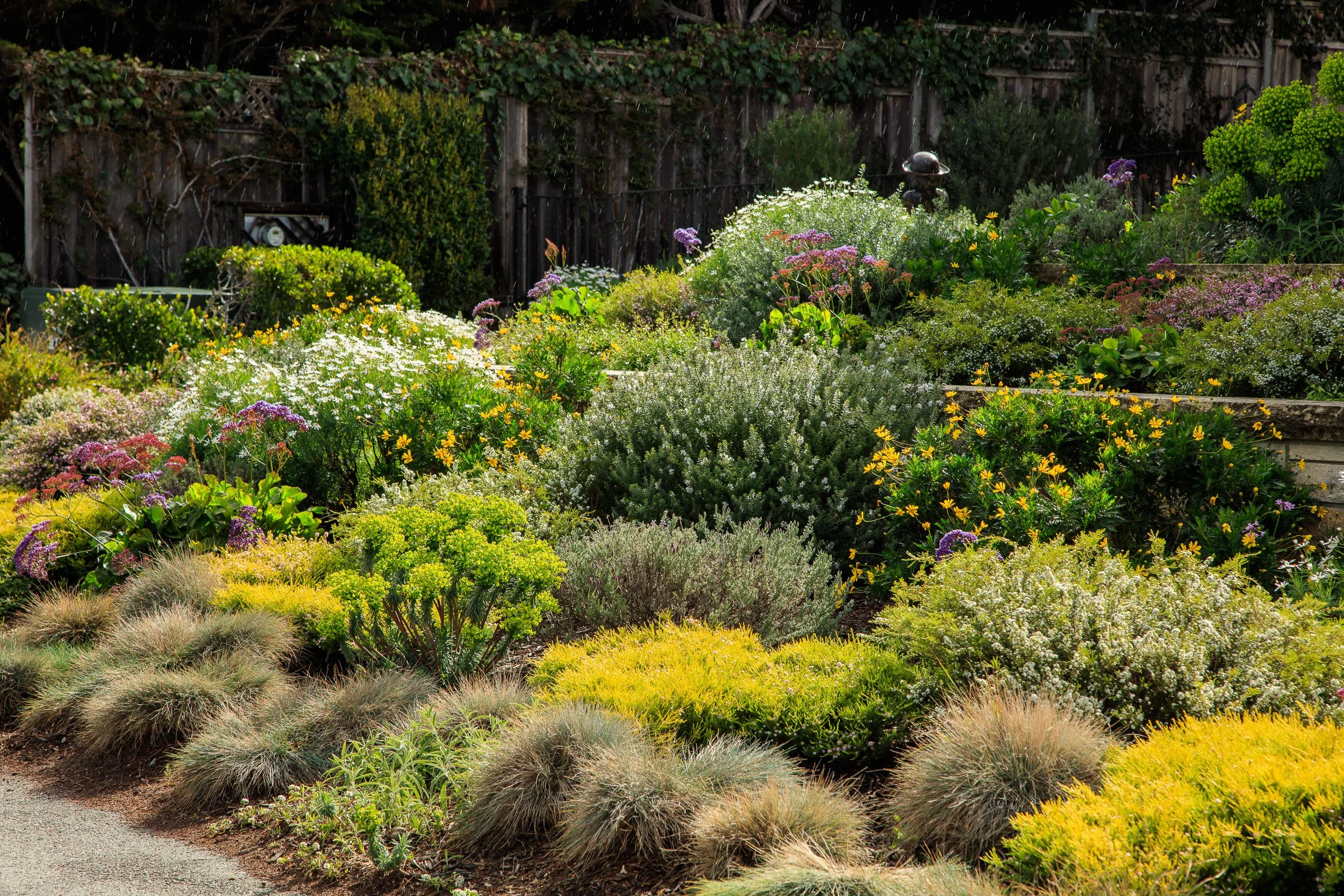
Blue fescue grass. sedum, and drought-tolerant native perennials are wonderful varieties to consider for a full-sun, well-draining, and sloped bed area.
The Exceptions: Mediterranean Plants That Can Work (With Conditions)
I'm going to contradict something you'll read in almost every Nashville gardening article. The blanket advice is "don't plant Mediterranean herbs in Nashville clay." That's mostly right. But "mostly" is doing a lot of work in that sentence.
Rosemary 'Arp' (Rosmarinus officinalis) 'Arp' is the most cold-hardy rosemary cultivar available, and it can survive Nashville winters. I've grown it successfully in the ground in Wilson County. The key: it needs excellent drainage. Don't put it in a low, wet spot. A raised bed, a slope, or a berm with amended soil is fine. Tip-prune dead tips in late winter but never cut hard into bare, leafless wood; rosemary doesn't regenerate from old stems. If you've killed rosemary in Nashville, you probably planted the wrong cultivar in the wrong spot. 'Arp' in the right spot is a different story entirely.
Thyme (Thymus vulgaris) Same principle. Needs drainage, hates wet feet, but in a well-drained sunny spot it's perfectly at home here. Useful as an edging plant, between stones, or in an herb garden. Lightly tip-prune in late winter and it comes back fine.
The lesson: it's not that these plants can't grow here. It's that they can't grow in heavy, undrained clay. Know the difference and you open up your options. The plant didn't fail. The placement did.
What to Avoid (Or at Least Think Twice About)
This section is going to annoy some people. Good. I'd rather you be annoyed now than broke and disappointed in two years.
Bradford Pear (Pyrus calleryana)
If you have one, I'm sorry. If you're thinking about planting one, don't. They're structurally weak; the branch angles are so tight that they split apart in storms, often within 15 to 20 years. Tennessee now classifies them as invasive. They escape into woodland edges and crowd out native trees. Beautiful for about ten days in spring. A liability the other 355.
Leyland Cypress
Already covered above. Fast growth isn't worth disease susceptibility, shallow roots, and the cost of replacing them in five years when Seiridium canker shows up. There are better options, and I listed them.
The "Well-Drained Soil" Warning
When a plant tag says "requires well-drained soil," that's code for "will drown in Nashville clay." This includes most lavender (except in raised beds or berms), many Mediterranean perennials, and a lot of the plants that look stunning in garden magazines shot in California or the English countryside. You can grow them; in raised beds, containers, or heavily amended berms. But don't stick them in a hole in your yard and blame the plant when it rots.
The exception, as I noted above: if you choose the right cultivar and put it in a spot with actual drainage, some of these plants surprise you. That's the difference between reading a tag and reading a site.
Boxwood (in certain conditions)
I'm not saying never plant boxwood. But boxwood blight is present in Tennessee and spreading. If you're going to use it, choose blight-resistant cultivars and give it good air circulation. If you're looking for a compact, evergreen, low-maintenance foundation shrub, Distylium and dwarf hollies are increasingly the smarter bet in our area. The plant that was once the default foundation shrub in Nashville is becoming a gamble. That's worth knowing before you invest.
When to Plant in Nashville
Fall (October through early November) is the best time to plant trees and shrubs. The soil is still warm, roots establish through our mild winters, and the plant isn't trying to grow leaves and roots at the same time. By the time July hits, a fall-planted tree has months of root development that a spring-planted one doesn't. This is the single biggest advantage you can give a new plant in Nashville, and it costs you nothing except patience.
Spring (after last frost through early May) is good for perennials and grasses, and the second-best window for woody plants. Our last frost date in Middle Tennessee is typically mid-April, but I've seen frost as late as early May. Don't rush it. The garden centers start stocking early because they want your money. The weather doesn't care about their business model.
Summer planting is possible but hard on the plants and hard on you. If you're planting in July or August, be prepared to water deeply and consistently until the roots establish. In Nashville's heat, that's a real commitment. I've done it. I don't recommend it unless you're the kind of person who enjoys watering by hand in 95-degree heat, which, as it turns out, I am. But I'm also the kind of person who moved to a farm and named a box turtle. Your mileage may vary.
Late February is the single most important maintenance window of the year. Cut back grasses and perennials, prune shrubs that bloom on new wood, clean beds, apply mulch and a single light round of fertilizer. If you do one thing right each year, make it this.
The Real Secret: It’s Not Just the Plant. It’s the Plan.
A good plant list gets you started. But a plant without a plan is just a thing stuck in the ground. The right plant in the wrong spot will fail. The right plant in the right spot, with the right soil preparation, the right drainage, and somebody who's actually read your specific piece of land, that's a garden.
I don't pick plants from a list. I pick them from the land. Every project I take on starts with walking the property, studying the light, reading the soil, and listening to what the ground itself is telling me before I ever open a catalog. I call this practice Land Portraiture, and it changed everything about how I work. Then I design around the hours of your actual life, not the plan view, not the aerial photograph, not the Pinterest board. I call this approach Inhabitation Design.
My background is in fine art; composition, color, the way light moves through a space across seasons. That's the lens I bring to every garden I design. The plants on this list aren't just species I've researched. They're plants I've specified, sourced, installed, and maintained on properties across Wilson, Williamson, Davidson, Sumner, and Cheatham counties. I know how they perform because I've watched them perform, on my farm and in my clients' gardens, at every hour, in every season, for years.
What Nashville Homeowners Ask Me Most
Is Nashville soil acidic or alkaline?
Alkaline. Almost always. Nashville sits on a limestone basin, and our clay typically runs pH 6.5 to 7.5, sometimes higher. This is the opposite of what most national gardening advice assumes. The majority of garden blogs, books, and plant tags are written for the Northeast and Pacific Northwest, where soil is acidic. When they tell you to "add lime in spring," they're writing for someone else's dirt. If you follow that advice in Nashville, you're making alkaline soil more alkaline, locking up nutrients and slowly killing acid-loving plants. Get the soil test. It's $15 and it's the most important thing you'll do.
Should I add lime to my Nashville soil?
Almost certainly not. This is the most common mistake I see. Nashville's clay sits on a limestone shelf; our soil typically runs neutral to alkaline, pH 6.5 to 7.5 or higher. Adding lime to soil that's already alkaline locks up iron, manganese, and other micronutrients your plants need. Your azaleas turn yellow. Your hydrangeas won't blue. Your Japanese maples look sick. Test before you amend. Always.
Why do my plants keep dying in Nashville clay?
The number-one killer isn't drought or cold; it's drowning. Nashville clay holds water. When you dig a hole in clay and backfill with nice amended soil, you've created an in-ground pot with no drainage hole. Rain fills the pocket, hits the clay walls, and sits there. The roots suffocate. The plant slowly dies and you blame the nursery. The fix: dig wide, not deep. Keep the root flare at or slightly above grade. And amend the entire bed, not just the hole; otherwise you're building a bathtub.
Can I grow blue hydrangeas in Nashville?
You can, but it's a fight. Nashville's alkaline clay pushes bigleaf hydrangeas pink; that's the limestone doing its thing. To get blue, you need to acidify the soil around each plant with aluminum sulfate and maintain a pH below 6.0. That's an ongoing commitment, not a one-time amendment. If you want blue without the battle, plant them in large containers with acidic potting mix. If you want a hydrangea that thrives in Nashville clay without any pH management, plant oakleaf hydrangea 'Ruby Slippers'; it's native, clay-tolerant, and gives you four seasons of interest without ever needing you to argue with the soil about color.
What's the best tree for Nashville clay soil?
Shumard Oak. It handles our alkaline clay, grows relatively fast for an oak, develops a magnificent canopy, and gives reliable red-orange fall color. It's my most-recommended large shade tree for Nashville properties. For smaller trees, Eastern Redbud is native, clay-tolerant, and puts on one of the best spring shows in Middle Tennessee. For evergreen screening, Southern Magnolia 'Bracken's Brown Beauty' is the cultivar that handles Zone 7a reliably.
Do I need to amend Nashville clay soil before planting?
For new perennial and shrub beds, yes; work 2 to 3 inches of quality compost into the top 8 to 10 inches. This improves drainage during wet periods and moisture retention during drought. But don't over-amend. Native plants evolved in this clay; they don't want rich, fluffy soil. And never amend just the planting hole. Amend the whole bed, or the amended pocket becomes a water trap surrounded by impermeable clay walls. The bathtub problem, again.
What plants should I stop trying to grow in Nashville clay?
Lavender in the ground (it rots; needs sharp drainage and lean soil). Most Mediterranean herbs directly in unamended clay. Blue hydrangeas without ongoing soil acidification. Bradford Pear (invasive, structurally weak; Tennessee classifies them as invasive). And any plant whose tag says "requires well-drained soil" if you're planting it in flat, unamended clay; that phrase is code for "will drown in Nashville."
When is the best time to plant in Nashville?
Fall. October through November. The soil is still warm, so roots establish through our mild winter. By the time summer heat arrives, the plant has months of root development that a spring planting doesn't. Spring planting (mid-April through late May, after last frost) works too, but the plant has less time to establish roots before facing its first Nashville summer. Avoid planting anything in June through August unless you're committed to hand-watering through the heat.
How do I know if my Nashville soil has drainage problems?
Walk your property after a hard rain; not a drizzle, a real Middle Tennessee downpour. Where is water pooling? Where is it sheeting across the surface? Where are muddy ruts that take days to dry? Those observations are worth more than any soil test for understanding drainage. If water sits in an area for more than 24 hours after rain, either amend the soil heavily, improve grading, or choose plants specifically adapted to wet conditions, like Virginia Sweetspire 'Henry's Garnet' or Cardinal Flower. I wrote about this kind of observation in detail.
What's the difference between compost and fertilizer for Nashville clay?
Compost improves soil structure; it physically changes the clay over time, creating air pockets that improve drainage and root growth. Fertilizer feeds the plant but does nothing for the soil. In Nashville clay, soil structure is the bigger problem. One to two inches of quality compost top-dressed annually is worth more than any bag of synthetic 10-10-10. The compost feeds the soil biology, the earthworms and microbes that transform dense, airless clay into living soil. Fertilizer skips that process entirely. Think of compost as an investment in the ground. Fertilizer is a quick loan to the plant.
Are native plants boring?
This is the question people don't ask out loud but think constantly. The answer is no, and the assumption comes from seeing natives planted badly; in sparse rows with mulch between them, looking like an ecological obligation rather than a garden. Echinacea 'Magnus' in full summer bloom is stunning. Liatris spicata sending up purple spikes covered in swallowtails is showstopping. Little bluestem catching October light is one of the most photographed moments in Nashville gardens. Baptisia in full blue flower is as dramatic as anything in a perennial border anywhere in the world. I built an entire pollinator garden around my house specifically to prove this point. Native plants aren't boring. Boring design is boring. The plants are magnificent; they just need someone who knows how to compose with them.
If you're staring at your yard trying to figure out where to start, or staring at a landscape that isn't working and wondering why, book a consultation. I'll walk your property, read your site, and help you build something that actually belongs on your land. You bring the questions. The dirt will tell us the rest.