
What Does a Landscape Design Consultation Actually Look Like?
Every step of the process, from the first phone call to holding a finished design, so you know what you’re walking into.
I’ll tell you the thing nobody talks about with landscape design: most people don’t put it off because of the money. They put it off because they don’t know how it works. They’re not sure what they’d even say on the phone. They’re worried they should have some grand vision before they’re allowed to call. Or they’re picturing some slick sales situation where somebody walks their yard and hands them a number that makes them wish they’d never asked.
I get it. And none of that is how it goes with me.
Here’s the whole process.
First: You Send Me a Message
Most people reach out through my website. The message might be three paragraphs, or it might be one sentence: “Our yard is driving us crazy, and we don’t know where to start.” That’s a perfectly good place to begin. I don’t need you to show up with answers. That’s the whole reason you’re calling me.
Then: We Get on the Phone
Before I ever set foot on your property, we talk. This is just a conversation; the kind where you actually get to know who you’d be working with, and I get to know you.
I want to hear about the property. Where is it? How long have you been there? What’s not working? What do you wish it was? What are you fed up with? Some people have a whole list. Some people just have a feeling that something’s off and they can’t quite name it. Either is fine.
And I’ll tell you about me. How I work, what my process is like, what kind of projects I take on. I’m a small boutique design studio with a fine art background, and that’s not for everybody; some people want a big company with a team of thirty. I’d rather we figure that out over the phone than after I’ve driven to your house.
This call is friendly. It’s not a pitch. It’s two people figuring out if they’d work well together. If it feels like a good fit for both of us, we schedule a site visit. If it doesn’t, that’s okay too, and I’ll tell you that honestly rather than wasting your time.
Before I Show Up: I've Probably Already Been There
Here's something most clients don't realize. Before our scheduled walk-through, I've usually already driven by your property on my own. I'll pull up your address on a map, look at aerial views, dig up old real estate listing photos if they're out there. I want to form my own first impression of your land, without conversation and without anyone pointing anything out. Just me and the property.
I do this because my first instinct about a place is almost always the thing the whole design ends up hinging on. And I want that instinct to be clean. Not shaped by what you've told me yet, not clouded by what's frustrating you. I want to see what the land itself is doing: where it pulls the eye, where it feels neglected, where something beautiful is hiding under years of being ignored. That quiet first read is where the design begins, even if I don't fully realize it until later.
By the time I show up for our walk, I've already been thinking about your property. You just don't know it yet.
Next: I Come See Your Property
This is the part I love most. I show up, and we walk the land together.
Show me the part of the yard you actually spend time in. Show me the part you avoid. Point at the drainage ditch that turns into a river every time it storms, the fence line that looks like the back of a strip mall, the slope you’ve mowed for six years and hated every single time. Tell me what you wish was different. And if you don’t know what you wish was different, that’s fine too. Sometimes the best projects start with “I just know this isn’t right” and nothing more.
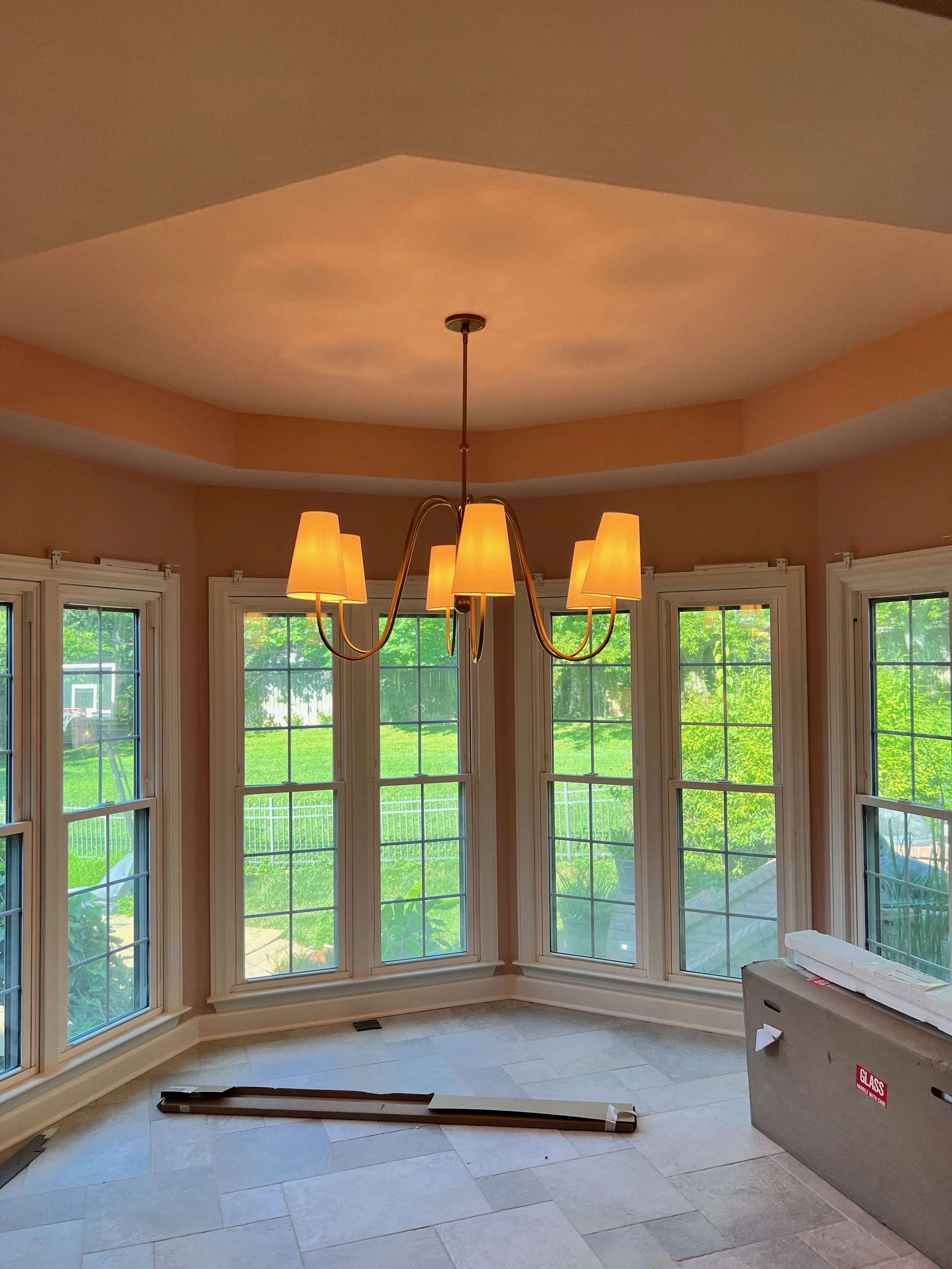
The view from a client's breakfast room. This is the first thing I want to see — what are you looking at every morning, and what could it be?
We’ll talk. We’ll point at things. We’ll stand in spots and stare at views and probably laugh about the builder who graded the yard like they’d never heard of rain. That’s what it’s like. It’s two people walking around outside, looking at the same piece of land, and starting to imagine what it could be.
But while we’re doing that, I’m also reading the property. This is where my background kicks in and why hiring a designer is different from hiring somebody with a truck and a plant catalog. I’m seeing things that won’t occur to most people, and they’re the things that make or break a landscape:
Where the Water Goes
Not during a light rain. During the hard stuff, the kind of downpour we get in April that dumps two inches in an hour. I’m tracking how your property moves water: where it pools, where it sheets, where the downspouts discharge, whether the grade is pushing water toward the house or away from it. Nashville clay doesn’t absorb water the way people expect. It just sits there, or it moves somewhere you don’t want it. If there’s a water problem on your property, I want to find it before we design anything on top of it.
How the Light Moves
A spot that’s gorgeous at nine in the morning might be a furnace by three in the afternoon in July. I’m noting which trees are deciduous and which are evergreen, because your winter light is a completely different animal than your summer light. This is something I think about the way I think about light in a painting; it’s not just whether a spot is sunny or shady. It’s the quality of the light, the direction, how it changes across the day and across the year. It determines where you’ll actually want to sit, what you’ll be able to grow, and how the whole space feels.
What’s Already There That Matters
A mature oak that’s been on your property for thirty years is doing more for you than any nursery run could replace. It’s holding soil. It’s creating structure. It’s casting shade that cools your house. I’m looking at every existing tree and deciding: is it healthy? Is it in the right place? Should the design work around it? Because ripping out something irreplaceable to put in something from a garden center is a trade I won’t make.
I'll also look into what was on the property before you were. Old aerial photos, historical images, county records, if they're available, I'll pull them. Sometimes you find a stone wall foundation that's been buried under decades of fill dirt, or evidence of a garden layout that was lost when the property changed hands. That history matters. It tells me what the land has already been, and sometimes the most compelling design isn't inventing something new, it's honoring something that was already there and bringing it back into the light.
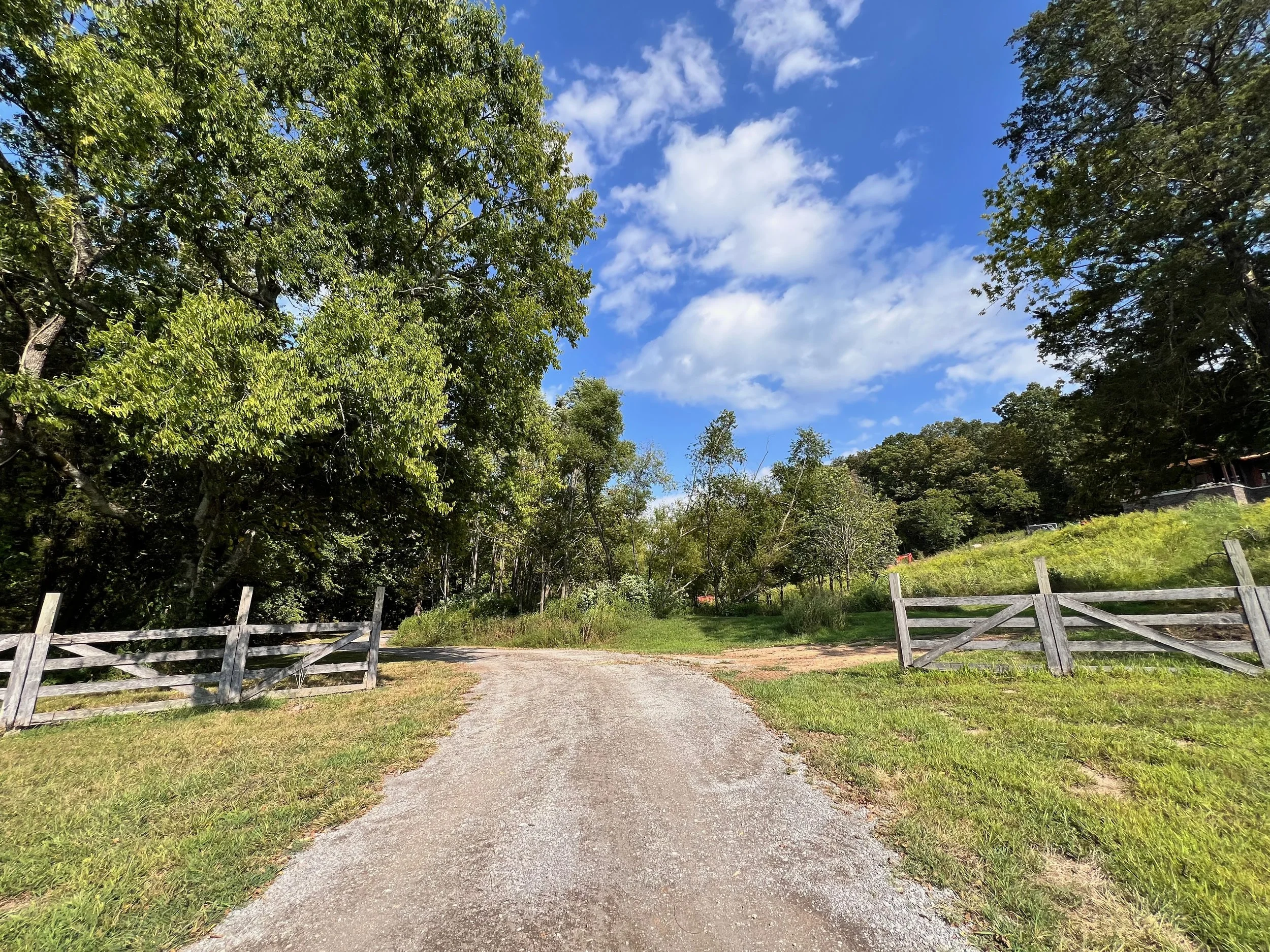
Some properties tell you exactly what they want to be. You just have to listen.
The Dirt Itself
I can tell a lot about a property just from looking at the soil. The color, the compaction near the foundation, whether limestone is showing up close to the surface. Nashville’s soil is all over the map, and it changes the whole conversation. Out in Williamson County, I’m often hitting rock at 18 inches. Parts of Wilson County give me decent loam over clay. Davidson County varies block by block. What’s under your feet determines what we can plant, how we handle drainage, and sometimes whether we need equipment just to dig.
The Composition
This is the art part, and it’s the thing that separates a designer from someone who just knows plants. I’m standing where you stand when you pull into the driveway, and I’m seeing what you see. I’m standing at the back door looking out and asking: what draws the eye? What’s ugly that needs to disappear? Where should there be privacy, and where should things open up? I am a painter. I think about outdoor spaces the way I think about any composition: foreground, middle ground, background. Tension and release. What you notice first, and what reveals itself slowly.
The whole visit usually runs about 45 minutes to an hour. Sometimes longer if the property is complicated, or honestly, if we just get into it. People have been stewing about their yard for years. Once they’re walking it with somebody who’s actually listening and actually knows what they’re looking at, it tends to come out in a rush. I never mind that. That’s the good stuff.
After That: I Go Think About Your Property
I don’t go straight to the computer after a site visit. I go think. I need to sit with what I saw and what you told me. I’ll sketch. I’ll turn over ideas about plant palettes that would work in your specific conditions: your light, your soil, your exposure. I’m thinking about how the space could look in October, not just May. How a tree fills in over ten years, not just how it looks going in the ground.
Then I put together a design fees proposal. This isn’t the design itself — it’s the plan for the plan. It lays out what the design fee is, what your budget for the finished project is, what you’ll get as deliverables, and how long the process takes. Everything’s on paper. No surprises.
If the proposal feels right, we move forward. If the timing’s off, or the budget isn’t there yet, or it’s just not the right fit, that’s okay. I’m not interested in talking anyone into something. I want clients who are ready and excited, not clients who feel cornered.
Then: The Design
This is the good part.
I build a comprehensive design for your property. Not a quick sketch. A real, specific plan: style direction, hardscape layout, planting plans with actual species selected for your soil and light, planting indexes with everything you should know about each plant, drainage needs, lighting, irrigation, material selections. Every element chosen for your land.
One thing I always explore is whether we can bring in materials with age and character: reclaimed stone, salvaged brick, antique pavers, old iron. A new garden built entirely from new materials can feel like it just arrived, no matter how well it's designed. But work in a piece of weathered limestone or a hand-forged gate that's clearly been somewhere before, and suddenly the space has a backstory. It feels settled. It feels like it belongs. I think of it the way you'd think about furnishing a home; you wouldn't fill every room from one store in one afternoon and expect it to feel like yours. A garden's the same way. The things that have lived a little are often the things that make the whole space come alive.
The process is back and forth. I first share concepts within a design proposal, walk you through my reasoning, and take your feedback seriously. Sometimes a client sees something in an early draft that sparks an idea neither of us expected. Sometimes I’ll push back, maybe the Japanese maple you love is going to cook in the spot you want it, or the layout you’re picturing is going to trap water against the house. You’re paying me to know things like that, and I’m not going to nod along just to keep the peace.
Every plant in the plan is picked for how it actually performs in Nashville’s Zone 7a climate. Not how it looks on a nursery tag. How it looks in January when everything else has quit. How it fills in over five years. Whether it can handle our clay, our humidity, our ice storms. A garden is a living thing that changes, and the design has to be smarter than the moment.
I've been designing and gardening in Middle Tennessee for long enough now that my past projects have become something like an ongoing field study. Every planting I've done is a test; some hypotheses proven, plenty disproven. That Itea that was supposed to handle full sun? Scorched by August. That Hydrangea quercifolia I tucked into a dry slope on a hunch? Thriving five years later. No plant tag or reference book can tell you what actually happens in Davidson County clay after a brutal July followed by an ice storm in February. But I can, because I've watched it happen. That kind of knowledge is what you're really getting when you hire a designer who's been working this land for years, not just reading about it.
Finally: Installation and Oversight
A beautiful design that gets installed wrong is just an expensive disappointment. I’ve seen it happen on other people’s projects, and I won’t let it happen on mine.
I work with contractors and crews I’ve built relationships with over years of working in Middle Tennessee. I’m not a big company with a fleet. I’m a designer who creates the vision, partners with skilled builders, and then shows up during installation to make sure what’s in the plan is what’s going in the ground. The grading. The plant placement and their depths. The stonework. The details that are easy to lose when a designer hands off a plan and walks away. I don’t walk away.
If you’re building a new home and wondering when to bring a landscape designer into that process, the short answer is before you think you need to. I wrote a whole post about why.
Let Me Tell You What This Isn’t
Because I think these are the things that keep people from sending the first message:
It’s not a sales presentation. Nobody’s showing up to your property with a laminated binder and a closing strategy. I’m going to walk your land, listen to what you have to say, and tell you what I think. That’s it.
You don’t have to know anything. You don’t need to know plant names. You don’t need to know what kind of stone you want. You don’t need a Pinterest board or a mood board or a vision. Show up with a vague feeling that your yard isn’t working, and that’s plenty. Figuring out the rest is my whole job.
It’s not a commitment. The phone call is free. If it doesn’t feel right, or the timing’s wrong, or you realize you need something I don’t offer, no hard feelings. I’d rather help you find the right fit than force one.
It’s not going to feel like a lot. We're not starting with a 40-page proposal. We're starting with a phone call. If that goes well, we schedule a site consultation, and everything unfolds from there, at whatever pace works for you."
Who This Is For
The people who tend to find me are the ones who want something considered for their property. Not the fastest option or the cheapest option, the right option. They notice good design in the rest of their lives, and they want that same thoughtfulness brought outside.
Maybe you just built a house and you’re staring at a construction yard. Maybe you’ve been in your home five years and the builder-grade landscaping has never once felt like yours. Maybe you’ve got a gorgeous piece of land and you can feel what it could be, but you can’t quite get there on your own.
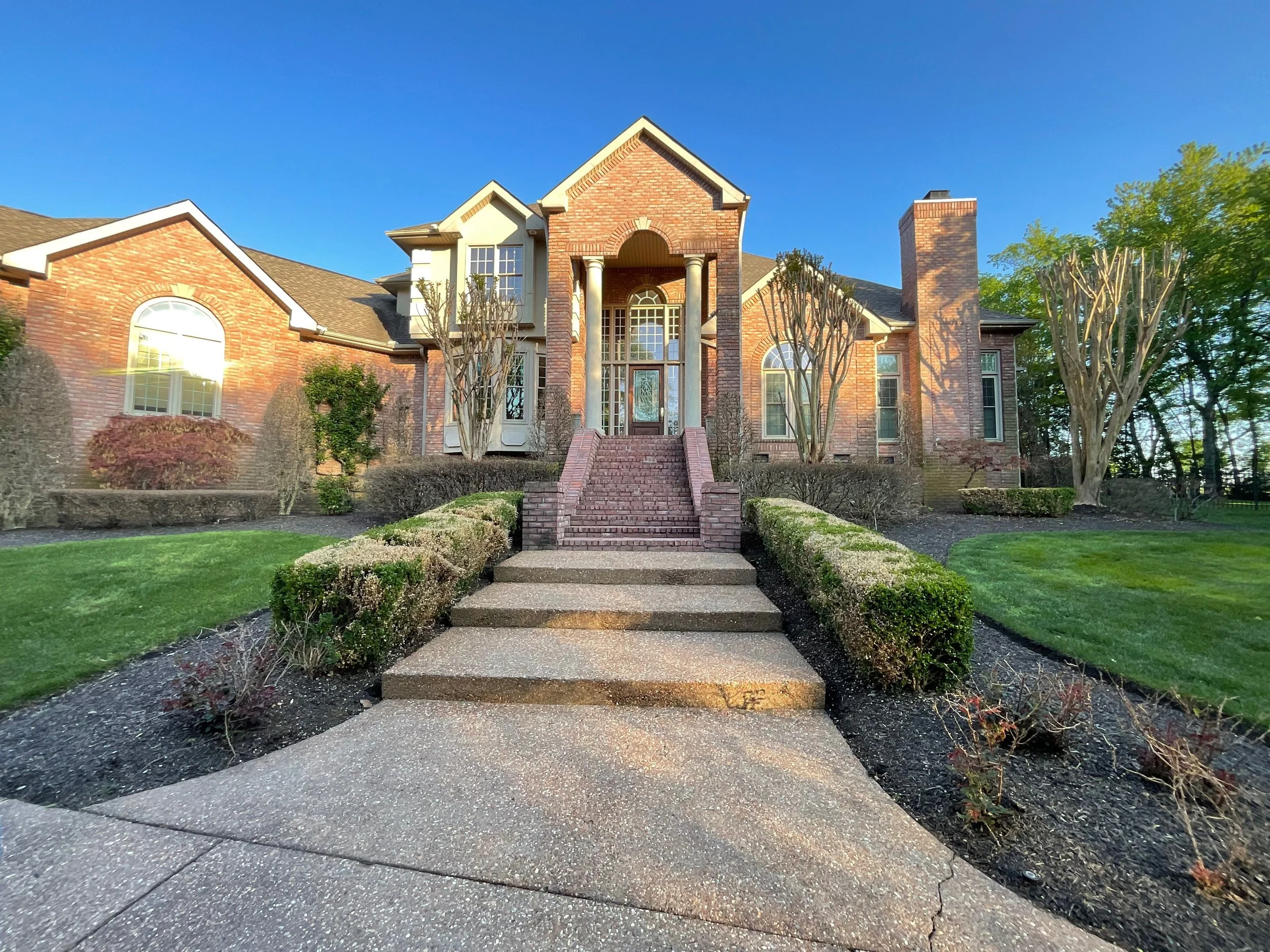
The day I first walked this property. A beautiful home — just waiting for someone to listen to it.
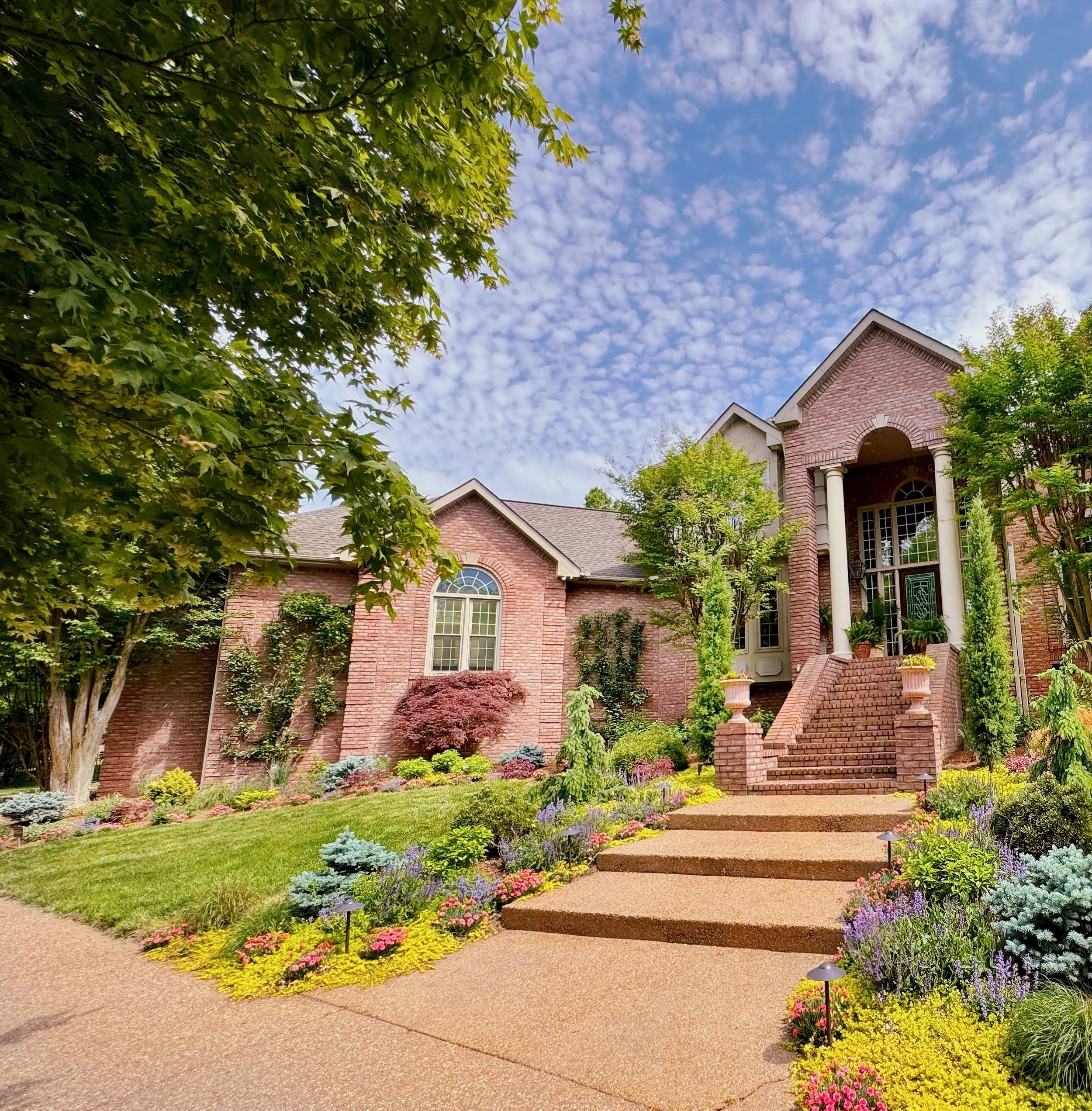
Two years later. Same house. Same walkway. Completely different feeling when you pull in the driveway.
I work primarily in Nashville, Williamson County, Wilson County, Davidson County, and the surrounding areas. If you’re within about an hour of Nashville, let’s talk. If you’re farther than that, I’m open if the project and vision aligns.
Here’s How to Start
Send me a message. Through my contact page. Tell me a little about your property and what’s on your mind. I’ll get back to you, and we’ll set up a time to chat.
That’s the whole first step. One phone call. No pitch, no pressure. Just a conversation about your land with somebody who cares about it.
Ready to talk? Get in touch.
Want to know more about how I think about gardens? Read this first.