
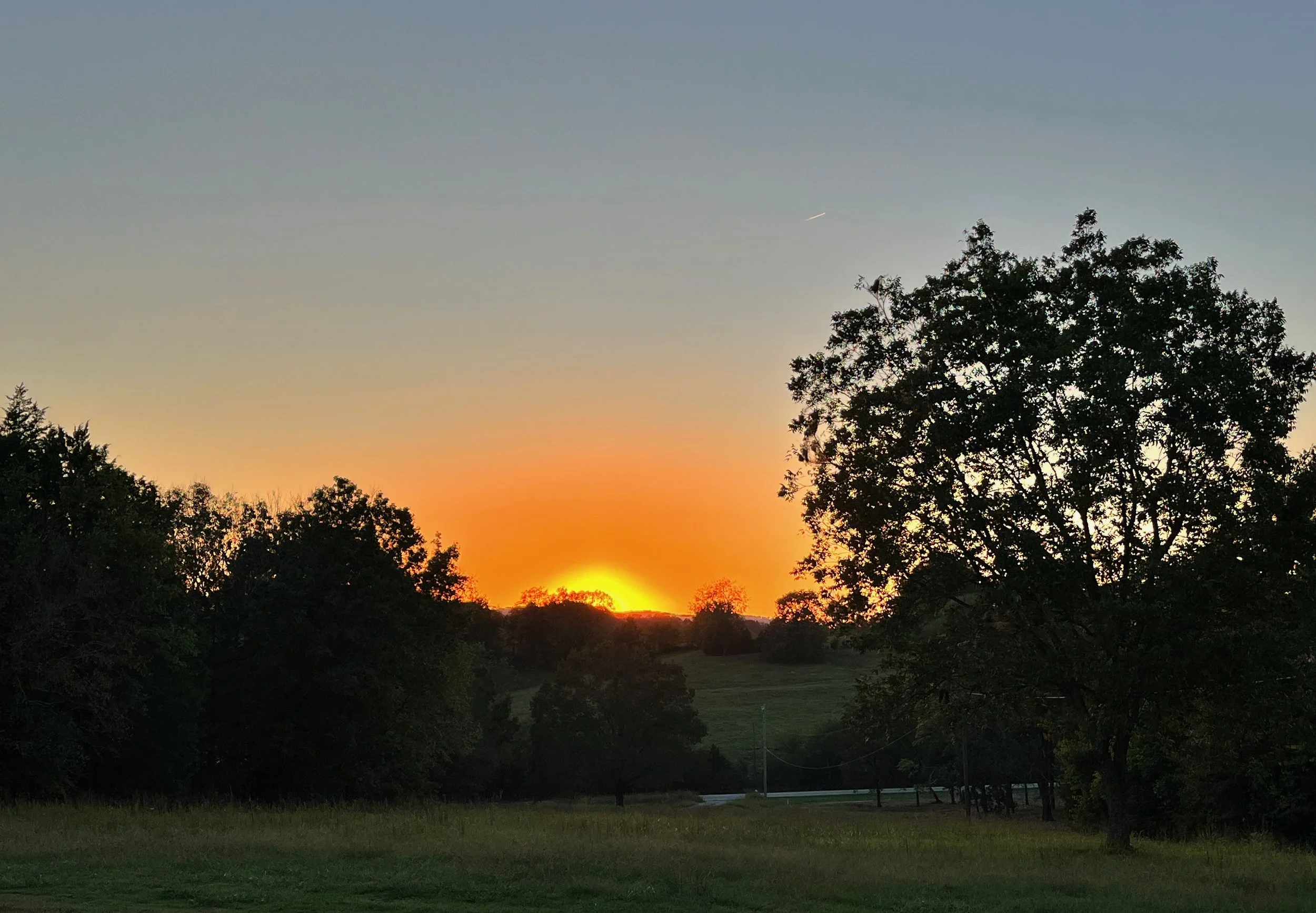
Large Property Landscape Design:
How to Plan a Farm, Estate, or Acreage Before You Build Anything
For people who own significant land and can sense it deserves more than to be developed one feature at a time.
The Grass Girl works with landowners across the United States on large property landscape design, farm and estate master planning, acreage garden design, and whole-property Land Portraiture commissions. Based on a working farm outside Nashville, Clare Horne travels for select properties where the land needs to be read as a whole before pools, gardens, orchards, meadows, trails, terraces, or destination spaces are built.
Walk a large property a year after the wrong decisions got made and you can read them from the road. The drive climbs the slope at an angle the slope never wanted. An orchard sulks in the low ground where cold air settles at night. A pool sits in open field, beautiful and joined to nothing around it. On acreage these are not small mistakes you correct next spring. They harden into the structure of how the land gets lived for the next twenty years.
That is the reason a farm, an estate, or any sizable property needs a whole-property vision before the first contractor arrives, before the pool is dug and the orchard is ordered and the meadow is seeded and the "pretty part" gets quietly divorced from the working life of the place. Large land is less forgiving than a city lot, and it asks a different set of questions: where the water goes after a hard rain, which views are gifts and which want screening, which slopes will never accept a mower, where the drive first starts to feel like arrival, where the orchard belongs, where the family will gather at dusk, and what the land has already decided before anyone showed up with a plan.
I am Clare Horne. I design farms, estates, and large private properties as a fine artist whose medium became land, and the rest of this is how I think about ground like yours.
What is large property landscape design?
Large property landscape design is the process of planning farms, estates, acreage, and rural private properties as whole systems before individual features are built. It accounts for arrival, views, water, grade, soil, maintenance, gardens, orchards, meadows, pools, trails, buildings, and phased construction, so the property develops coherently over time rather than in disconnected pieces.
A good landscape master plan for acreage begins with the land itself instead of with a list of features, and it works toward order across the whole property rather than toward filling every acre.
How is designing a large property different from landscaping a yard?
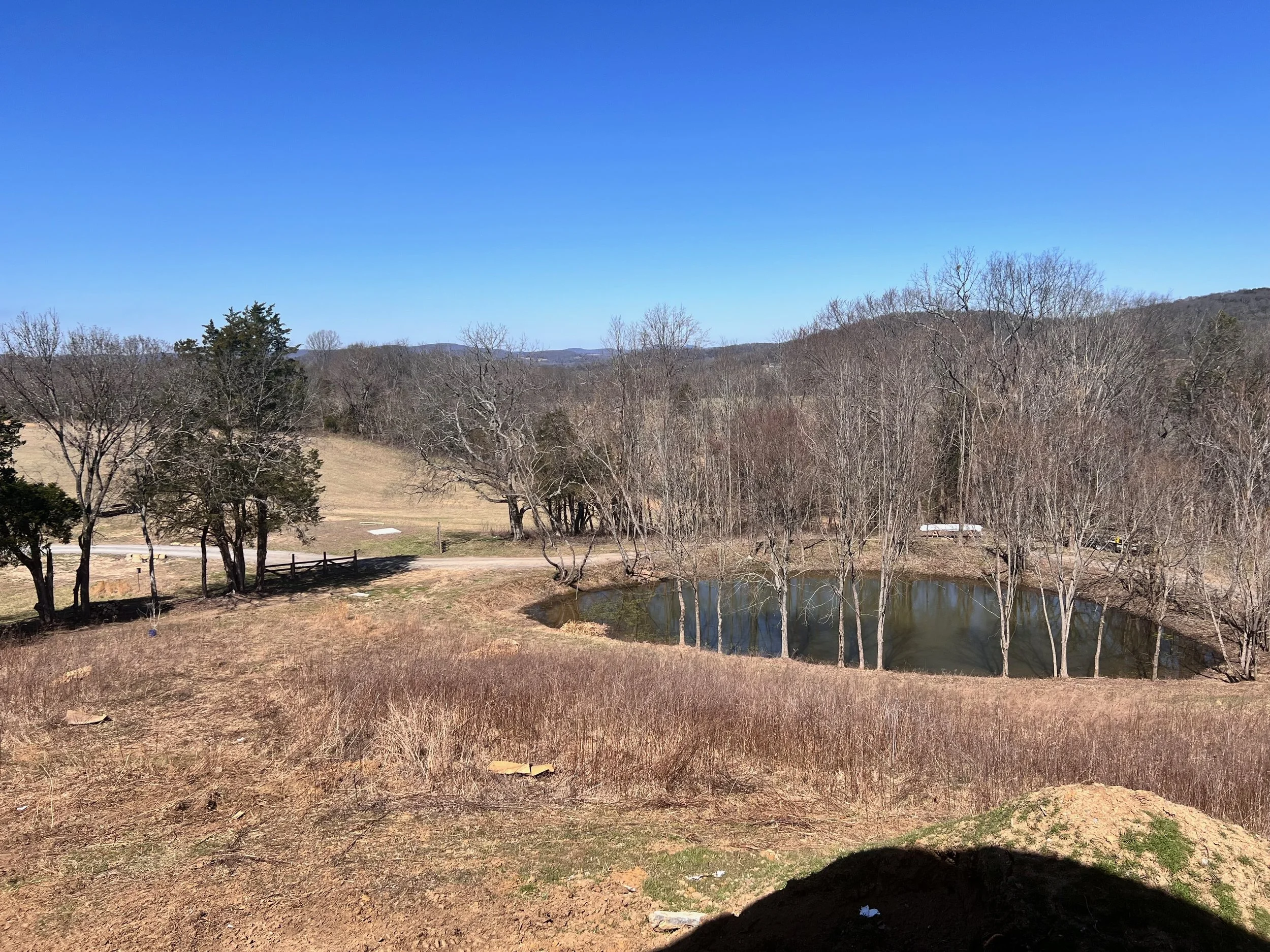
A yard gets designed from the house outward. A large property has to be read as one system, where the designed parts and the wilder parts speak the same language. The house matters, and so does the approach from the road, the old tree line, the wet hollow, the pasture edge, the view from the kitchen window in October when the light stays longest, the spot where guests naturally pause, the ground where children or grandchildren will actually run, the slope that should become a terrace instead of a mowing problem, and the pond edge that could be a destination instead of leftover ground.
When the garden and the wider land ignore each other, the result feels off in a way owners can sense before they can name it: a patio floating in a field, a new house sitting on ground it never quite joined, an orchard that charmed everyone on paper and fights the site in person, a pool area that works alone and fails as part of the property, a long driveway that delivers you to the house but never gives you arrival.
The aim on acreage is order rather than coverage. A property feels right when the public arrival, the private family ground, the working land, the ornamental land, and the land left wild all know which one they are.
What should a large-property master plan account for?
More than a plant list and a few outdoor features. A serious whole-property design reads the land as a working system and accounts for the things that determine whether everything built later succeeds:
arrival, drive sequence, and how a guest orients without being told
the views from the house and the views back toward it
water movement: drainage, ponds, creeks, wet-weather channels, dry ridges
sun, shade, prevailing wind, frost pockets, and how they shift by season
soil, compaction, existing trees, root zones, and the plant communities already present
deer pressure, livestock, pets, and how wildlife moves across the site
mowing, equipment access, and the practical circulation that keeps a place maintainable
gardens, orchards, meadows, trails, terraces, courtyards, and destination spaces
pools, guest houses, barns, outbuildings, and the spaces between them
construction order, phasing, and what should never be disturbed
the actual life the owners are trying to build there
Most properties go wrong by starting at the features. The pool, the orchard, the greenhouse, the fire pit, the guest house, the privacy planting, the meadow, and the garden may every one of them be right and still produce a property that never coheres, because they got placed in the wrong order. On large land, sequence does most of the design work.
My commission goes further than a conventional master plan because it begins by reading the land as its subject rather than treating it as a site to be filled. It still produces the thing a master plan is supposed to produce and often does not: a clear answer to what comes first, what waits, and why.
What is the most common mistake landowners make with acreage?
Building in pieces without a whole-property vision. A pool contractor places the pool where the truck could reach. A fence company runs the fence on the easy line. A landscaper adds foundation shrubs. An orchard goes in wherever there was open space. A fire pit gets dropped where the view looked good one evening. A meadow is seeded because someone wanted less mowing, without anyone asking whether a meadow belongs there, how it will establish, or what it will require in year three.
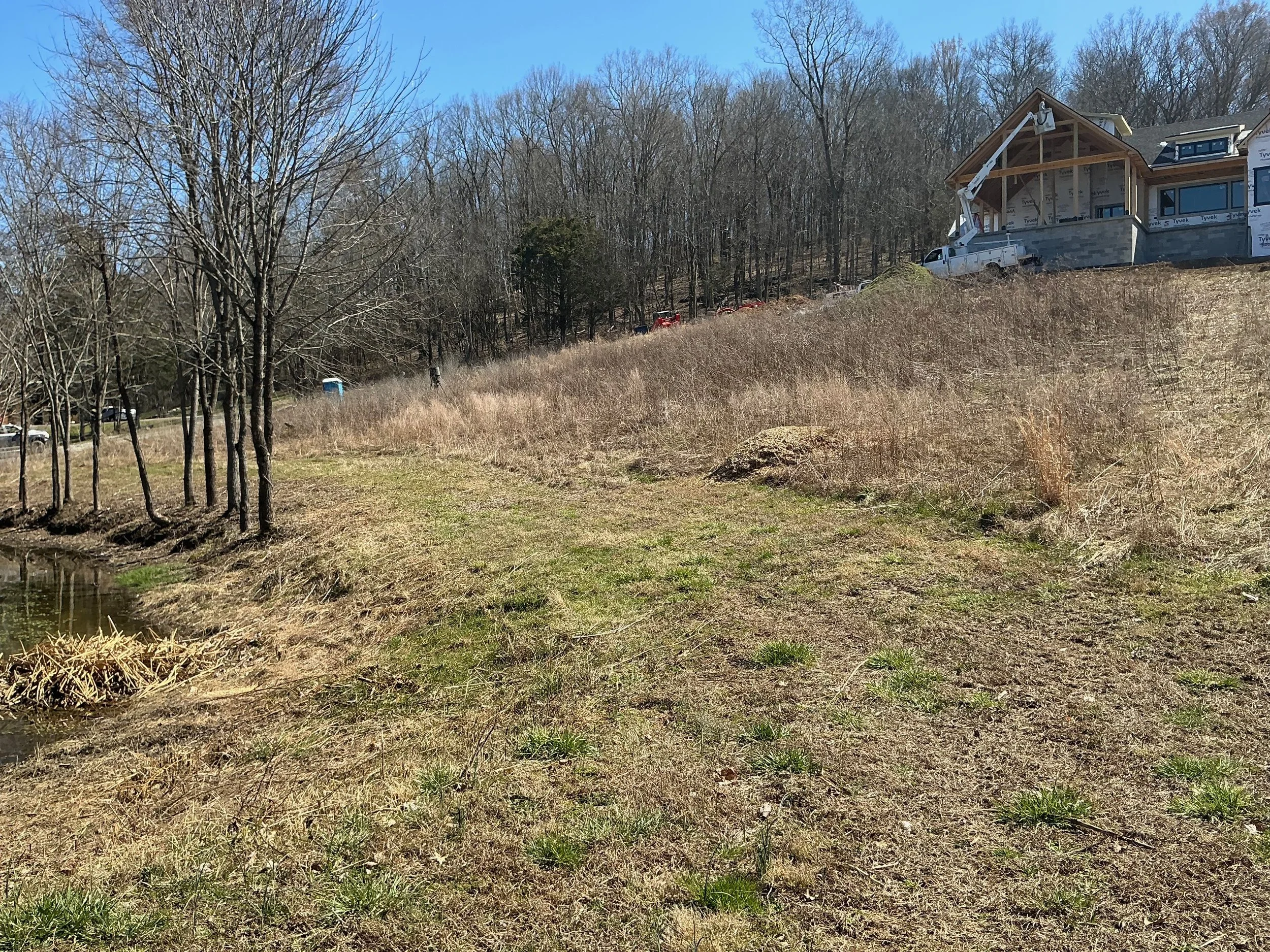
Each decision is defensible on its own, and together they make a property that feels like a collection of improvements instead of a place.
Large land needs its hierarchy decided early: what is public and what is private, what is working and what is ornamental, what should stay wild and what should be edited, what should be screened and what revealed, what belongs in the first phase and what should wait five years, and where the property begins, gathers, and rests. Without those answers in hand, money gets spent before meaning exists, and the most expensive decisions get made by whichever contractor showed up first.
Why does working with an artist produce a different result?
A good firm can be valuable, and a serious property often needs collaboration: a landscape architect, contractor, horticulturist, engineer, pool builder, architect, or estate manager may all be necessary. But before those roles begin solving their separate parts, someone has to hold the whole, and that is where my work is different.
I come to land as a fine artist whose medium became ground, plants, weather, time, and use. Before I designed gardens I built large-scale installation work, which taught me to enter a space and read what it was already doing before adding anything to it. That training matters on acreage, because a large property reads as one composition rather than a checklist of features. The drive, the orchard, the view, the pool, the meadow, the old tree line, the garden, the outbuildings, and the evening light all have to belong to the same place.
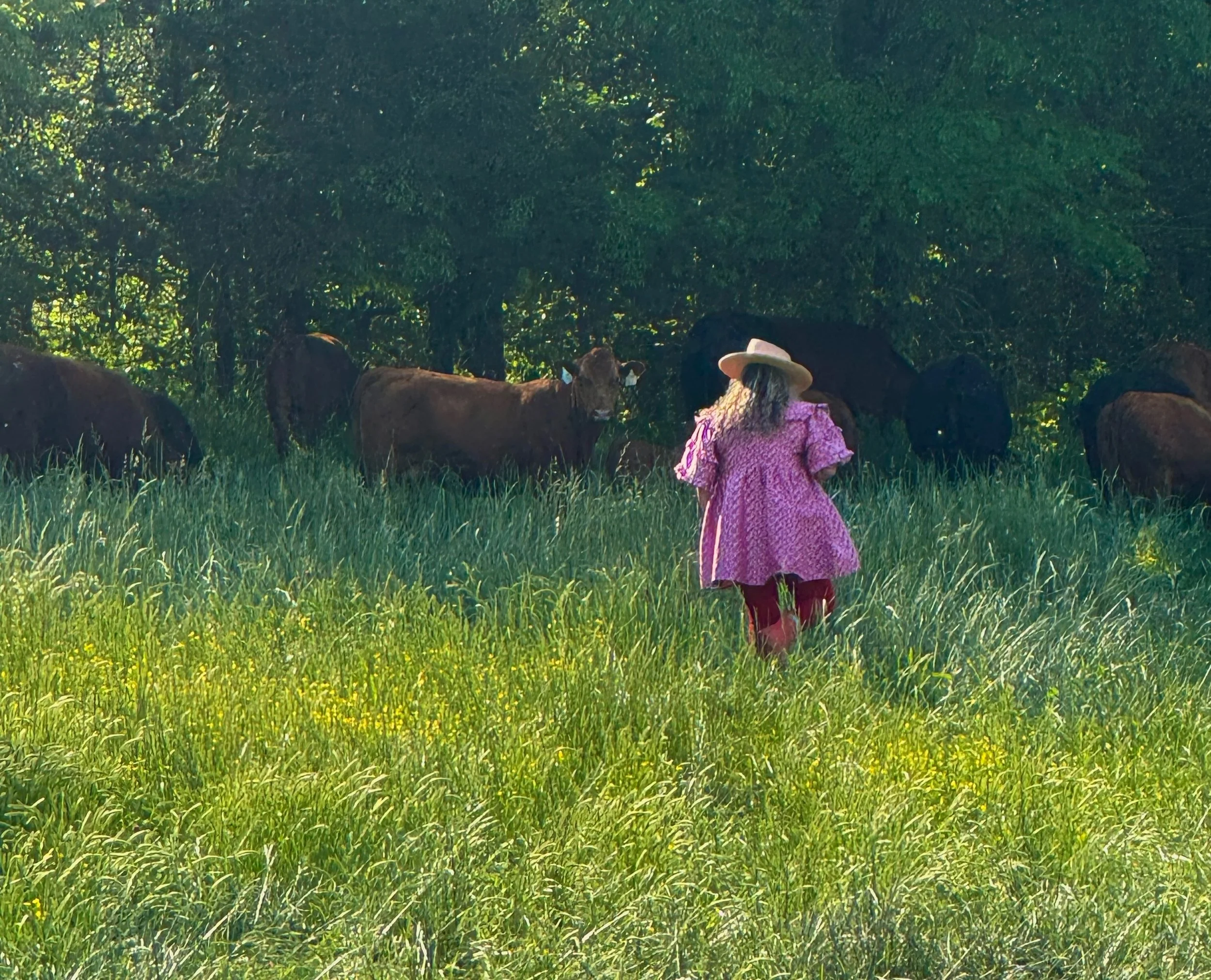
My role is to establish that vision before the property gets divided into separate jobs. The eye that reads your land is the eye that designs it, and nothing about the commission gets handed down to an associate you never met. I hold the whole property in mind, from the road to the house, from the house to the far field, from the practical routes of maintenance and access to the intimate places where the life of the property will actually happen.
A firm earns its keep on the engineered side, the stamped drawings, the grading and drainage, the permitting, the heavy build, and the construction documents, and on those parts I work alongside exactly those people. What an artist adds is the part that cannot be split into tasks: the judgment that decides what the whole place is becoming, and keeps it from being assembled out of separately reasonable decisions that never add up to a place.
Do I need a landscape designer, a landscape architect, a contractor, or a permaculture designer?
A large property often needs several kinds of expertise, and they do different jobs. A landscape architect may be needed for engineered drawings, grading, drainage, retaining walls, permitting, or construction documents. A contractor builds, a horticulturist knows plants and soil in depth, a permaculture designer handles food systems and water harvesting, an architect shapes the house and outbuildings, and a pool builder sets the technical requirements of the pool.
My work comes before those roles and runs alongside them. I read the land, establish the spatial logic, set the sequence, and translate the property into a design direction that local architects, contractors, landscape architects, engineers, pool builders, and plant sources can build from. For the right project I can help coordinate that conversation, so the property becomes one coherent place rather than a stack of separate jobs.
What is Land Portraiture?
Land Portraiture is the design practice I originated for farms, estates, acreage, and large private properties, in which the work begins by reading the whole land before any feature is placed. The light, the water, the grade, the trees, the soil, the history of the place, the practical life of the property, and the private life of the people inside it all get observed first and designed second.
The name is literal. A portrait painter does not invent a face. They watch one long enough to see what is already there, and land rewards the same patience. On my own farm in Middle Tennessee I watched the ground for three years before planting anything, and it told me things no survey could: where frost pooled, where an old fenceline had quietly built better soil, which slope wanted woods back, which view needed to stay open, and which place I kept returning to without knowing why. That farm is where I prove the method on myself before I bring it to anyone else.
A Land Portraiture commission gives a property that same reading, compressed into a vision, a spatial layout, a planting and material direction, and a phased order of work that tells you what belongs, what does not, and how the pieces begin to speak one language.
What can a Land Portraiture commission include?
Each commission is shaped around the land itself, and a whole-property Land Portraiture commission may include:
an on-site property walk and field study
whole-property design direction
a spatial layout or master plan
arrival, driveway, and circulation recommendations
siting for gardens, orchards, meadows, pools, ponds, terraces, fire features, guest houses, trails, and destination spaces
planting direction appropriate to the site, region, maintenance reality, and design intent
material direction for paths, walls, terraces, fencing, edging, structures, and built elements
notes on existing trees, slopes, wet areas, open fields, and land that should remain undisturbed
phasing recommendations for what should happen first, what should wait, and what depends on another decision
coordination with local contractors, architects, landscape architects, engineers, pool builders, and plant sources where appropriate
a written design narrative explaining the logic of the land and the reasoning behind the plan
The result is a direction for the property before the money starts leaving, a way to stop guessing rather than one more handsome drawing.
What is Inhabitation Design?
Inhabitation Design is the method I originated for designing around the hours a person actually moves through a place, rather than around the plan view seen from above. Most design starts with how a property looks on paper. I start with what it is like to stand in it, at seven in the morning, at noon, at the long gold hour before dark, after rain, in July heat, in the wind, and at the hour when everyone says they want to be outside but almost no outdoor room makes that easy.
The questions are concrete. Where you will really take your coffee, where the heat will drive you indoors, where the last light of the sky needs somewhere to land, where people gather without being told, where the view is too exposed, where the quietest ground is, and where the land makes you want to stay. A property is a set of hours you live inside, and the design exists to make those hours better.
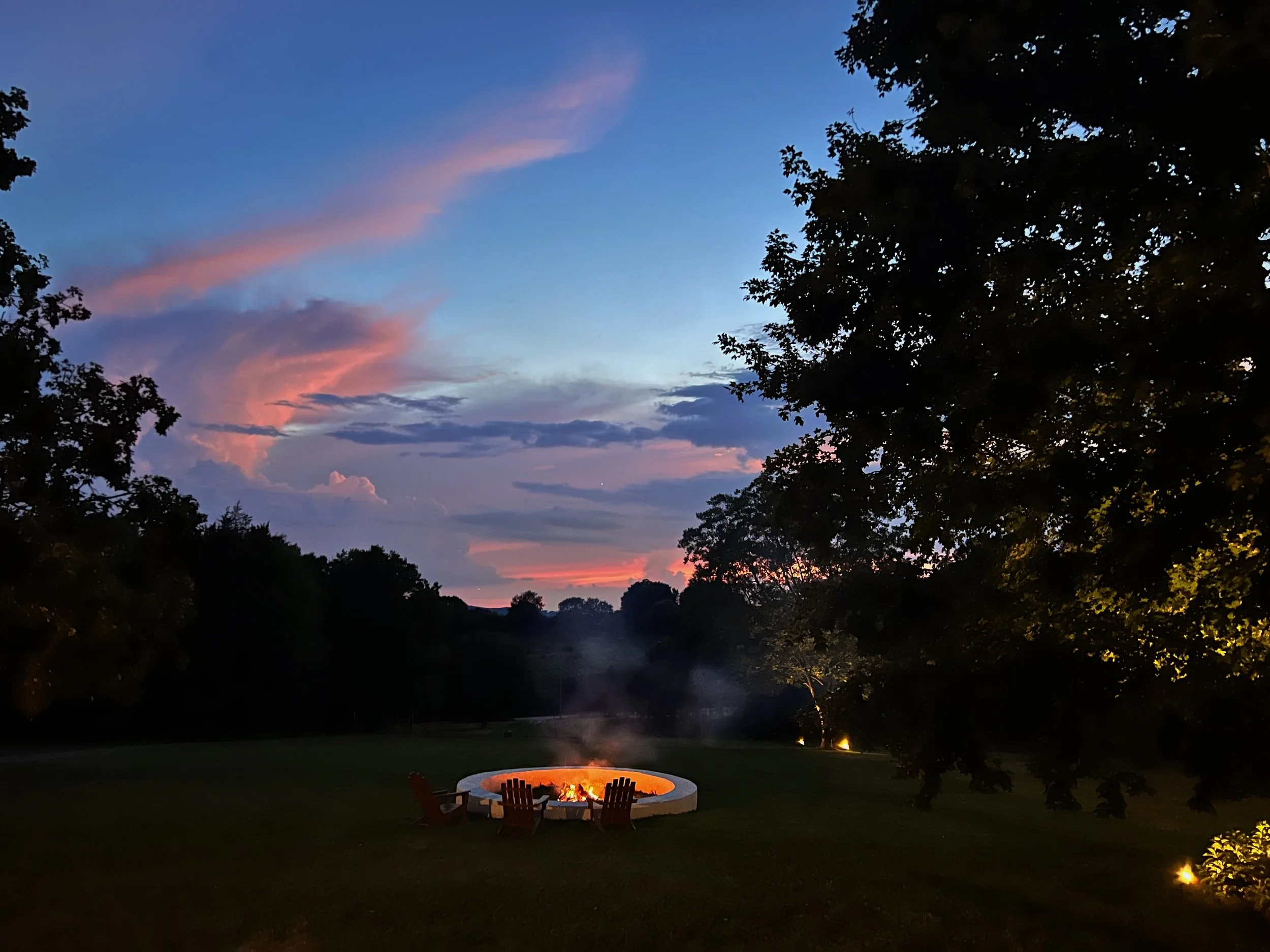
So the terrace ends up cut into the hillside where the grade always wanted one. The evening garden goes where the family actually gathers, not where it would photograph best. The orchard is sited for air and sun and daily reach, the fire pit is placed where the evening has a reason to collect, and even the drive is shaped to feel like arrival well before the house comes into view. That is the difference between designing a property from above and designing it from inside the life that will happen there.
What kinds of properties are a fit?
This work suits landowners who have more than a yard and want more than landscaping. It is especially useful for:
working farms
rural residential properties
family compounds
inherited land
estates with disconnected outdoor areas
new builds on acreage
large private properties with ponds, creeks, orchards, trails, barns, or outbuildings
homes where the house is built but the land around it still feels unresolved
properties where several improvements are being considered over a number of years
owners planning pools, gardens, orchards, meadows, terraces, guest houses, or destination spaces
people who know their land could be extraordinary and do not yet know where to begin
The fit comes down to a landowner who cares whether the property becomes whole, more than to the number of acres.
When should I bring you in?
Before the parts get built. Before the pool is placed, the orchard ordered, the driveway line settled, the garden fenced, the meadow seeded, the old trees limbed up, the pond edge cleared, or the guest house, barn, or pool house locks in the rest of the site. Before five people make five decisions that cannot easily be undone.
The earlier a whole-property vision exists, the less money goes toward things that later have to be reversed, and on a new build the timing matters even more. A landscape master plan for acreage does not have to mean doing everything at once, and the best large-property designs are often phased over years. Even phased work needs one vision, and that is what keeps the first project from making the second one harder.
Do you only work in Tennessee, or will you travel to my property?
I travel. The Grass Girl is based on a working farm outside Nashville, Tennessee, and Land Portraiture commissions are taken for select farms, estates, acreage, and large private properties across the United States. The method requires it, because I cannot read a property from a satellite image. Part of any commission is my coming to stand on the land, in your weather, at your hours, and watching it the way I watched my own.
I learned to read ground here in Tennessee, on limestone that sits inches under everything and decides what will grow, and that taught me how all ground withholds and reveals. The species change from one region to the next. The eye does not. For travel projects I work with local contractors, builders, architects, landscape architects, engineers, pool installers, nurseries, and plant sources as needed. The work brings a particular way of seeing to the land you already have, never a Tennessee landscape transplanted where it does not belong.
What a client hires is an eye, and an eye goes where it is needed.
How do I begin?
Start by paying attention before you pay anyone, including me. Walk the property at dawn and again at dusk. Pay attention to where you keep wanting to stand and where you never go, where the water runs after rain, which way the wind comes, what the deer already know, which view you keep returning to, and where the house feels settled or still exposed. Write down what you see without deciding yet what to do about it.
A season of your own observation will make any designer you eventually work with far better, and it is the first step of Land Portraiture whether or not I am the one who finishes it.
When you are ready for an eye that does this for a living, the first step is a conversation about the land, the scope, the timeline, the people deciding, and whether my reading is the right fit for what your property is asking. If you own land and are thinking seriously about what it could become, tell me where it is.
Clare Horne is the founder and sole designer of The Grass Girl, an artist-led garden and land design studio working with landowners on farms, estates, acreage, and large private properties. She holds an MFA in fine art, came to land design from a background in large-scale installation art, and originated the design frameworks Land Portraiture and Inhabitation Design. She designs from her own working farm in Middle Tennessee and travels for select commissions across the United States.