
The Only Garden Trend That Matters in 2026
A Nashville garden designer on why the biggest shift in 2026 isn't a feature — it's the return to presence, peace, and the radical act of going outside.
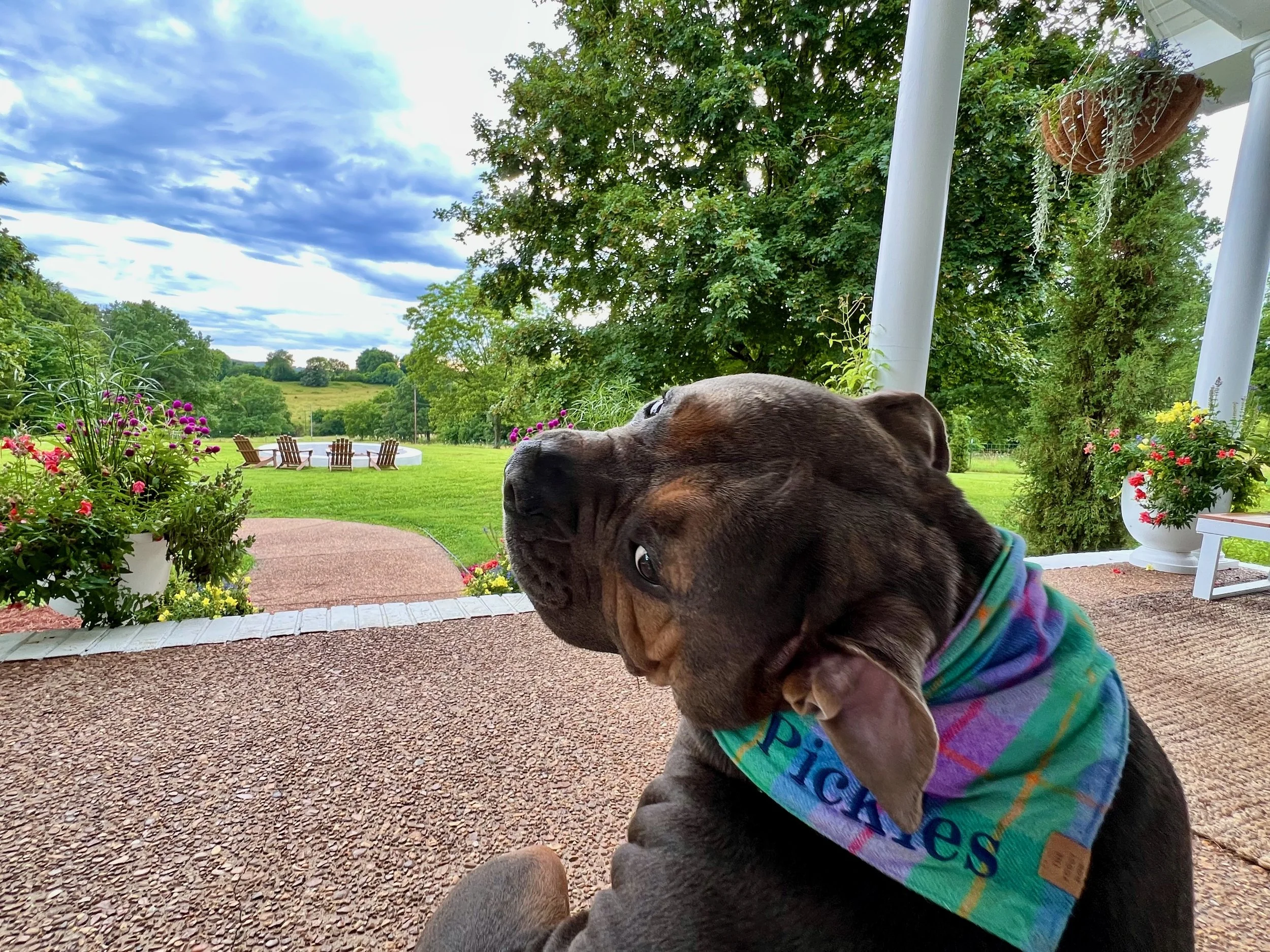
I'm going to skip the trend report.
Every January, the landscape design industry publishes its predictions. I've read this year's. All of them. NALP, Garden Design Magazine, Homes & Gardens, Livingetc, half a dozen regional firms. And they say what they always say, just rearranged: native plants are in. Sustainability matters. Outdoor rooms. Smart irrigation. Bold colors. Cozy fire features. Wellness spaces. The same nouns in a different order, repackaged with new photography and a fresh year stamped on the headline. Click, read, forget.
I'm not writing that post. I'm writing what I actually think is happening. And what I think is happening has very little to do with products or features or what's "in" for spring.
The World in 2026
Let me start somewhere that garden blogs don't usually go.
The average American now spends more than seven hours a day on a screen. Our children are growing up inside a digital architecture that is measurably damaging their capacity for attention, for sleep, for unstructured thought, for the kind of slow observation that used to be called childhood. We know this. The data is overwhelming and the conversation is everywhere and almost nothing has changed.
The news is a wall of noise. It doesn't matter where you sit politically, the volume is the same. The speed is the same. The sense that the ground is shifting under everything is the same. AI is remaking industries overnight and generating an ambient hum of anxiety about what's coming that nobody can quite name. We are, by every measure, the most informed and least peaceful generation in human history.
Social media promised connection and delivered performance. We curate our lives for an audience instead of living them. We document instead of experiencing. We have four hundred followers and eat dinner alone. Loneliness is now classified as a public health epidemic by the U.S. Surgeon General. Not metaphorical loneliness. Clinical, morbidity-increasing, life-shortening loneliness. In an era of infinite connectivity.
I'm a garden designer. Why am I talking about this?
Because every single person who calls me about their yard is living in this world. When a homeowner in Brentwood says they want their backyard to "feel like a retreat," they're not making a landscaping request. They're making a life request. They're telling me, sometimes without knowing it, that something in their daily existence has become unsustainable, and they need a physical space that operates on a different frequency.
That's a reckoning. It's the most important thing happening in garden design right now, and not because the industry decided it was trending, but because people can't breathe and they're looking for air.
What the Industry Is Saying (And What It Means)
Now here's what's interesting. The 2026 trend reports are, for the first time, actually circling this truth. They're using words they've never used before in professional landscape publications. Refuge. Sacred spaces. Intimate nooks. Homes & Gardens quoted a designer this year who said: "With the continuous chaos in the world, homeowners are wanting to create sacred spaces to escape and connect with nature." Garden Design Magazine opened their 2026 report with: "Now, more than ever, our gardens are a place of balance."
I read all of that and felt two things. Relief, because the industry is finally naming what I've felt for years. And impatience, because they're still framing it as a "trend." As if it's a style choice. As if next year the pendulum might swing back toward outdoor kitchens with built-in TVs.
It won't. Because this isn't a pendulum. It's a correction. People aren't choosing intimate garden spaces because intimacy is "in." They're choosing them because the alternative of more screens, more noise, more performance, more consumption masquerading as living has made them sick. Not metaphorically sick. Measurably, documentably, clinically sick. And a garden is the oldest medicine there is.
I said this in my interview with Lebanon City Lifestyle (which I wrote about on my blog here) before any of these reports came out. I told readers: start with one cozy nook. One intentional space you truly love. A reading chair under a tree. A bench in the garden. Invest in comfy seating. Add a few plants that speak to you. Create a refuge for your spirit. I used those words, refuge for your spirit, because that's what I believe gardens have always been for.
The trend reports are arriving at the same language because reality is forcing them there. But I want to go further than they're willing to go.
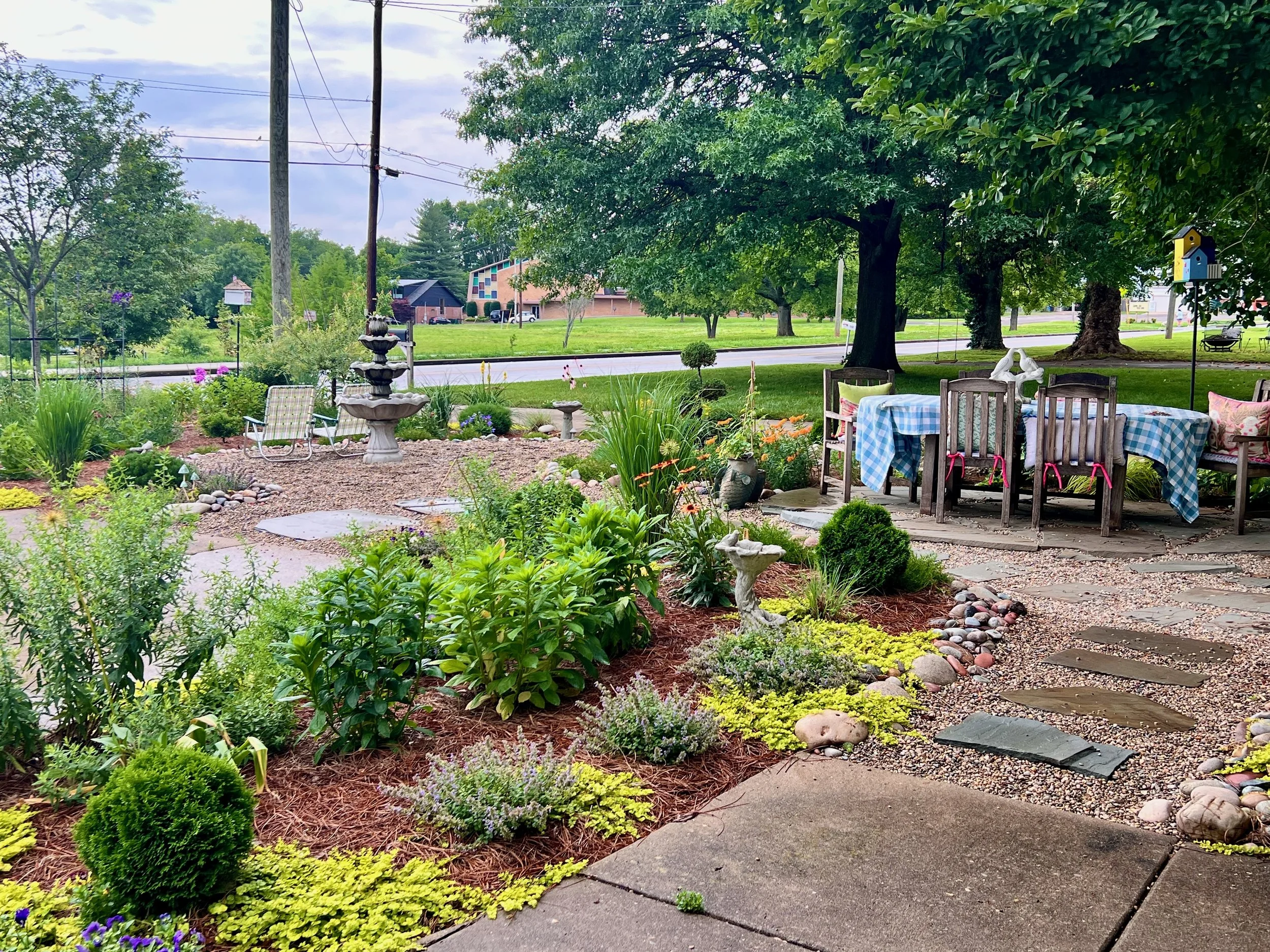
A Garden Is a Counter-Technology
I'm going to say the thing nobody in the industry will say because it doesn't sell product.
A garden is the only space in most people's lives that has no screen in it.
Think about that. Your office has screens. Your car has screens. Your kitchen has a screen. Your living room is organized around a screen. Your bedroom, be honest, has a screen in it. Your children's bedrooms have screens. The waiting room at the dentist has a screen. The gas pump has a screen. Even bathrooms have screens.
Your garden doesn't.
Your garden has wind. Has light that changes by the minute. Has fragrance that shifts between morning and evening. Has sound: cardinals, wind through grasses, water, the hum of bees, the particular quiet that happens at dusk when the day exhales.
Your garden has things growing. Actual biological processes happening in real time, at a pace you can't accelerate or optimize. A seed becomes a root becomes a stem becomes a flower becomes a seed. It takes exactly as long as it takes. No hack. No shortcut. No update.
Your garden requires you to be in your body. To feel temperature. To smell. To notice whether the soil is wet or dry. To squat down and look at something six inches off the ground. To use your hands. To be an animal in the air again, standing on earth, under sky, in weather.
We have built an entire civilization around removing ourselves from these experiences. Climate control. Digital mediation. Frictionless convenience. And we have made ourselves profoundly, measurably unwell in the process. The anxiety. The insomnia. The attention deficits. The loneliness. The depression. The sense that everything is happening very fast and none of it is real.
A garden is real.
That's not a trend. That's a lifeline.
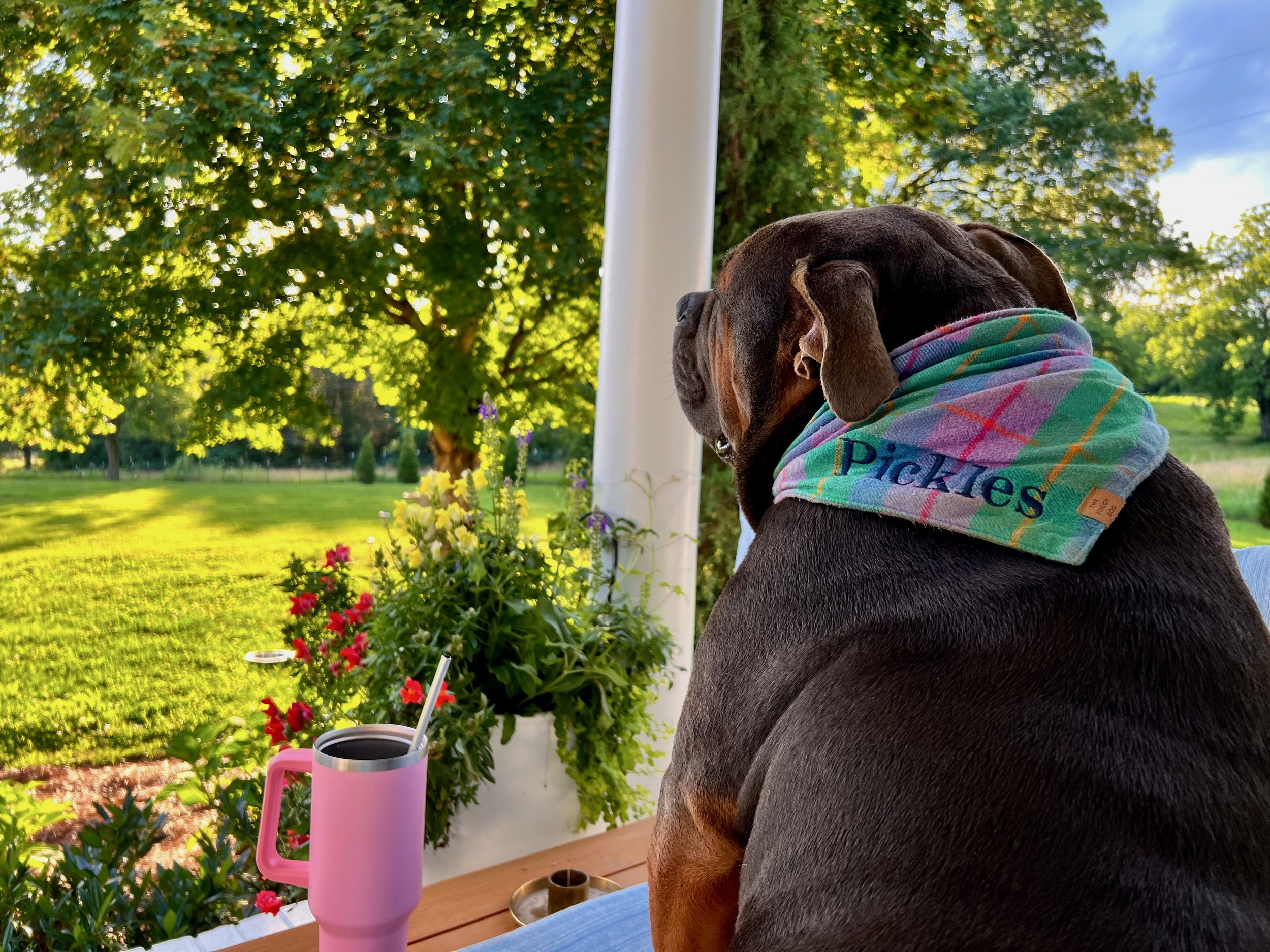
What This Actually Looks Like in 2026 Design
Let me bring this down from the philosophical to the specific, because I'm a designer who works in Nashville clay. I am not a theorist.
The shift from performance spaces to presence spaces. For a decade, the dominant question in outdoor design was: what will this look like when we entertain? The 2026 question, the real one, the one I hear in consultations now, is: what will this feel like on a Wednesday evening when it's just us? That's a fundamentally different design brief. It means smaller, more intimate spaces. Deeper planting. More sensory richness: fragrance, texture, sound. Less hardscape, more garden. Less stage, more room.
Sensory design over visual design. The industry is finally talking about this. Not just what a garden looks like, but what it sounds like, smells like, feels like under your feet. Water features designed for their sound, not their spectacle. Nepeta catmint planted where the October evening air carries its fragrance to the patio. Grasses chosen for movement because watching Muhly grass catch wind is something your body responds to before your mind does. Stone and wood chosen for warmth under bare feet. This is the compositional thinking I bring to every garden, engaging every sense, not just the eyes.
Native plants as a trust in place. The movement toward native and climate-adapted plantings has been building for years, but in 2026 it's crossed from ecological niche into mainstream design philosophy. And the reason isn't just environmental, it's that people are tired of fighting their site. Tired of replacing plants that die. Tired of importing beauty from other climates and nursing it through Nashville's clay and heat and humidity. The plants that evolved here, Echinacea, Baptisia, Rudbeckia, Liatris, Switchgrass, Muhly, Oakleaf Hydrangea, are not compromise plants. They're the most beautiful, most resilient, most alive things you can grow in Middle Tennessee. Choosing them is an act of trust in the place you live. In 2026, that trust is becoming the default. And it has to be, because Nashville's climate demands it.
The death of the perfect lawn. Garden Design Magazine said it directly this year: high-maintenance landscaping with perfect beds and immaculate lawns is out. The new direction is naturalistic: meadow plantings, layered perennial borders, gardens that self-seed and evolve and have a slightly wild edge. This isn't laziness. It's a philosophical shift from control to collaboration, from dominating the land to working with it. As an artist, I can tell you: the most powerful compositions have tension between structure and wildness. A garden that's too controlled is dead. A garden that's too wild is chaos. The art is in the balance. And the balance, in 2026, is tipping toward alive.
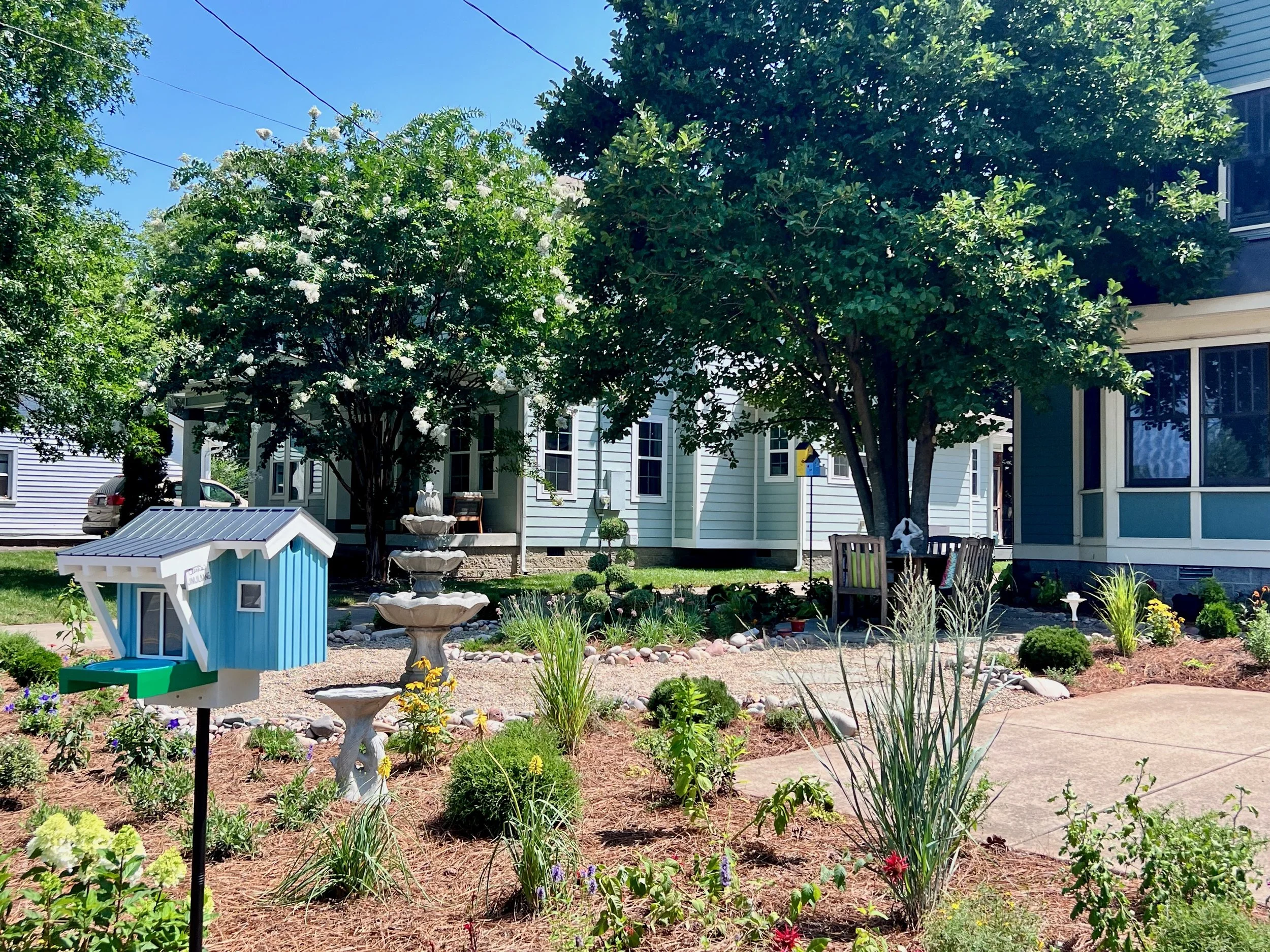
Enclosure over exposure. Privacy isn't just about blocking a neighbor. It's about creating the feeling of being held by a space, enclosed, intimate, safe. In a world where everything feels exposed and surveilled and performative, the desire for a physical space that is truly private, not private in the "fence" sense, but private in the "room made of living things" sense, is intense and growing. This is where garden design intersects with everything I've been saying about presence. Enclosure is what allows presence. You can't be fully here if you feel watched.
The Trend Is Not a Trend
Here's what I need you to understand. What's happening in garden design in 2026 is not a style shift. It's not going to be replaced by the next thing in 2027. It's a permanent reorganization of what people need from their homes, driven by forces that are only intensifying.
The screens are not going away. The noise is not going away. The speed, the chaos, the algorithmic anxiety, none of it is going away.
What can exist, on your property, in your yard, ten steps from your back door, is a space that operates on a completely different operating system. A space governed by biology instead of technology. By seasons instead of news cycles. By the slow, irreducible pace of a thing growing.
You cannot optimize a garden. You cannot hack it. You cannot make it go faster by upgrading the processor. It does what it does at the speed of life. And sitting in it, being in it, with your hands in the dirt or your feet on the stone or your eyes on the way the light is hitting the grasses, recalibrates something in you that no app, no retreat, no meditation recording can reach. Because you're not consuming an experience. You're in one. Physically. With your whole body. In real time. In real weather. In the real world.
That is the only trend that matters in 2026.
Not the fire feature. Not the smart irrigation controller. Not the color of the year.
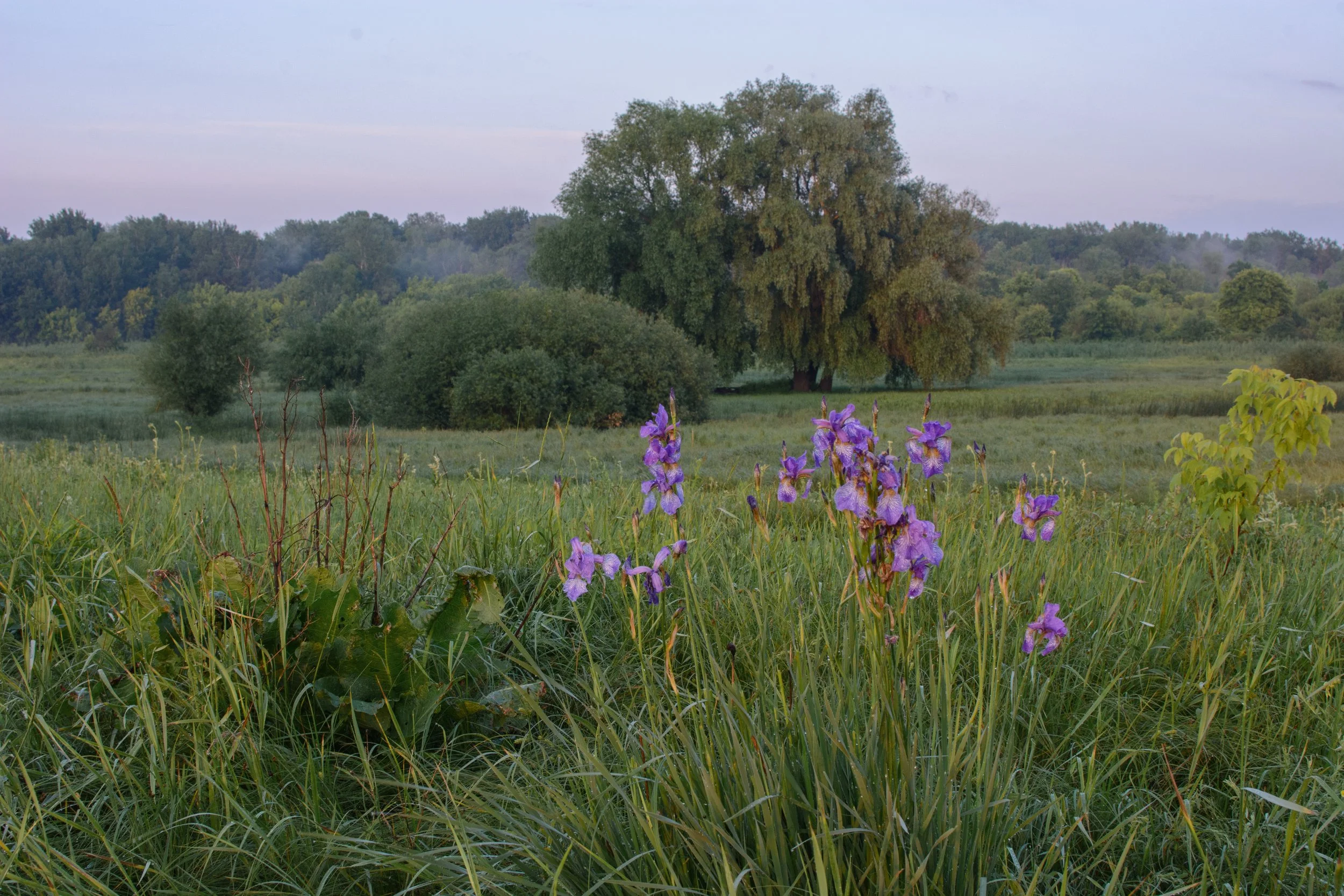
Peace. Presence. The radical, revolutionary, quietly defiant act of going outside into something alive and staying there.
Where This Leaves Nashville
Nashville is growing faster than almost any city in America. Lots are smaller. Houses are bigger. Density is increasing. Traffic is worse. The need for designed outdoor spaces that provide enclosure, sensory richness, and genuine refuge is more acute here than almost anywhere.
At the same time, Nashville's climate, the clay, the heat, the drought-deluge cycle, makes generic design advice from other regions useless. The garden that gives you peace also has to survive August. The native plants that create your refuge also have to handle alkaline clay. The composition that holds you also has to perform through four seasons in a climate that tests everything.
This is where design matters. Real design; not a plant list. The act of reading a specific piece of ground, studying it’s microclimate, and composing a living space that belongs there. That works ecologically. That performs through every season. And that creates, within its borders, the one thing that 2026 can't seem to manufacture anywhere else.
A place to be alive in.
If you're ready to build that place, I'd love to hear about your property.