
The Spring Garden Is Decided in September
Why fall is the true beginning of the garden year in Middle Tennessee, and when to start a garden or landscape design commission if you want to be living in your garden by spring.
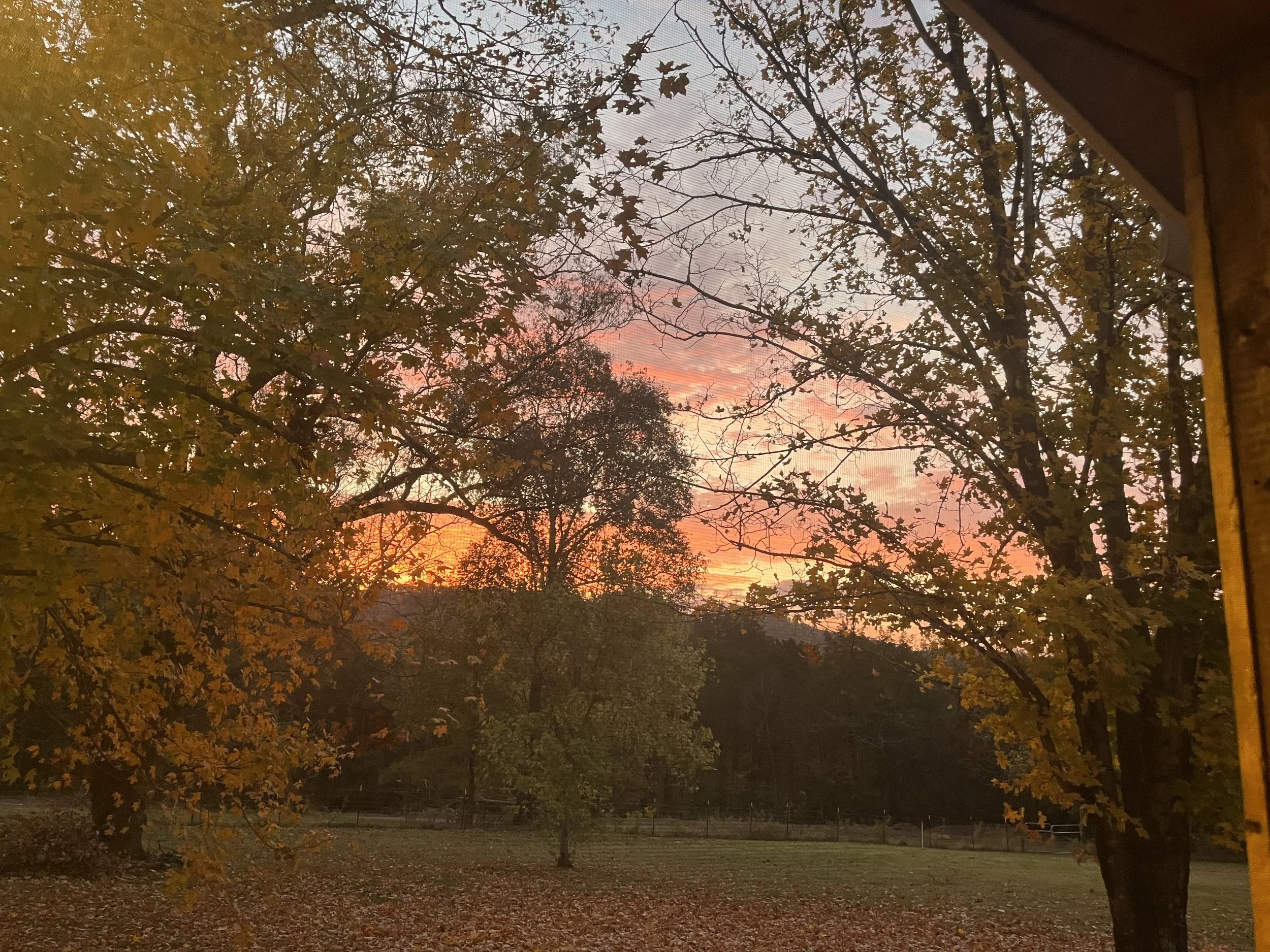
The red maples on my farm turn first. Every year, sometime in the middle of September, weeks before anyone is ready to admit summer is over, a single branch goes red like a struck match. Nobody else notices. Pool floats are still out. The county fair just finished. But the maples know, and once you've lived with a piece of land long enough, you know too: the year has turned, and the real work is about to begin.
Here is the thing almost nobody in my industry will say plainly.
Everyone believes the garden year begins in spring. It doesn't. Spring is when gardens are photographed. Gardens are made in the fall.
Spring is the marketing season. Fall is the planting season.
Every March, the same thing happens. The weather breaks, the daffodils come up, the garden centers fill their lots, and my inbox fills with people who have just walked outside, looked around, and decided this is the year. I understand it completely. Spring is persuasive. Spring is the land's own advertising campaign.
But spring planting is an industry convenience, not a horticultural one. It exists because that's when the nursery trucks arrive, when landscape crews mobilize, when homeowners feel the itch. The entire machine is built around the moment you feel motivated, not the moment the plants actually want to go in the ground.
Ask the plants, and they will tell you what every extension office, every honest nurseryman, and every designer who has watched a landscape survive its first Tennessee July already knows: in Tennessee, fall is the best planting season there is. Not a close second. The best.
Why fall planting wins in Tennessee clay.
It comes down to what a plant is trying to do, and when.
In October, our clay soil is still holding the warmth of the whole summer. The air has cooled, the rain has returned, and a tree planted now has exactly one job: roots. It isn't trying to push leaves. It isn't trying to flower. It isn't trying to survive 96 degrees while establishing itself in the ground. All of its energy goes down, into the dark, into the specific clay of your specific property, all through our mild winters, when the ground here rarely freezes deep, and the roots keep working long after the branches have gone quiet.
Now run the comparison. A tree planted in April gets about ten weeks of root growth before July arrives, and July in Nashville is not a season; it is an interrogation. A tree planted in October gets eight or nine months. By the time the heat comes, the fall-planted tree has already moved in. The spring-planted tree is still living out of boxes.
I wrote about this in my guide to planting in Nashville clay: the planting window that matters most here runs from October into late November/early December. It is the single biggest advantage you can give a new landscape, and it costs nothing except foresight.
The problem is: foresight has a deadline.
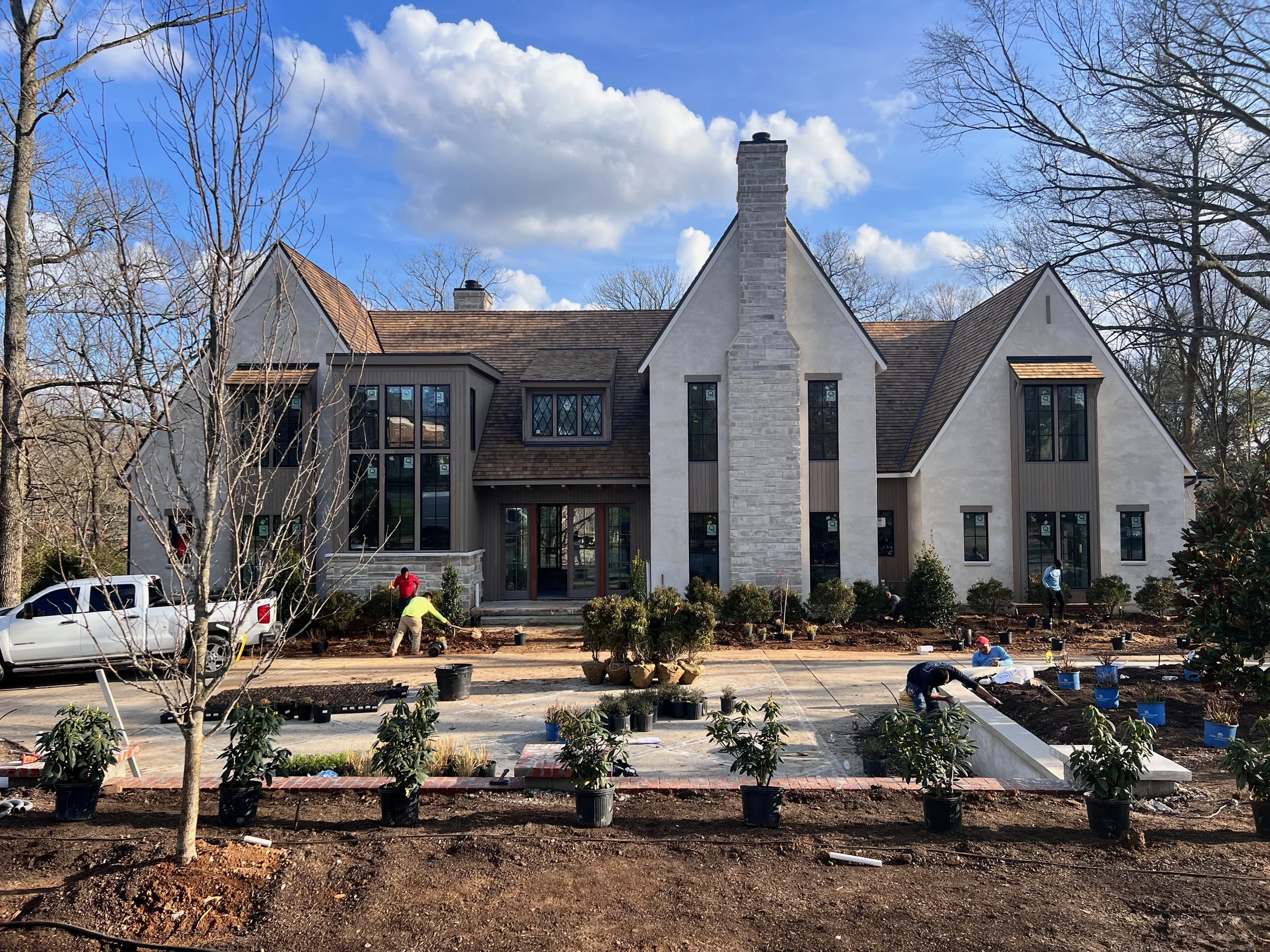
Root balls staged, not yet planted. This is the moment the whole essay is about.
The math nobody explains until it's too late.
A garden designed the way I design them cannot be conjured in three weeks. I wish I had magical powers. I do not. I don't say that to be precious about it. I say it because the calendar is simply the calendar, and I would rather you hear it in July than discover it in April.
Here is what a great garden or landscape commission actually requires. Time on your land: walking it, listening to what it's already doing, testing the soil samples, understanding where the water goes, and where the light lands at the hours you'll actually be outside. Then the design itself: the thinking, the drawing, the renderings, the plant sourcing, the revisions. Then installation has to be scheduled, and the good crews in this town book out months ahead, because everyone wants the best planting windows.
So run the math with me, honestly, in both directions.
If you reach out now, in July or August, we walk your property in late summer, design through early fall, and your garden goes into the ground in the October to December window. If you have irrigation, your backflow is disconnected in December and the plants have had at least two months of establishment watering before winter temps arrive. Roots establish at a healthy rate all winter. In April, while your neighbors are standing in line at the garden center, you are watching a landscape wake up that has been quietly deepening its roots and becoming itself for six months. This is the best-case timeline that exists in Middle Tennessee, and it is available exactly once a year.
If you reach out in September or October, we design through the fall and winter, which can be a gift, because winter shows a property with all its bones exposed, and install in late winter or early spring. You're living in the garden by summer.
If you wait until March, here is what actually happens, and I say this with love: you will not get a spring garden. You will get a spring conversation. Design takes the months it takes, installation crews are already committed, and the honest arrival point for a project that begins in March is the fall planting window, which is where we would have started anyway, half a year earlier.
The spring garden is decided in September. Sometimes it's decided in July. It is never decided in April.
A note on why the calendar is honest.
I want to be clear about something, because the internet is full of manufactured urgency and I refuse to add to it.
The Grass Girl is not a landscaping company. It is a design studio, and I am its only principal. I take on a limited number of design and installation commissions each year. This is not a marketing scarcity tactic. The way I work requires it. Land Portraiture means actually spending time with your land before I draw a line. Inhabitation Design means designing around the real hours of your life, which requires knowing what they are. That kind of attention does not scale, and I have no interest in scaling it. I'm here for the art form, not the profit margin.
So when I tell you the calendar is the calendar, that's all it is. Every garden that will be planted this October is being designed right now in July.
What the land is doing while you decide.
Here is the part I love, the part that has nothing to do with timelines.
A garden planted in the fall spends its first six months invisible. And those are the six months that determine everything.
All winter, while the surface shows you nothing, bare branches, cut stems, mulch, patience, the roots are moving through the clay. The garden is happening. It's just happening where you can't see it. And then one morning in late March, you walk outside, and the whole thing arrives at once, and it looks like magic, and it isn't. It's just the visible result of a decision made back when the maples first turned, by someone willing to trust the part of the work that doesn't reveal itself for six months.
I think about this every year on my farm, and I have come to believe it's the truest thing a garden teaches: everything that matters starts underground, in the dark, months before anyone applauds.
The garden you want next May does not exist yet. Right now, in July, it is only a decision.
Make it in the fall, and spring is simply the reveal.
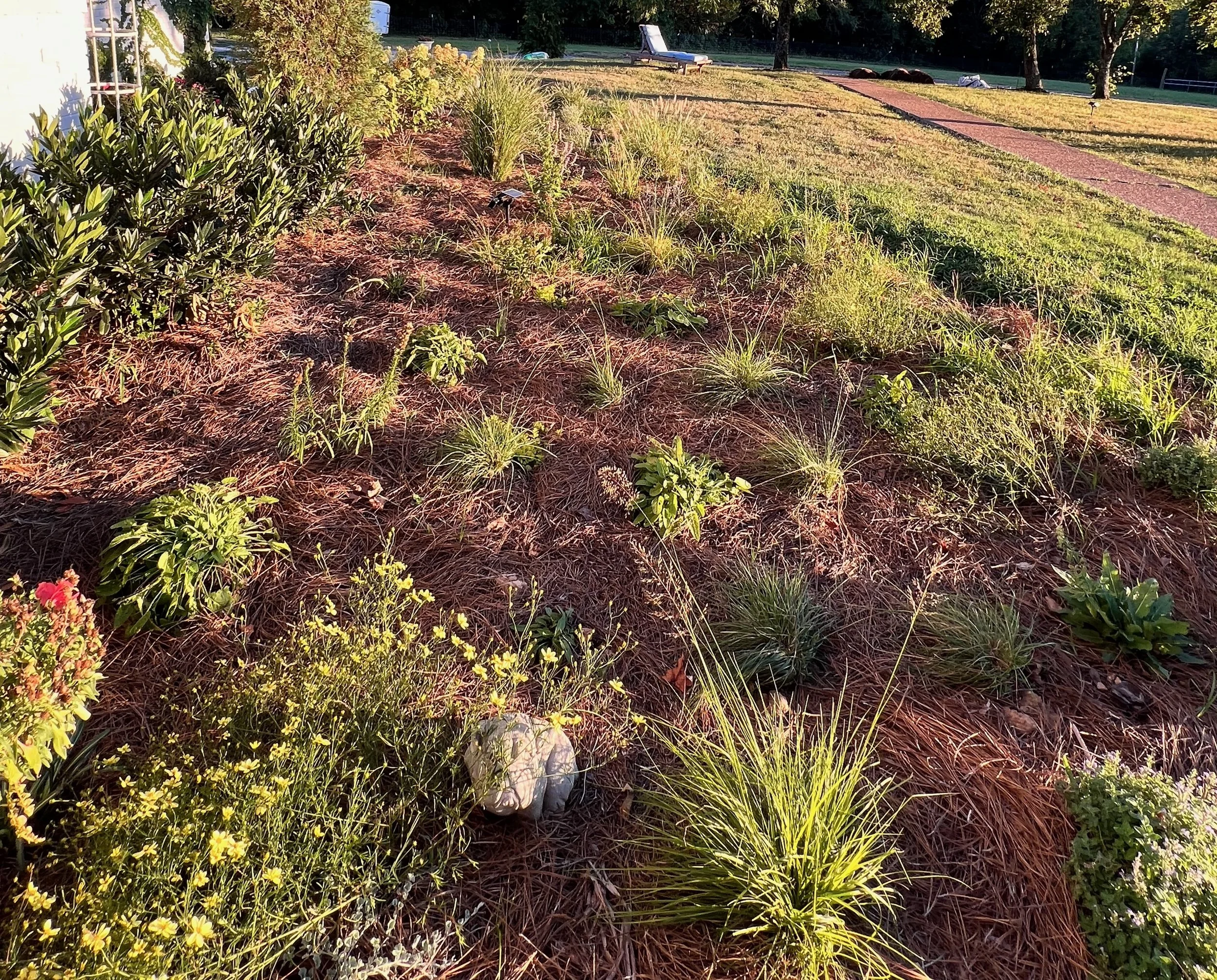
This is what fall is supposed to look like. Nobody told the grasses it's the end of anything.
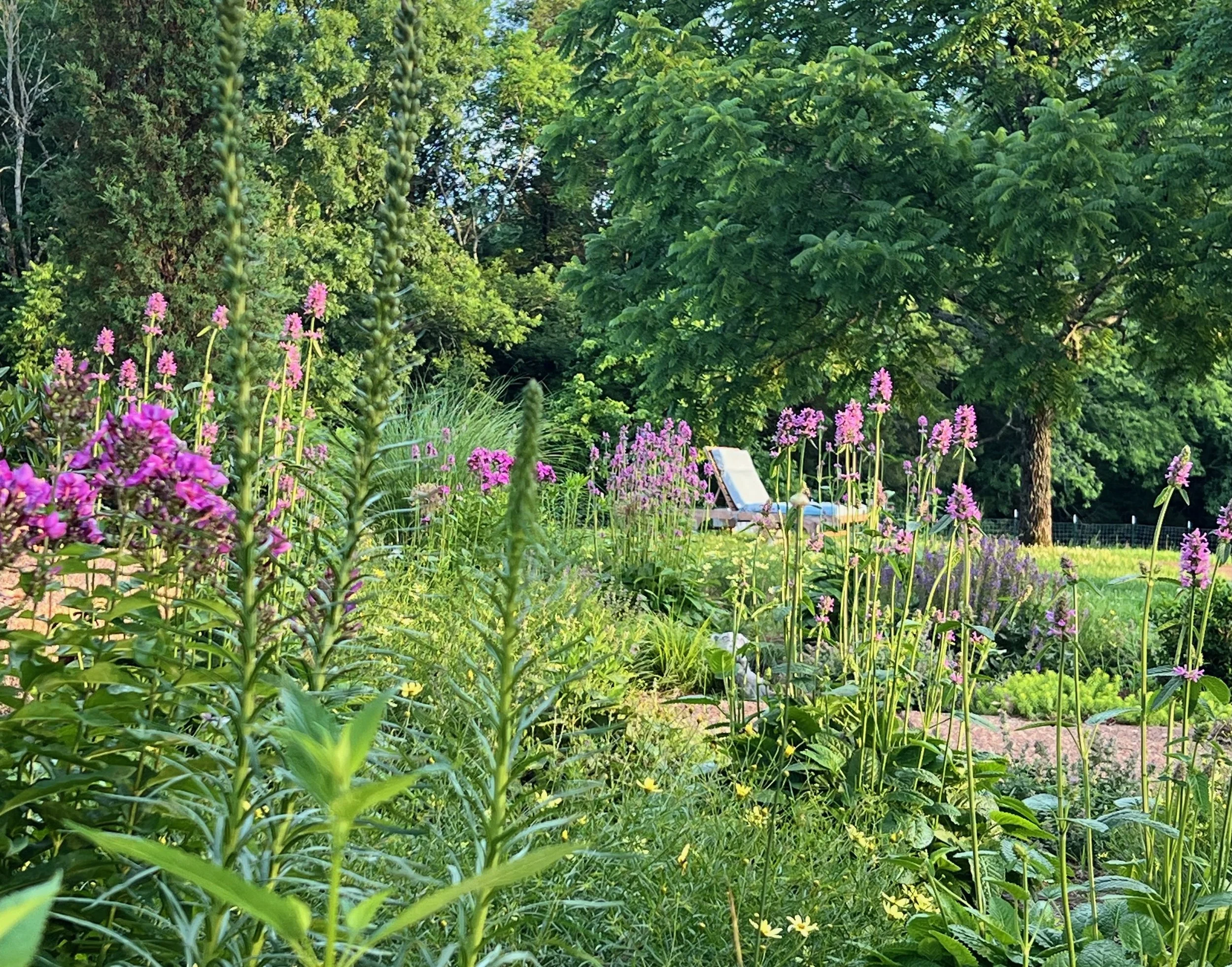
Planted the October before. This is June collecting on the debt.
Questions I Answer Every Fall:
When is the best time to plant trees and shrubs in Middle Tennessee?
October through early December. Four years ago, my answer was October through November. For the past three years, we have experienced changing weather, where the heat lasts well through October, and December is still mild enough for t-shirts. The soil holds summer warmth much longer now. By this late fall/early winter timeline, the air has cooled, and roots establish all through our mild winters, so a fall-planted tree meets its first July with eight or nine months of root development instead of ten weeks. It is the single biggest advantage you can give a new landscape in Nashville clay.
If I contact a garden designer in July or August, when will my garden be planted?
In the best window of the year. Site observation and design happen through summer and early fall, and installation lands in October, meaning your garden establishes all winter and is alive and moving by April.
If I reach out in September or October, is it too late for this year?
Too late for the October window, usually, but perfectly timed for the next-best path. We design through fall and winter, when a property shows its bones, and install in late winter or early spring. Tennessee’s winter is very mild, and as long as the ground is not frozen, planting continues. You're living in the garden by summer.
What happens if I wait until spring to start?
A project that begins in March realistically installs in the fall. Design takes weeks to months (depending on project scale and scope), and installation crews book out well in advance of spring. Waiting for spring doesn't get you a spring garden; it gets you the same October planting window, one year of living with your land unchanged later.
Why does garden design take months?
Because the design should be a portrait of your specific land, not a template applied to it. Take a drive around your neighborhood. Do you notice the same landscape plan applied in various ways, but with repeatable plants and layouts? That’s not a custom garden design. That is a basic template applied to quick dimensions. Good landscape or garden design stands out against those properties for a reason. It requires time on the property, observation across conditions, plant sourcing, drawing, and revision, and then an installation scheduled into a real crew's real calendar. The gardens worth having are decided slowly and revealed quickly.
How many projects does The Grass Girl take on?
A limited number of design and installation commissions each year, few enough that every property gets sustained attention. The studio is a fine art practice, not a volume business. When the year's commissions are filled, they're filled.
If you want to be standing in your garden next spring, this is the season to begin. Start with a conversation, or read about how the work happens.