
Land Portraiture
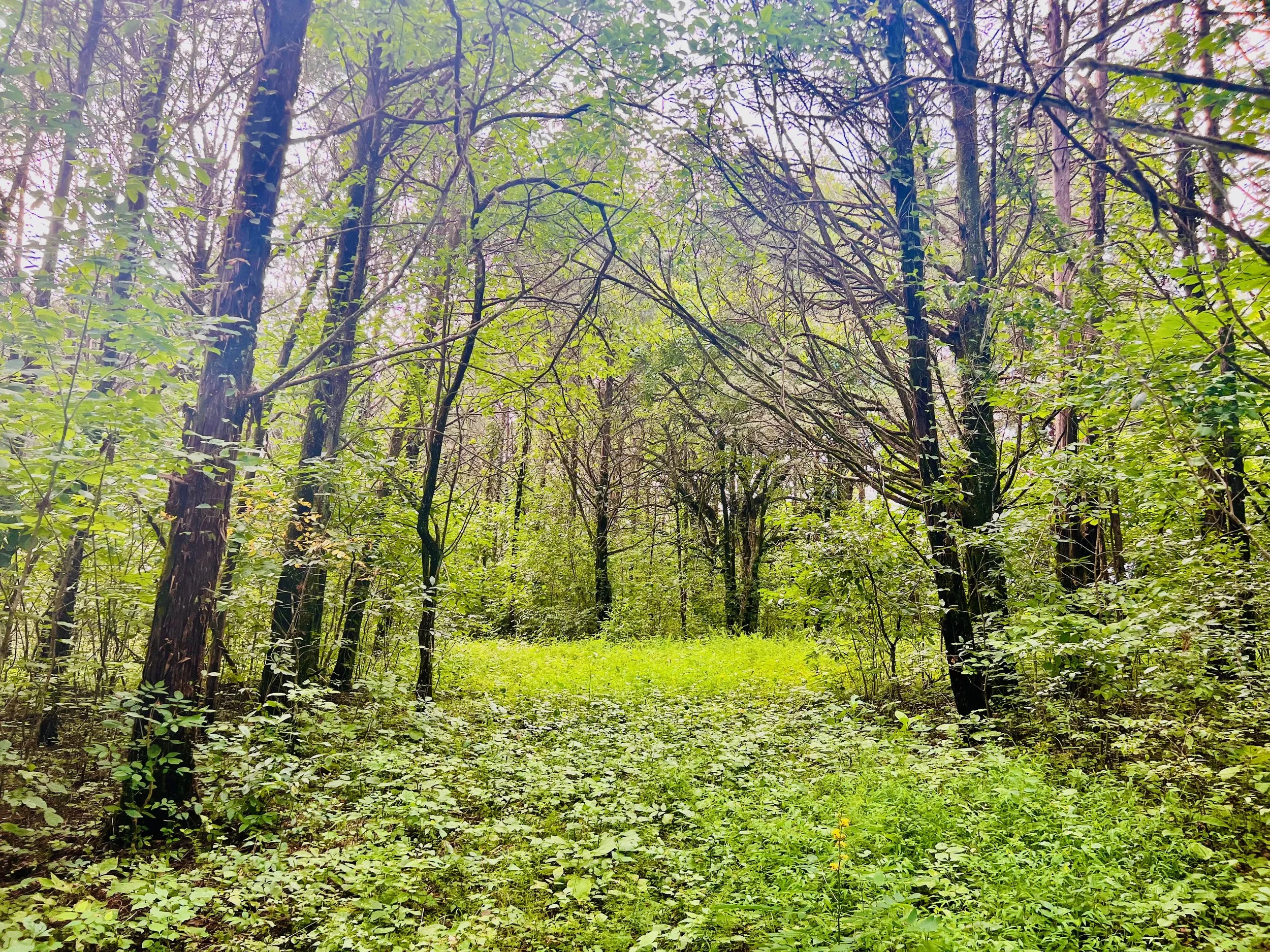
The woods where the deer bed down.
I moved to my farm in Smith County from East Nashville. I don't think I ever once even noticed a bird at my house there, unless it flew into my window and died by the front door. I was a different person before this land got hold of me.
The house on my farm sits on top of a hill. When I first saw it, the hollies were overgrown years past the point of caring for them, and a redbud near the house might as well have been holding a cigarette in one hand and a white flag in the other; if it wasn't already dead, it wanted to be. The ash trees had all gone to borer and were standing there like ghosts taking up space that the cedars and maples around them were clearly angry about. The copperheads had turned the back cement porch into their own personal tanning deck. The fields rolling out below were nothing but neglected grass. No blooms. No color. Dried and beige—my personal hell; certainly nothing for a bee to bother stopping for. And the lowest wet ground at the bottom was bare. Not even grass. Just mud.
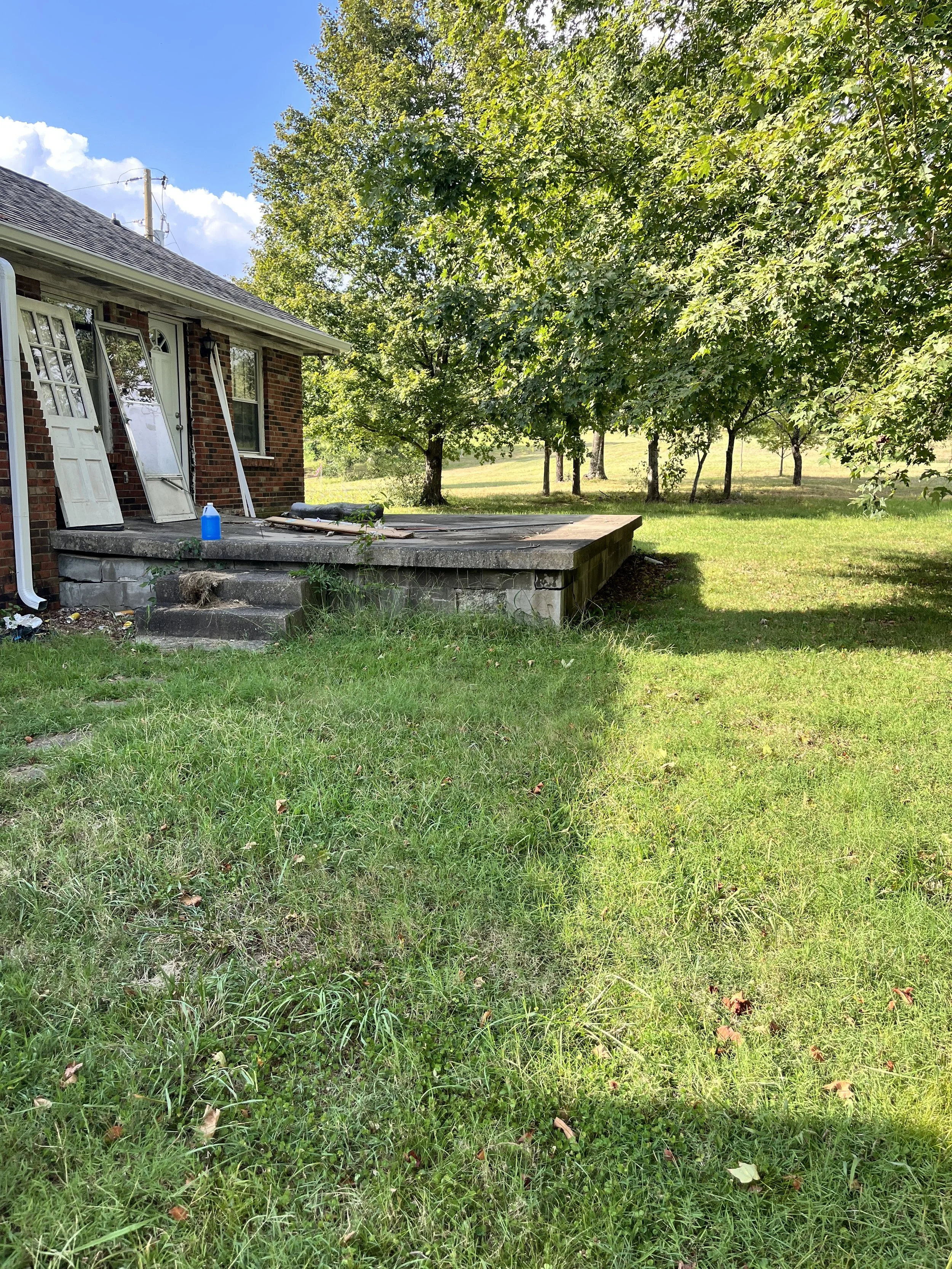
The back porch when I arrived. I still shiver.
I didn't plant anything for three years.
I'd love to tell you that was intentional. That I had a philosophy about observation and I was executing it with discipline at midnight with a candle and a monocle. But I was just overwhelmed. I'd come from pavement and noise and screens to this hilltop full of dead things and danger and land I didn't have the first conversation with yet. So I walked it. Over and over. I watched the water in April and the weeds in June and they told completely different stories. I watched the light shift from June to November and nothing about it was what I would have guessed standing there when I got the place. I walked so much that the deer started to know my route before I did. And Pickles, my dog, grew a walking wardrobe fit for every season.
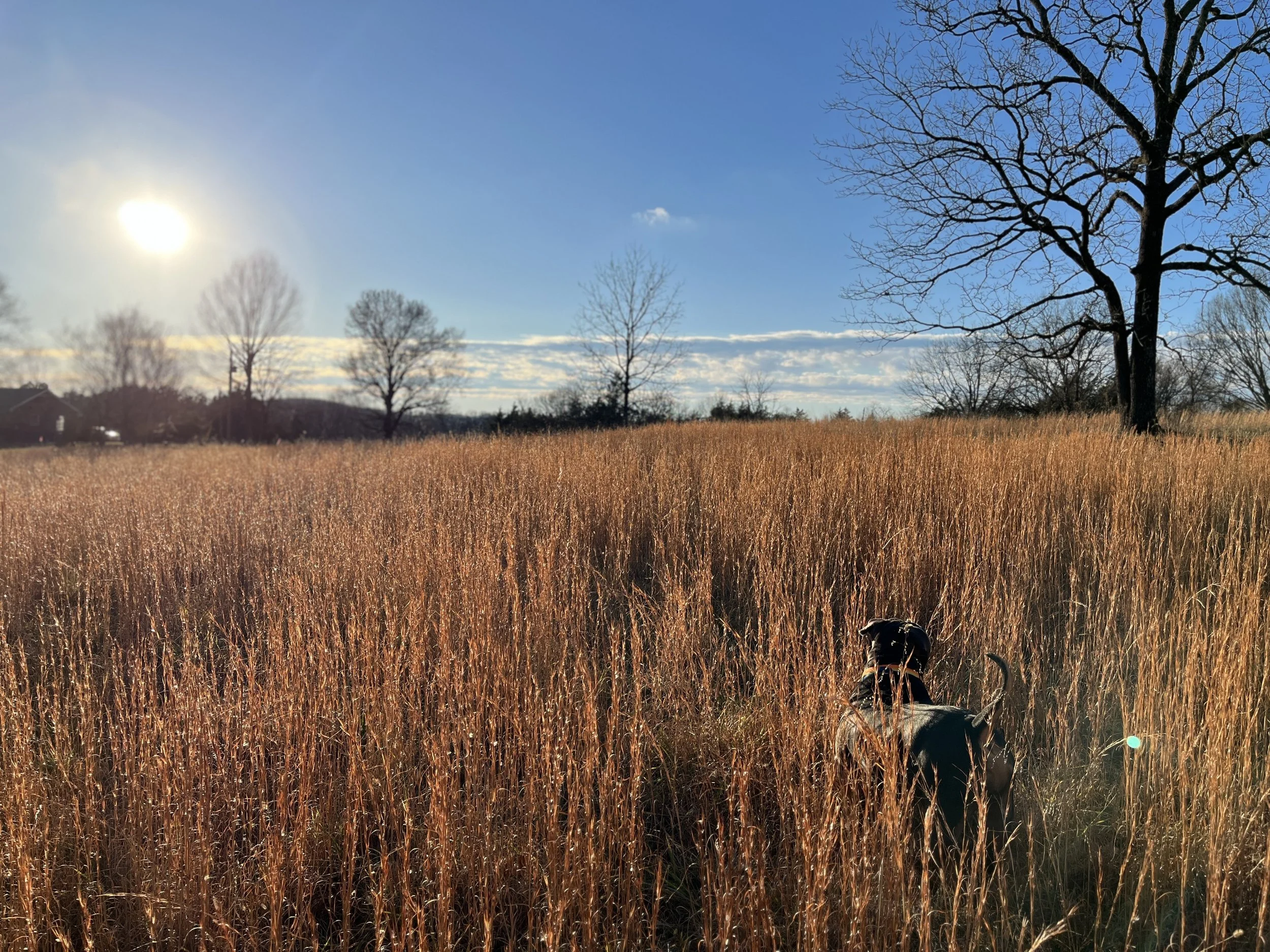
Pickles on our daily walk through the fields.
Somewhere in all of that, something happened that I wasn't planning nor expecting. I got quiet. Not peaceful-retreat with a complimentary leather-bound monogrammed journal quiet. I mean my actual volume changed. The internal noise, the opinions and arguments and thoughts and comparisons that come from screens and phones and all the digital stimuli the world seems designed to fill your life with. It started to thin out. And in the space that opened up, I started hearing things I'd never heard. Not metaphorically. The birds. The insects. The wind doing different things in different parts of the property. The land had been talking the entire time. I just couldn't hear it over myself.
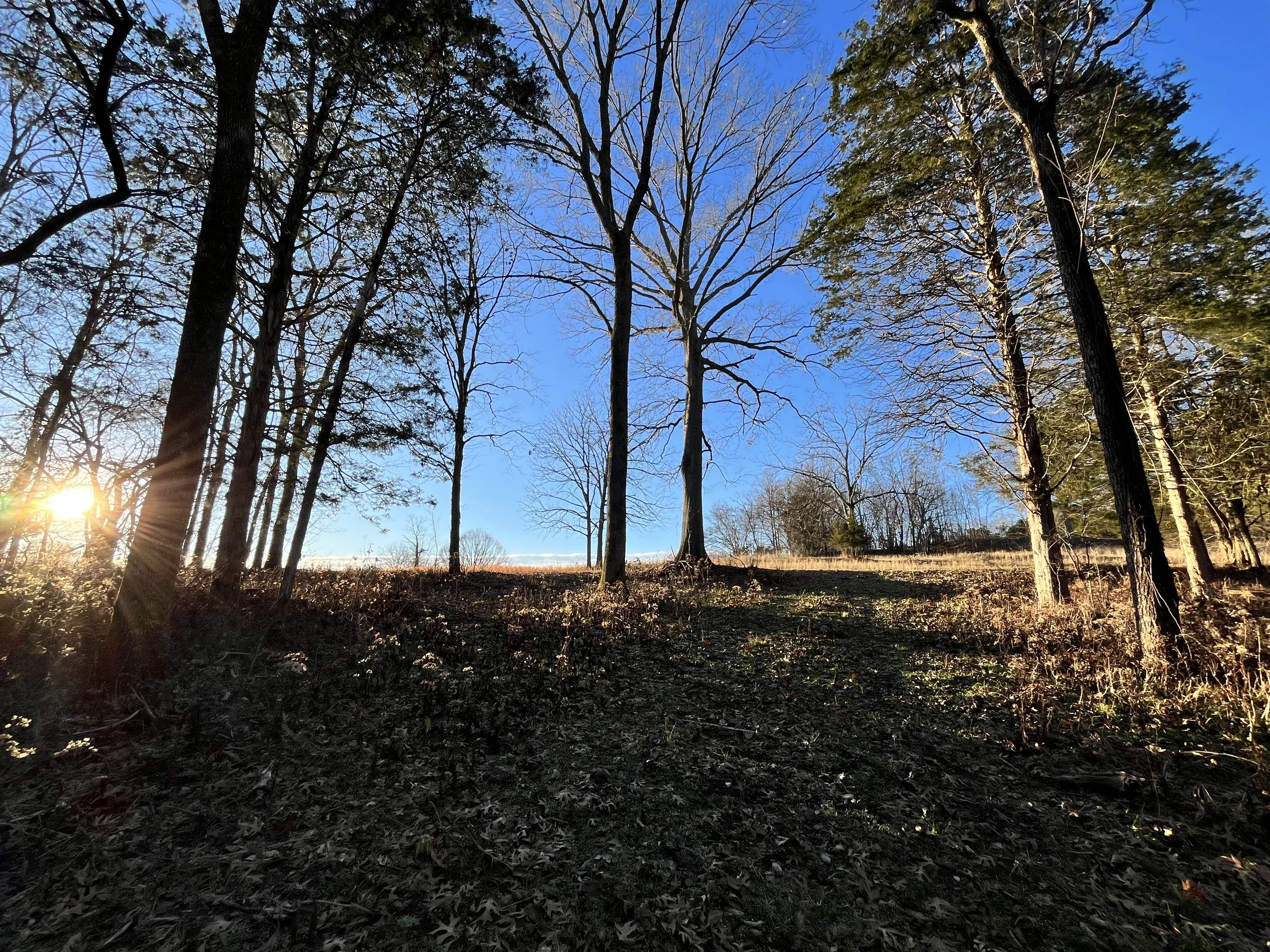
The woods in winter. Still talking.
My third summer, I planted a pollinator garden. And not because I was inspired by an Instagram gardener wearing a circle skirt, a kerchief, and a basket. Because I'd finally noticed the absence. All that grass and not one bloom. Of course the bees were gone. Of course the birds had nothing to say about it. I planted, and that first month the bees came like they'd been waiting somewhere nearby for someone to remember them. Every year since, more come.
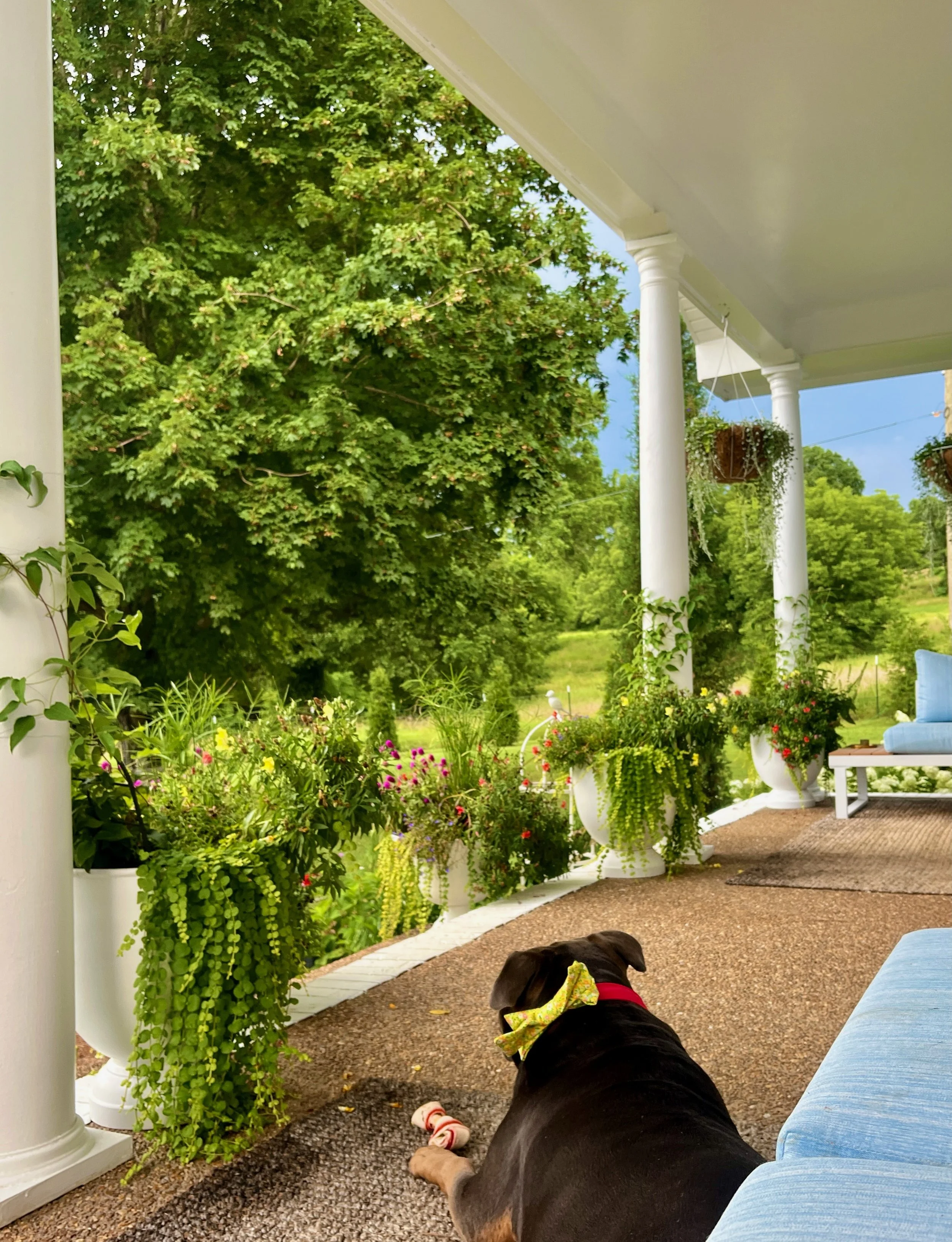
Pickles keeping watch over the pollinator garden.
The willow took four years. Four years of looking at that bare wet hollow where nothing would grow before I was certain enough to put something in the ground there. A weeping willow (Salix babylonica). It's thriving now. Because I didn't guess. I waited until I understood what the ground needed and was holding space for.
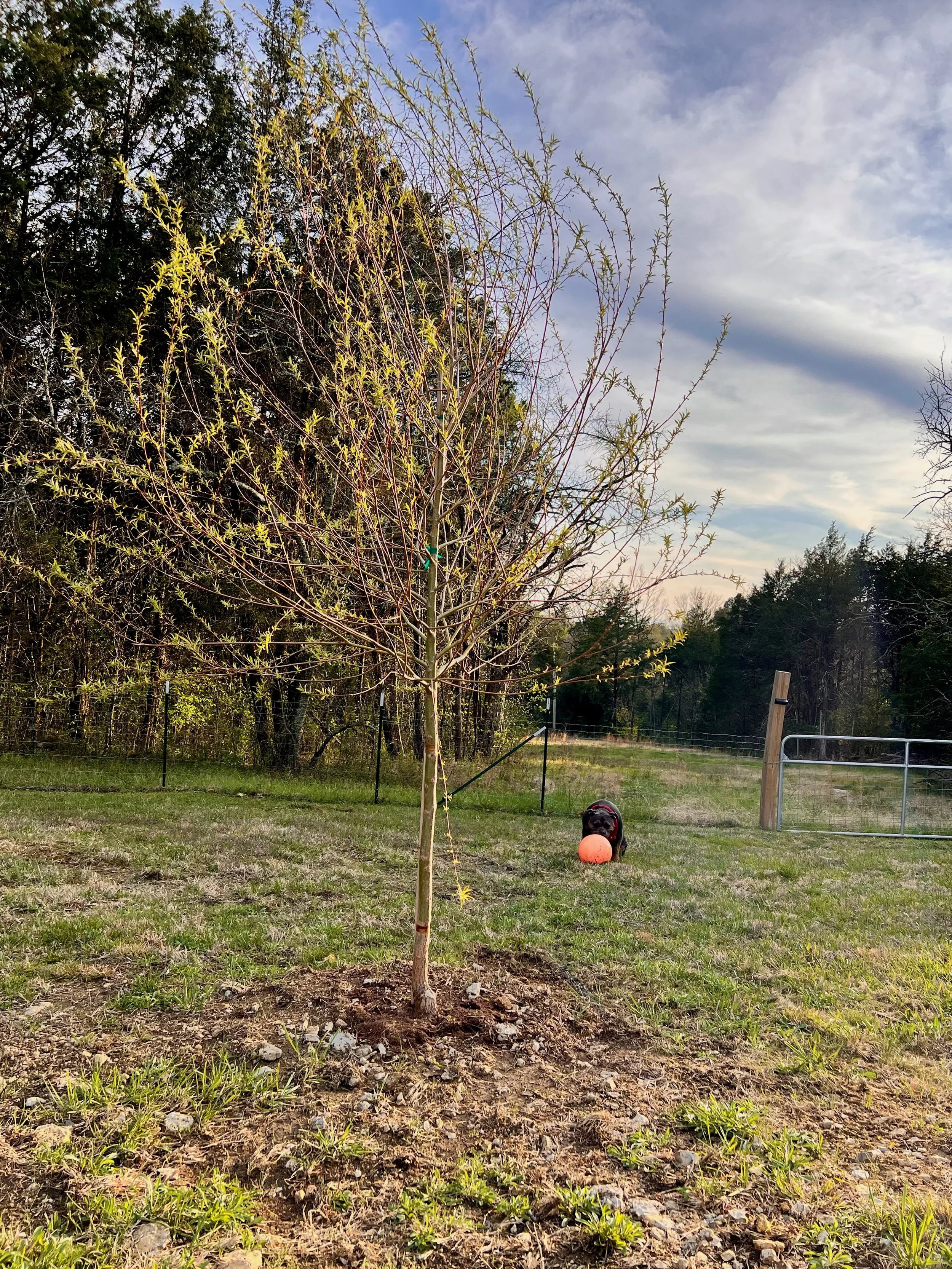
The weeping willow (Salix babylonica), year one, in early spring. Four years of watching came before this.
The limestone underneath Smith County is why I started to water everything by hand. Running irrigation would mean trenching through rock, and the disruption to the land would be violence dressed up as convenience. It would also be fiscally insane. Expensive violence; the mafia doesn't even believe in that. So I water. Every day in the summer, with a hose, by hand. And I grew to love and cherish that time in a way I never could have predicted. Watering is when I see things. The plant that's stressed. The one that's reaching toward light I hadn't noticed. The bug I haven't identified yet. The weed that thinks it's more sly than me. Watering became my daily silent conversation with the ground, and I would not trade it for any system.
Here is what I know now that I could not have known from living downtown in Nashville. The land studies you back. The deer bed down in my woods every night now, and every season their numbers grow. They didn't come because I designed a habitat. They came because I became quiet and safe. The copperheads didn't leave because I fought them. I cleared the overgrowth and the deadwood and the concrete tanning deck that made the porch their kind of place, and it became my kind of place, and they moved on. The land renegotiated.
I'm still planting my sound barriers slowly. Slowly is the only speed I trust anymore. And it's working. The car noise from the surrounding hill roads has gotten quieter. The birdsong has gotten louder. The insects have gotten louder. Something is being restored that I feel in my body before I can explain it. The ratio is shifting. More life, less machine.
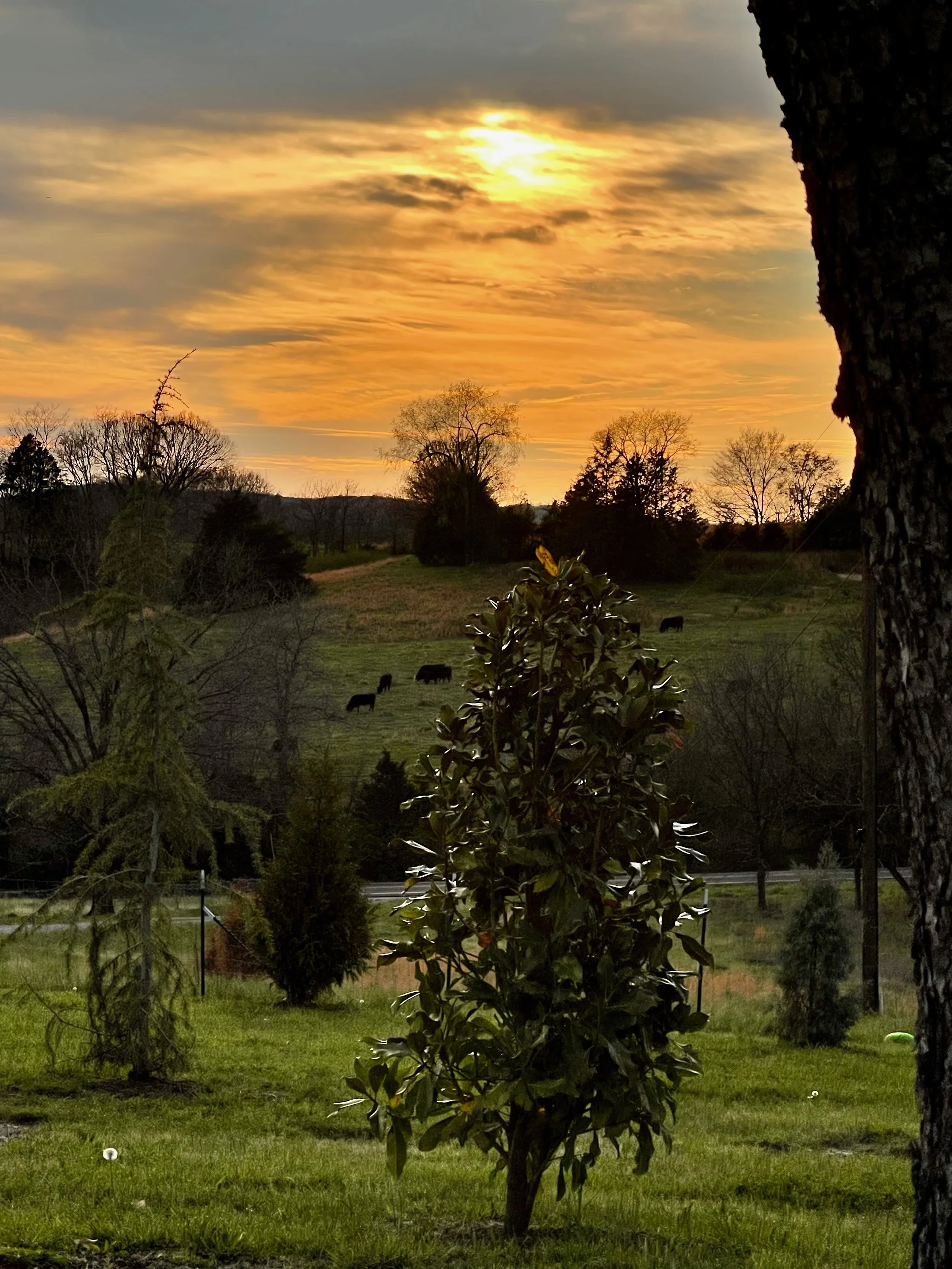
Sound barrier plantings at sunset. The ratio is shifting.
And I've gotten quieter too. My volume has been turned down.
I don't mean that metaphorically. I mean I am a physically quieter person than I was four years ago. Listening is more important than talking. I move through the property differently than I move through the rest of my life. The land did that. Not me. I didn't set out to become a quieter person. I set out to figure out what to plant, and the land said: not yet. Wait. Watch. And the watching changed me before it ever changed the garden.
This is what I call land portraiture. It's not a site analysis or a survey. It's not a fancy title for a technique with better design outcomes. It is a practice of sustained presence with land that changes you. And the changed version of you sees what's actually true about a place. What's missing. What's waiting. What's already there and just needs someone to finally notice it and respond.
Land Portraiture is how I listen. Inhabitation Design is what I do with what I hear.
I bring this to my clients' properties now, and it has changed everything about how I work.
A new client had already decided where her pavilion was going. Lowest point on the property, right where the water pools and sits after a big rain. I’d been on the land for an afternoon. The pavilion needed to be on the opposite end of the property entirely. It would block the neighbor’s storage shed from her home’s best view off the hilltop and wouldn’t require a new access path to the pavilion. That access path would have been exactly where the sunset hits. That’s not pathway ground. That’s where you light a fire, pour some wine, and watch a sunset. She’d owned the land for years. I just knew what to listen for.
The garden design comes after that. But it can’t come right without it.
The extended time I spend on a site isn't a luxury or an inefficiency. It's the whole method. Because over months and seasons, I don't just learn the property. I learn the people living on it. I hear what's absent from their lives and their language on that land. What they haven't said. What they haven't noticed yet about their own place. This is not a property and a problem to solve. If that's what someone wants, I'm not the designer for them. This is deliberately slow, thoughtful work.
My farm taught me that before I ever had a name for it. I spent years becoming someone who could see what the land already knew. And now I bring that seeing to yours.
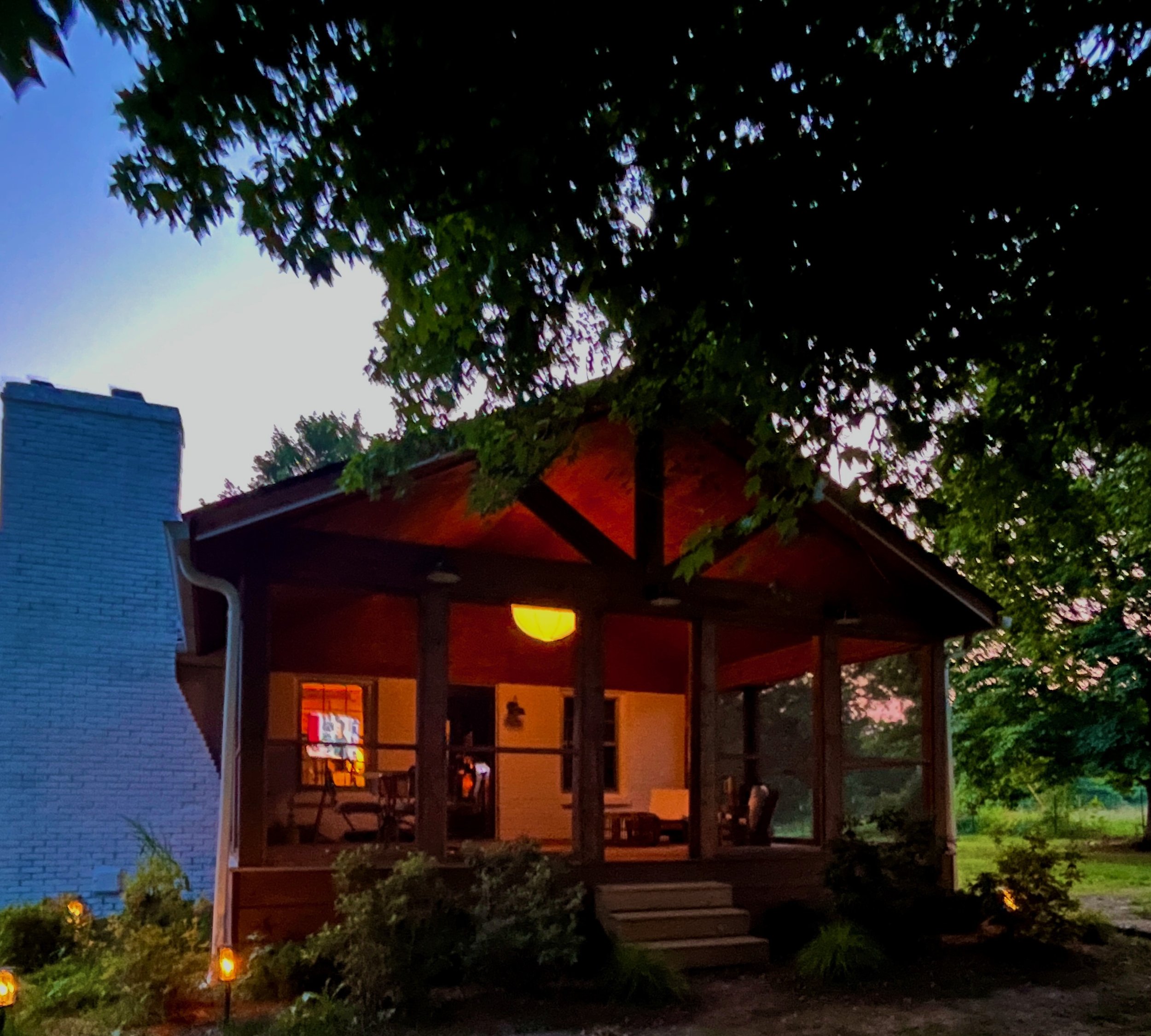
The same porch, renegotiated.