
Why Luxury Outdoor Spaces Go Unused: A Nashville Garden Designer's Answer
The screens won. Now what?
Why so many expensive outdoor spaces go unused, and how thoughtful garden design can pull people back outside for the hours that actually matter.
People are spending more than ever on outdoor living, privacy, and land, yet many of the most expensive gardens in America still go unused. This is why, and what garden design has to do differently now.
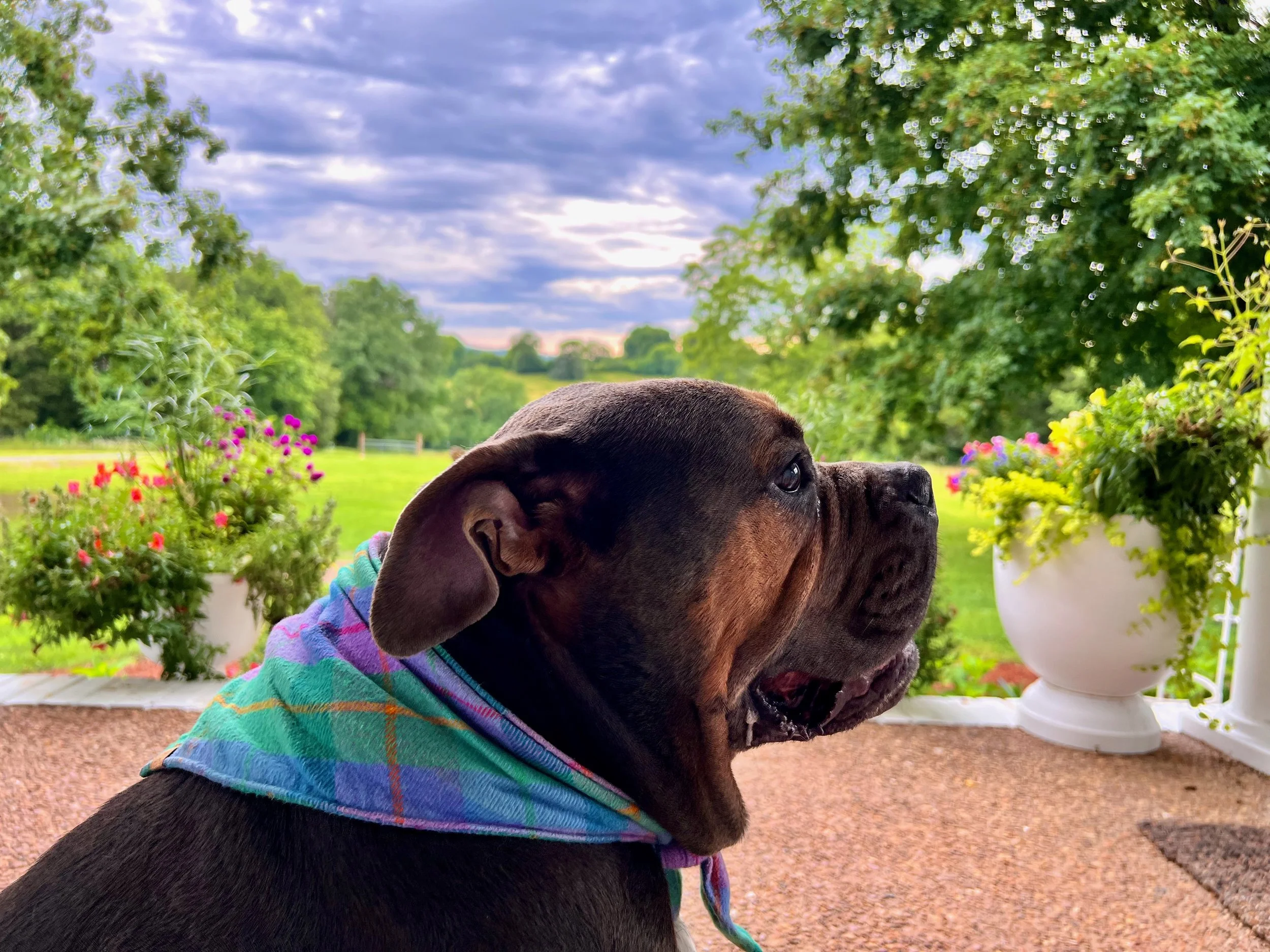
Pickles has an air conditioning vent with his name on it inside. He has never once chosen it.
Last fall I walked onto a property in Williamson County, TN where the landscape budget exceeded what most people spend on a house. The patio furniture still had tags on it from two summers ago. The outdoor kitchen had been used three times. The fire pit was decorative. The homeowner told me she never sits outside.
Not rarely. Never.
She'd done everything right. Hired a landscaper. Built the patio. Bought the furniture. Installed the lighting. Spent $30,000 on a privacy screen that blocks the neighbor's view of a backyard that nobody's in. And every evening, she's on the couch. Phone in hand. TV on. The garden is out there, empty, doing absolutely nothing for her life.
She's not lazy. She's not ungrateful. She wanted to be outside. She spent the money to be outside. The garden just never gave her a reason to stay. The garden couldn't even give bees a reason to stay.
The couch did. The screen did. The perfectly climate-controlled, endlessly entertaining interior of her house did. The inside of that house has been engineered by some of the smartest companies in the world to keep her exactly where she is. Her garden was designed by whoever made the lot look finished before closing. That's the competition. It isn't close.
More People Are Buying Land. Almost Nobody Is Designing a Life on It.
Something is happening right now that I've never seen in my career.
The Coldwell Banker 2026 Luxury Outlook reports land purchases up 38% year over year among affluent buyers. Unique estate inquiries are up 78%. Privacy shows up in nearly half of all luxury listings now, up from 38% the year before. Nashville keeps showing up in these reports as an emerging luxury haven. Sotheby’s 2026 Luxury Outlook points to luxury demand being shaped by lifestyle factors, wellness amenities, and legacy planning. Not returns.
The pull toward land is showing up across luxury real estate reporting, as affluent buyers look for more space, privacy, flexibility, and legacy value. The USDA’s 2022 Census of Agriculture found that 58% of U.S. farm producers reported a primary occupation other than farming, and that number keeps climbing.
People with resources are choosing the land. They can feel the pull of it even through the noise. They want out.
But buying the land is the easy part. Designing a life on it is where almost everyone gets stuck. Because the same industry that will sell you fifty acres and a beautiful house will hand you a landscape plan designed from a drone photograph or a survey, and nobody will ever ask you how you actually want your life to be there: what your morning routine is, which direction you walk when you come home, how you unwind from the day, or what the property sounds like at 8pm.
And then you're back on the couch. On fifty acres this time.
Why Beautiful Outdoor Spaces Still Go Unused
Here's what I see on high-end properties across Middle Tennessee.
A designer thinks about the plan view. The aerial perspective. The way the garden looks from above, on paper, in the presentation. Plants are chosen for a rendering. The patio goes where the plan says it should go. The screening is a wall of Green Giant or Emerald Green arborvitae because the client said "I need privacy," and a landscaper delivered.
The aerial perspective is correct. The design is expensive. The design is empty. As much as I love birds, I don't design landscapes for their aesthetic delights.
You don't live in your garden from above. You live in it from your porch at 7am with your hands around a warm cup or at 8pm with a cold one. You live in it from the kitchen window while you're rinsing dishes at 6:30pm. You live in it from the chair by the fire pit at 9pm when the kids are finally asleep and you have twenty minutes that belong to you and Stevie Nicks.
Those are the moments the garden has to win. If it doesn't win those moments, the screen will. The screen always wins by default. It's right there. It's warm. It doesn't have mosquitoes.
Your garden has to be better than the screen at the exact moment you're deciding between them. That's the design problem of this decade. I've built my entire practice around solving it.
Why “Go Outside More” Never Works on Its Own
Every wellness article, every parenting blog, every therapist's Instagram says the same thing. Go outside more. Reduce screen time. Touch grass. Try cold plunging. Never mind, what about a sauna?
They're right about the diagnosis. They're useless about the solutions. "Go outside" is a guilt trip. Guilt trips don't compete with a warm couch and a good show.
You know what competes? A porch positioned so the sunset hits you in the face every evening without you having to chase it. A planting that smells different at dusk than at noon because the catmint releases its fragrance in the cool evening air and nobody told you that would happen but now you can't stop noticing it. A waterfall that's louder than the road. A fire pit that makes the 9pm air feel like a room. Baby birds in a nest that make lunch outside seem sweeter than chewing and swiping in the kitchen. White hydrangea blooms positioned near the seating because they're the last things visible in a garden after dark; they hold the light when everything else has gone.
These aren't luxuries. They're design decisions. And they're the decisions that determine whether your garden wins or loses the nightly competition with Netflix or TikTok.
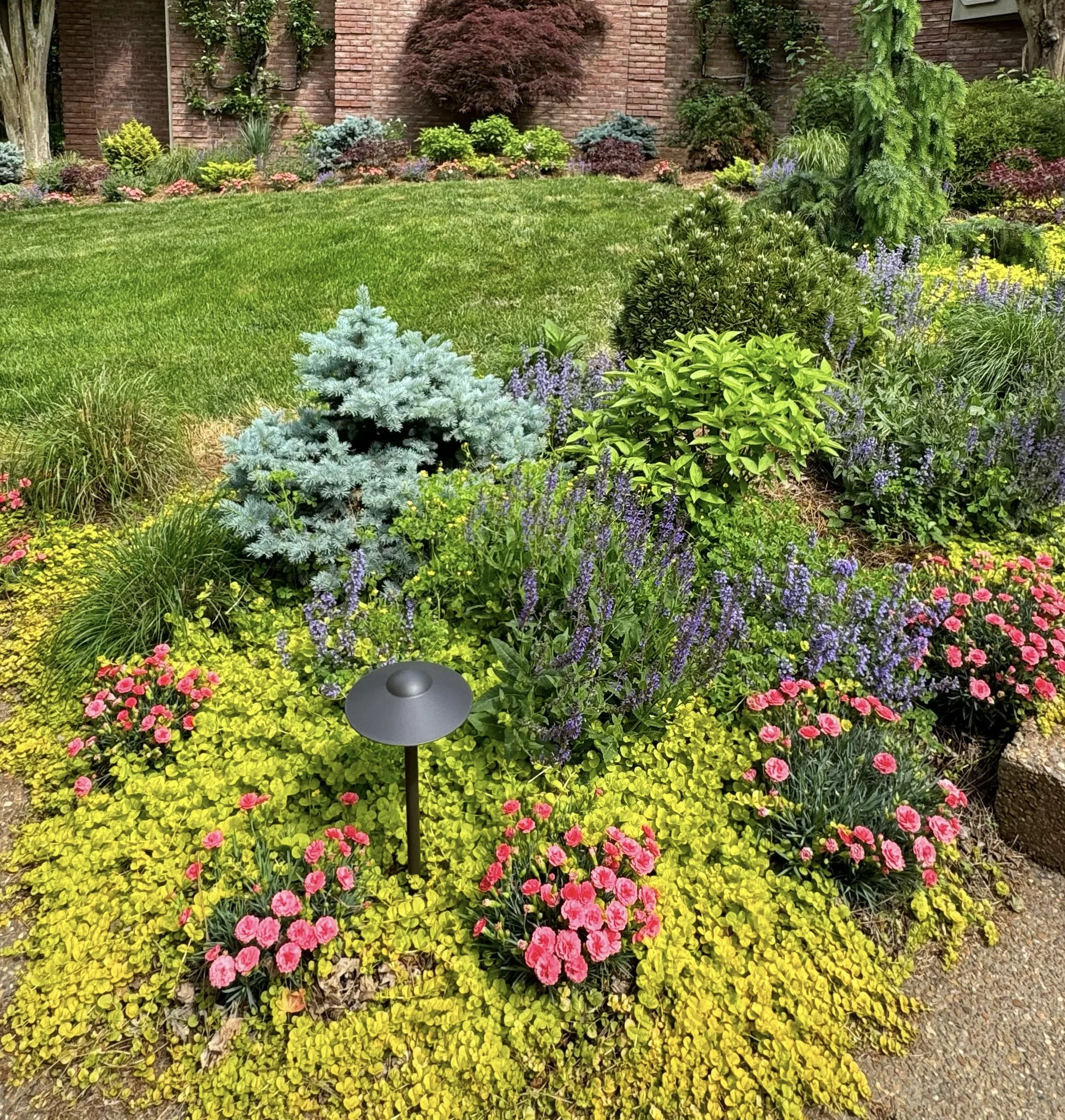
This is a residential property in Wilson County. That path light isn't decorative. It means somebody's still out here at 9pm.
What My Farm Taught Me About Designing a Garden People Actually Use
I moved to a farm in Smith County from East Nashville. If you aren't familiar with Tennessee, think Green Acres: New York City to Hooterville. I don't think I ever once noticed a bird at my house in Nashville, unless it flew into my window and died by the front door. I was a different person, a distracted person, before my land taught me there is infinite pleasure to be had in focused care.
I spent three years on my farm before I planted a single thing. Not because I was procrastinating, but because it taught me to slow down and listen. Learning where the water goes in February. Where the light falls in July. Where that same light falls in November. Where the wind comes from in October. What's already growing, and why it's growing there, and what that tells me about the soil and the drainage and the whole biography already written into the ground.
I call this practice Land Portraiture. It changed everything about how I work. The land already knows what it wants to be. My job is to hear it and then design something that honors what it's telling me while serving the life of the person who lives there.
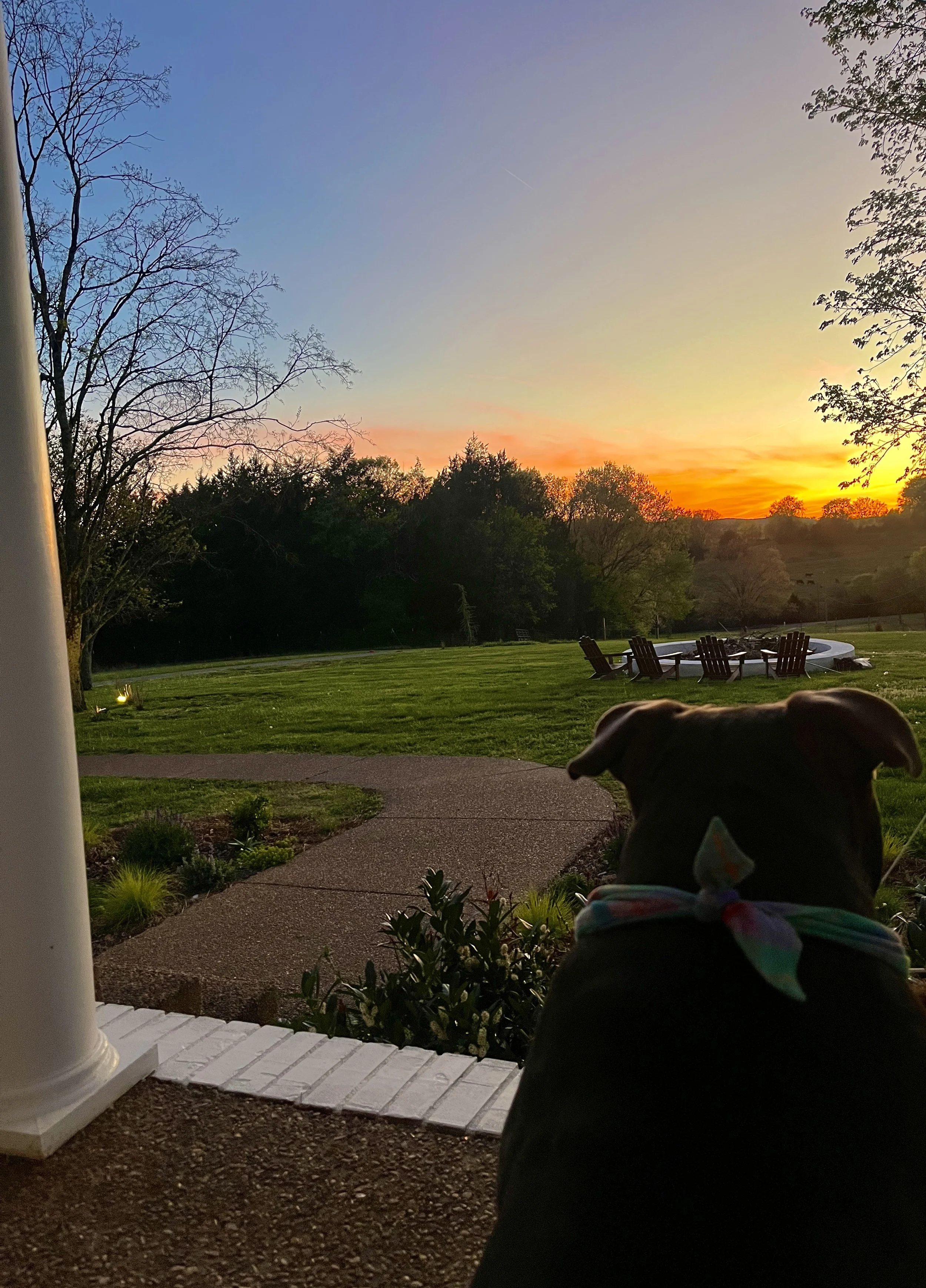
When I finally planted, I designed every bed around the hours I'm actually outside. Morning coffee is on the porch. The hummingbirds are on the snapdragons by 8am. The coneflowers are where I can see them from my office at noon. The fire pit faces west because that's where the sky turns pink and lands on the hills like it's kissing the cows goodnight. The white flowers are near the seating areas because they glow at dusk. The salvia and mint is close enough to the porch that by July you can hear it humming with the bees without leaving your chair.
The porch wins every night. And I don't even have to try in being disciplined about screen time. Because the garden is better than the screen at the hour I'm choosing between them.
My dog, Pickles, could sleep on the air conditioning vent inside. He chooses the porch. He has better instincts than most of us about this.
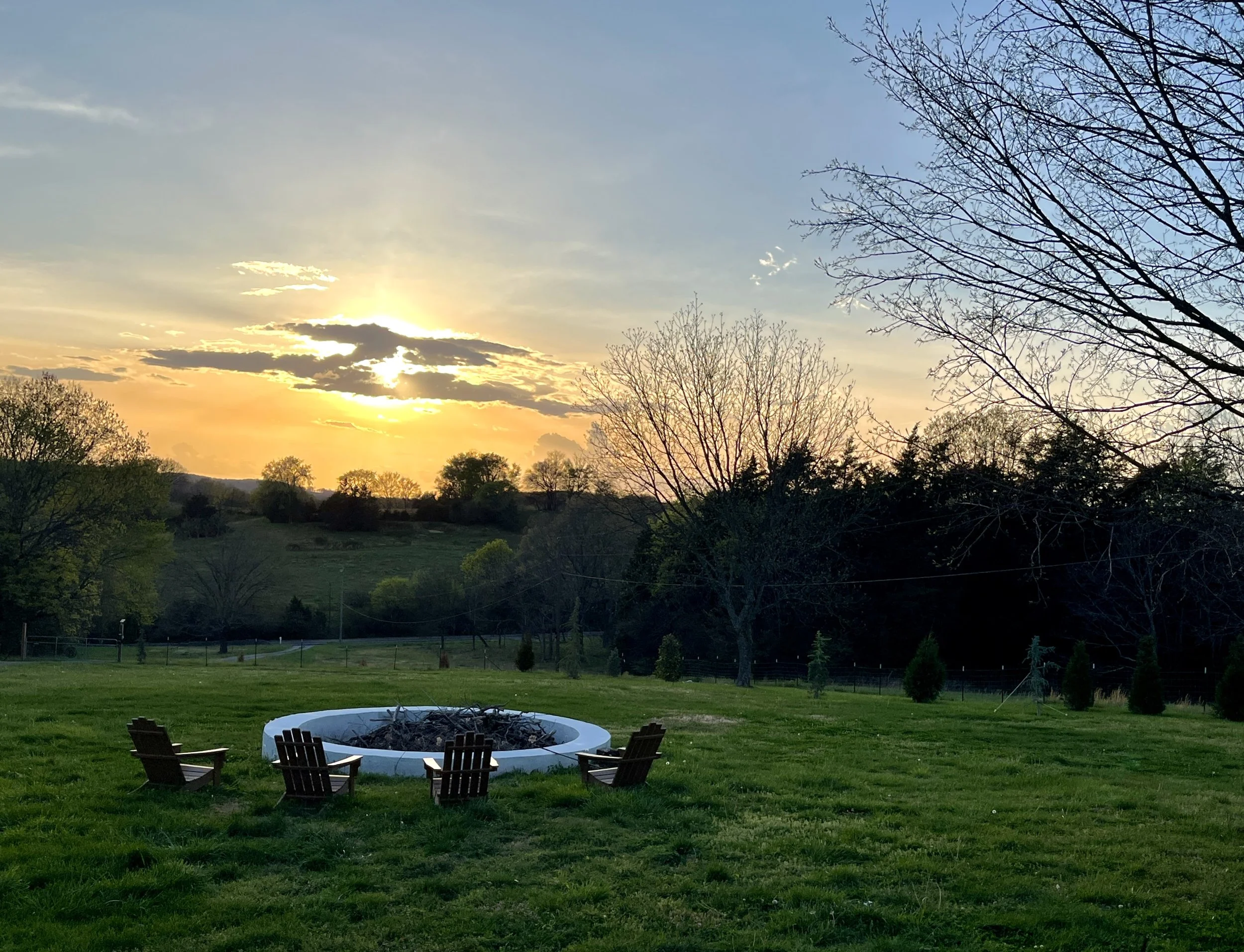
The chairs are waiting. The sky is doing the rest.
Why Privacy Screens Alone Don’t Create Real Privacy
The other thing I see going wrong, especially on high-end properties: privacy.
Every luxury client asks for it. "I want privacy." And almost every landscape company interprets that as "plant a wall of trees along the property line."
Privacy screening does not mean a bunker. The design approach should be invitation, not cancellation. Visually or through sound. The goal isn't a space that shuts the world out. It's a space so alive, and so clearly made by someone who gave a damn, that the world, just for a moment, just in that one spot, quietly gives way.
A row of Leyland Cypress doesn't create privacy. It creates a green wall that blocks a view. Real privacy is the feeling that you're somewhere. It's the sound of water replacing the sound of the street. It's a garden so full that your eye stops at the planting and never reaches the fence. It’s the direction toward a sunset view that re-orients the weight of your worries against the scale of the universe. It's the scent of something blooming that pulls your attention inward, toward the garden, instead of outward, toward whatever you were trying to block.
On my farm, I planted sound barrier trees along the road. Not to pretend the road doesn't exist. To shift the ratio. More birdsong. More wind through leaves. More textures and colors in January. More life, less machine.
Because here's what a bunker gets you: the same isolation you already had inside, just with better landscaping. A pool with no shade and no company is still a screen; you're just scrolling horizontally. The garden isn't only competing with the screen for your attention. It's competing with the screen for your connection. To your neighbors. To your land. To the hour you're in. To something alive that isn't asking you to swipe.
A kitchen garden situated close to the house, created for the joy of inviting your neighbors and friends over to taste an heirloom tomato spaghetti dinner served at a table under a 20-foot wisteria-covered pergola, that strikes the soul a bit deeper than floating alone in a pool unseen and scrolling TikTok for five hours. One of those is privacy. The other is loneliness with a landscaping budget.
Screen time, media overconsumption, isolation; these aren't problems you solve with thicker privacy walls and more expensive features. They're won by connection. And nature. My preference: connection in nature.
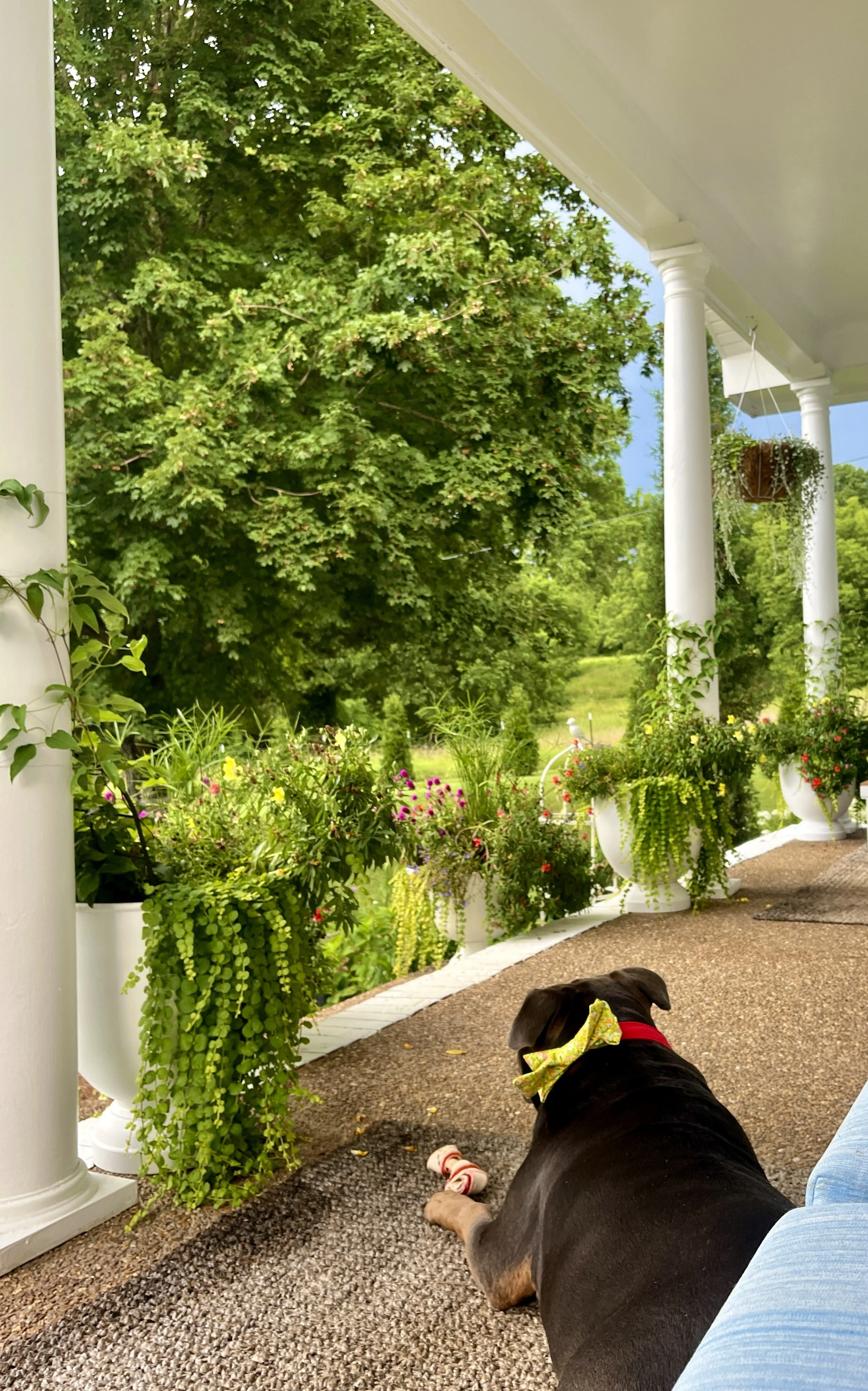
The garden starts before your foot ever leaves the porch.
Inhabitation Design: Designing a Garden Around the Hour, Not the Aerial View
I call this approach Inhabitation Design. The unit of design isn't the bed or the border. It's the hour. Your hour. The specific hour of your actual day when you might, if the garden is doing its job, choose the outside over the inside. Everything I design starts from that hour and works outward.
How Garden Design Can Win Back the Hours Screens Took
The screens won because they were designed to win. Billions of dollars, thousands of engineers, decades of behavioral research went into making the inside of your life as frictionless and addictive as possible. Your garden was designed by someone who looked at a plan view and picked whatever was in stock at the nursery that week and what was already working on the properties around yours.
The garden can win the hours back. But only if someone designs it with the same seriousness. Not with spectacle, or resort aesthetics, or "wellness-driven outdoor sanctuaries," a phrase I keep reading in trend reports that means absolutely nothing.
Gardens designed with honesty, with attention, and the kind of observation that comes from spending real time on real land, learning what it does at every hour, and then building a life around what you find.
My mom comes to the farm generally every weekend. We eat dinner and head out to the porch around 7pm. There is no better ending to a Saturday than watching the sun set into the horizon. She wakes up around 9am. She sits on the porch. The hummingbirds come right up to her, so close she could touch them if she were faster, which she is absolutely not. She doesn't look at her phone. Not because she has willpower. The hummingbirds are just genuinely better.
That's the whole theory. The hummingbirds are better. You just have to put them where the person is.
The fire pit faces west. That's not an accident.
Your Land Already Knows What It Wants to Be
If you have a garden you don't use, the garden isn't the problem. The design is. And design can be changed.
If you have land you haven't touched yet, the land already knows what it wants to be. It's been telling you and everybody else since before you closed on it.
If you're one of the people buying rural property right now, seeking privacy, seeking space, seeking something the screen can't give you, you're responding to something real. The land has what you're looking for. But it needs someone who listens to it and a design built around the hours of your actual life, not the aerial photograph.
The screens won the last twenty years. The next twenty belong to whoever designs the outside well enough to win back the hours that matter. Whether that's fifty acres or a quarter-acre lot with a back porch and a patch of clay, the principles are the same. The garden has to win the hour. The hour has to be yours.
I think that's the garden. I think it's always been the garden. We just forgot, for a while, what a garden is for.
If you want to find out what your land is trying to tell you, let's talk.
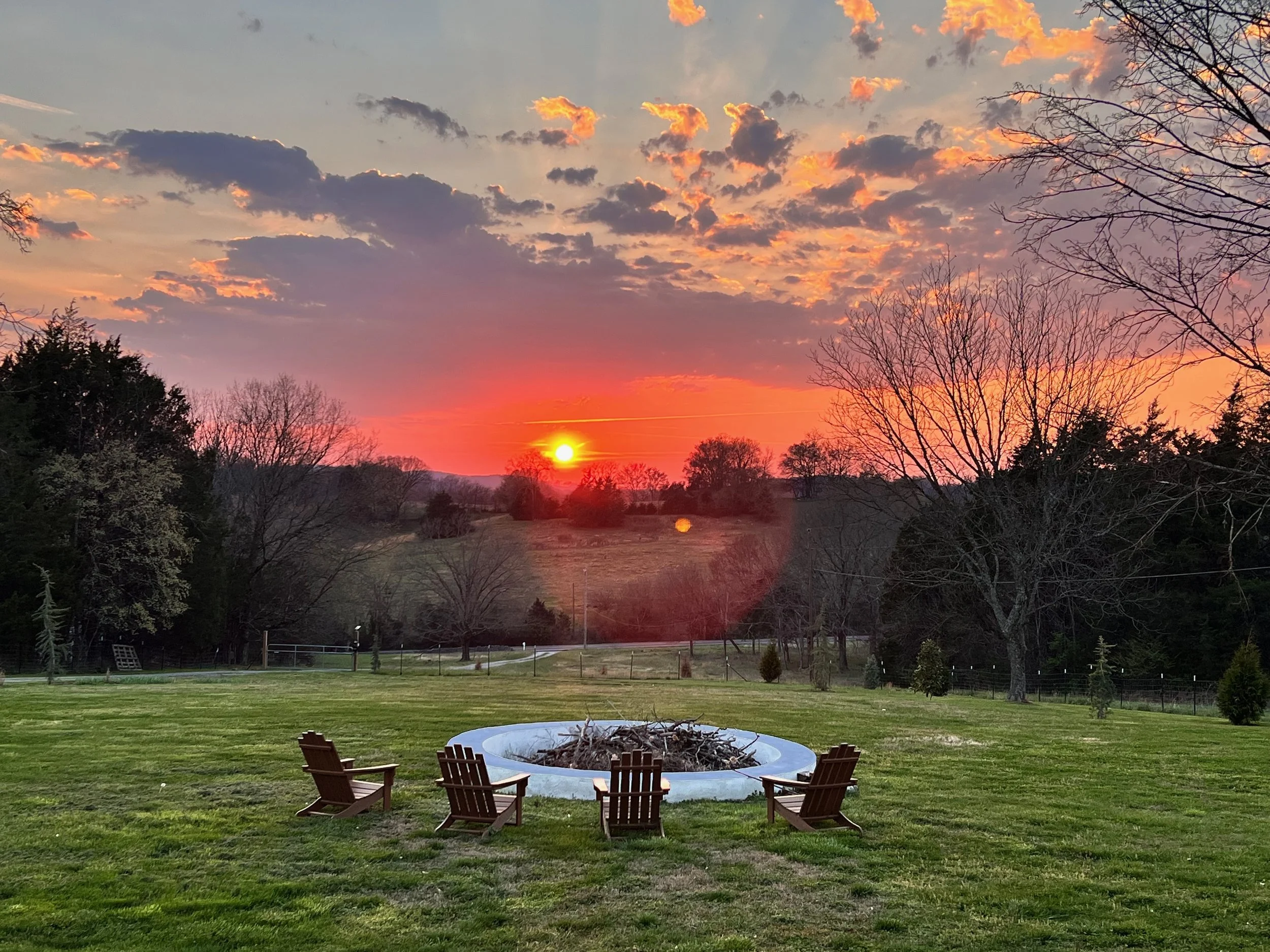
The hour the garden has to win.