
New to Nashville Homeowner's Guide to Landscape Design and Gardening in Middle Tennessee
What every Nashville transplant needs to know before spending a dollar on landscaping — from a garden designer who's watched it go wrong hundreds of times.
Welcome to Nashville. I need to tell you some things about your yard.
I'm a garden designer in Middle Tennessee, and a significant number of my clients are people who've moved here from somewhere else: Portland, Chicago, Denver, the Bay Area, New England, Florida, you name it. Nashville is one of the fastest-growing cities in America, and half the homeowners in Williamson and Wilson Counties arrived within the last decade. If that's you, this guide exists because I've watched too many smart, well-intentioned people make the same expensive mistakes in their first year or two of Nashville homeownership, and almost all of those mistakes come from the same place: assuming your new yard works like the one you left behind.
It doesn't. Not even close.
I'm not going to give you a polite, generic overview of USDA Zone 7a. You can get that from any national gardening website. What I'm going to give you is everything I wish someone had told me when I started designing gardens in Middle Tennessee; the real, specific, sometimes uncomfortable truths about Nashville soil, Nashville climate, Nashville light, Nashville drainage, and what actually grows here versus what you think should grow here because it grew beautifully in the place you came from.
Some of this will surprise you. Some of it will save you thousands of dollars.
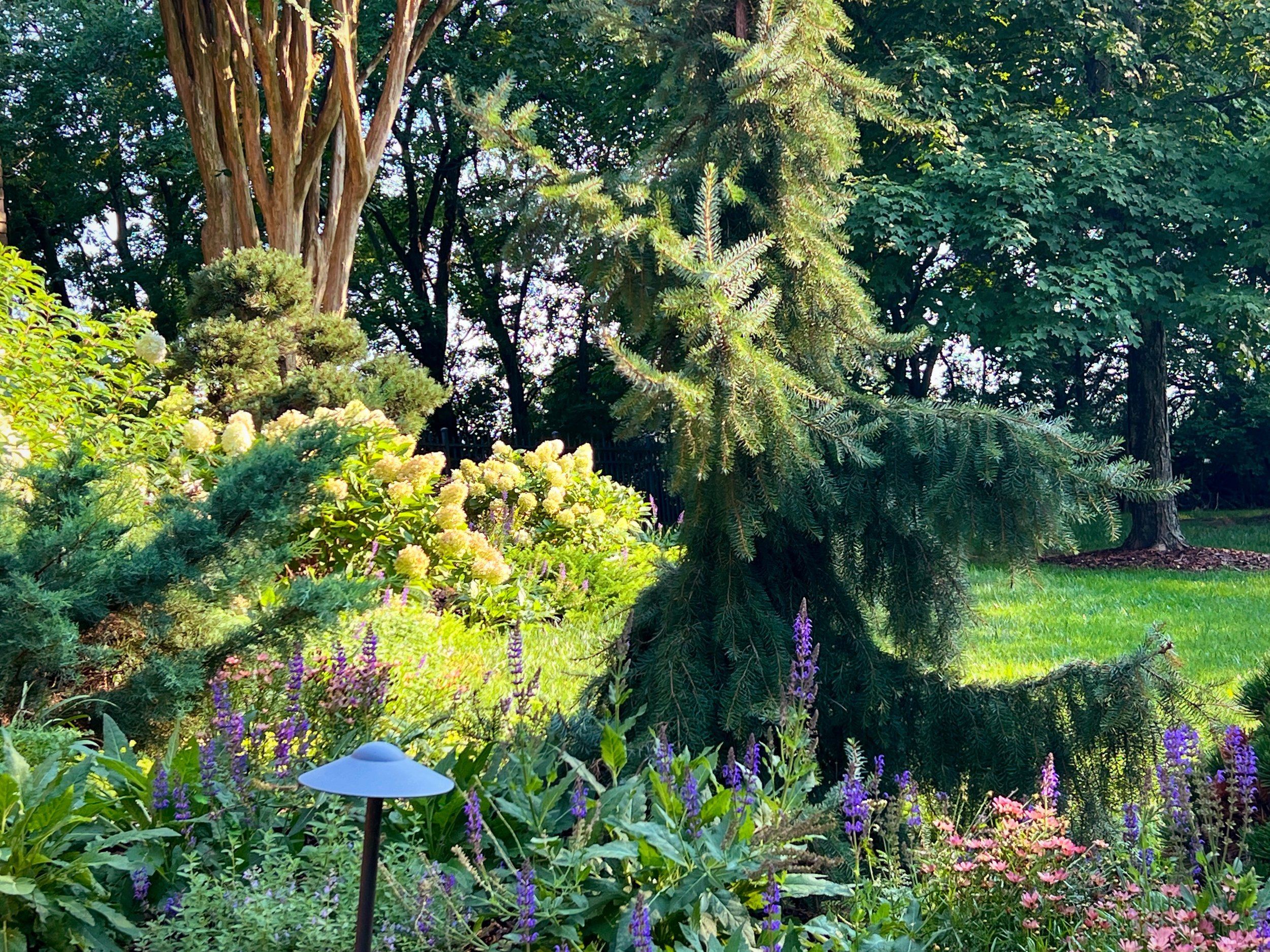
SO many cultivars thrive in Tennessee’s zone 7, but the plants are a small part to your garden’s success.
The Soil: This Is the Big One
I'm starting here because soil is the single most important factor in your Nashville landscape, and it's the thing transplants get wrong most consistently.
Nashville sits on a limestone shelf. The entire Middle Tennessee basin is underlaid by limestone bedrock, and the soil that developed on top of it is dense, heavy, alkaline clay. Not sandy loam. Not rich black topsoil. Not the acidic forest floor you remember from New England. Clay. Heavy, sticky, nutrient-rich clay that holds water like a bathtub when it's wet and cracks like dried pottery when it goes dry.
This single fact changes everything about how you garden here. And you must begin any landscape or garden design knowing it, or risk the plants being chosen for the design failing in two years.
The pH is probably the opposite of what you expect. Most national gardening advice assumes your soil is acidic and tells you to add lime. That advice is written for the Northeast and Pacific Northwest. Nashville's clay typically runs neutral to alkaline — pH 6.5 to 7.5, sometimes higher. If you follow that generic advice and add lime to soil that's already at 7.2, you're locking up iron, manganese, and other micronutrients that your plants need to survive. Your azaleas turn yellow. Your hydrangeas refuse to go blue. Your Japanese maples look chlorotic and anemic. And you have no idea why, because you did what the gardening book told you to do.
The gardening book wasn't written for Nashville.
Get a soil test before you do anything else. I cannot stress this enough. The University of Tennessee Soil, Plant and Pest Center is right here in Nashville at the Ellington Agricultural Center on Marchant Drive. A basic nutrient analysis is $15. You'll get results emailed to you within about a week: pH, phosphorus, potassium, calcium, magnesium, zinc, manganese, iron, boron, plus specific amendment recommendations. This $15 test will prevent you from making hundreds of dollars in wasted amendment purchases and potentially killing plants that would have been fine if you'd just left the soil alone.
The drainage problem. Nashville's clay holds water. When you dig a hole in clay and backfill it with nice amended soil and a beautiful new plant, you've essentially created an in-ground flower pot with no drainage hole. Rain fills the amended pocket, hits the clay walls, and has nowhere to go. The roots sit in water. They drown. This is the number-one way plants die in Nashville, not from neglect, but from drowning in soil that won't let go of water.
This is especially severe on new construction sites, which brings me to the next thing nobody warns you about.
If You Bought a New Build, Read This Twice
Nashville is building houses at a staggering pace, and I've walked onto enough new-construction properties to know exactly what the builders leave behind: a compaction disaster.
Here's what typically happens. Heavy equipment, excavators, bulldozers, concrete trucks, lumber deliveries, drives back and forth across your lot for months during construction. That equipment compresses the native clay soil into something approaching concrete. Then, after the house is finished, the builder "grades" the lot (often poorly), spreads an inch or two of topsoil over the compacted subsoil, rolls out some sod, and calls it landscaping. It photographs fine for the listing. It starts failing within months.
What you're actually standing on: One to two inches of topsoil over 12+ inches of compacted clay that water cannot penetrate. The sod looks green for a while because it's getting surface irrigation, but the roots can't push through the compacted layer. The water pools. The grass thins. And when you try to plant trees and shrubs into that compacted subsurface, you're fighting the ground itself.
What to do about it: Walk your property after a hard rain. Not a light shower, a genuine Middle Tennessee downpour. Then go outside and look. Where is water pooling? Where is it sheeting across the surface instead of soaking in? Where are there muddy ruts that take days to dry? Those observations are more valuable than any landscape plan, because they tell you where the ground is actually working and where it isn't.
Before you invest in expensive landscaping on a new build, consider having the planting areas core-aerated or even deep-tilled to break up the compacted layer. Work 3–4 inches of quality compost into the top 8–10 inches of soil. This isn't a weekend project; it's an investment in making the ground hospitable for roots. But it's far cheaper than replacing dead plants for the next five years because you planted into a parking lot and hoped for the best.
The Climate Is Not What You Think It Is
Nashville is USDA Zone 7a. That means our average extreme winter low falls between 0°F and 5°F. That number tells you which plants can survive the cold. It tells you nothing about the other eleven months, and it's the other eleven months that actually determine whether your garden thrives or just survives.
The summers will humble you. If you moved from the Pacific Northwest, Colorado, the upper Midwest, or anywhere with dry heat and cool nights, your summers were fundamentally different from ours. Nashville's summers are relentless. June through September brings sustained temperatures in the high 80s and 90s, humidity that frequently pushes above 70%, and nights that don't cool below the low 70s. The heat index regularly exceeds 100°F. This combination creates an environment where fungal diseases thrive: powdery mildew, black spot, anthracnose, and Cercospora leaf spot are constant pressures on susceptible plants. Plants that looked gorgeous in Portland's mild, dry summers may suffer badly here.
Spring happens fast. This one catches transplants off guard every year. In Nashville, you go from "is it spring yet?" to "everything is blooming at once" in about three weeks. This is not a slow Pacific Northwest spring that unfolds over months, or a gradual New England thaw. Once the warm-up starts in early March, it accelerates rapidly. If you haven't pruned and prepared your garden by mid-March, you're already behind. And by late April, you're in the planting window. By late May, you're entering summer. The whole transition happens in a blink. My spring playbook covers the exact week-by-week timing.
The last frost is later than you think. Nashville's average last frost date falls around April 15–23, depending on your microclimate. I've seen frost as late as the last week of April. The garden centers start putting out tropical annuals and warm-season vegetables in March because they want your money. The weather doesn't care about their business model. Don't plant frost-tender things until after April 15 at the earliest.
We get ice storms. Not every year, but often enough that your plant selections need to account for it. Heavy ice loads snap branches on brittle trees and shrubs. Bradford Pears (which you should not plant, more on that below) are notorious for splitting apart in ice storms because their branch structure is weak. When you're choosing trees, structural integrity matters here.
The Light Changes More Than You Expect
This is one of the most under-discussed factors in Nashville gardening, and it catches transplants especially hard because they make planting decisions based on what they see in March — and March is a lie.
Many Nashville neighborhoods, especially the established ones in Belle Meade, Forest Hills, Oak Hill, Green Hills, and the older parts of Brentwood and Franklin, have enormous mature tree canopies. Oaks, tulip poplars, maples, and hickories that are 60, 80, 100 feet tall. In March, before those trees leaf out, your yard may get six or eight hours of direct sun. By May, when the canopy is full, that same spot might get one hour of dappled light.
Right now, if you're reading this in late winter or early spring, walk your property and observe where the sunlight falls. This is the most accurate window for understanding your garden's true light conditions during the leafless months. But you also need to think forward: that sunny spot by the fence? It's probably deep shade by June. That bed along the north side of the house that seems hopelessly dark right now? It might get surprisingly good light in winter when the deciduous canopy drops.
If you moved from a region with fewer large deciduous trees, or from a newer subdivision where the trees are all still small, this seasonal light shift is dramatic and unfamiliar. It fundamentally affects what you can grow and where. A plant that needs "full sun" (six or more hours of direct light) may technically get that in March but not from May through October. And May through October is when it needs the light most.
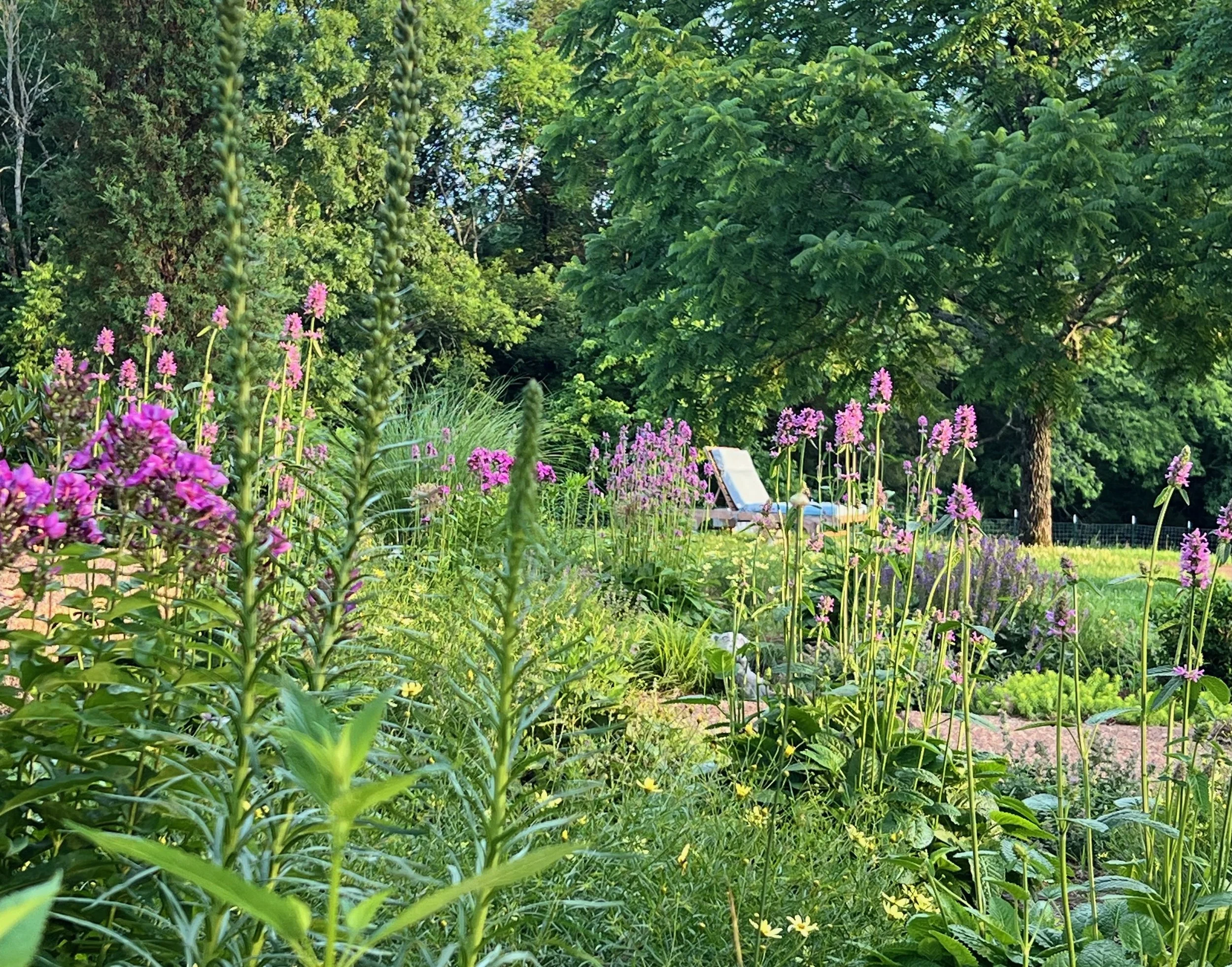
Dense, gorgeous gardens can thrive in Tennessee, but only with knowing the soil and the right plants!
What Actually Grows Here (And What Quietly Dies)
I have a comprehensive plant guide that goes deep into cultivar-specific recommendations for Nashville clay. I'm not going to repeat the whole thing here. But I want to hit the highlights that matter most for someone who just arrived.
What You Can Probably Stop Trying to Grow
Lavender (in the ground, in clay): I know. Everyone loves lavender. And the tags say Zone 7. But lavender needs sharp drainage and lean, slightly acidic to neutral soil. Nashville's heavy, wet clay is its worst nightmare. You can grow lavender here, in raised beds, in containers, or on a well-drained berm with heavily amended soil. The cultivar 'Arp' is the most cold-hardy option. But if you stick generic lavender in a clay bed, it will rot.
Most plants from California and Mediterranean climates (in the ground, unamended): If a plant tag says "requires well-drained soil," that's code for "will drown in Nashville clay." This includes most rosemary (except 'Arp' in a drained spot), most Mediterranean herbs, and many of the silvery-foliaged drought-lovers that look stunning in garden magazines photographed in Santa Barbara.
Blue hydrangeas (without serious soil management): Nashville's alkaline soil pushes bigleaf hydrangeas pink, period. If you want blue, you need to acidify the soil around each plant with aluminum sulfate and maintain a pH below 6.0, which in our naturally alkaline clay is an ongoing battle, not a one-time amendment. Many transplants from the East Coast or Pacific Northwest are baffled when their hydrangeas turn pink. It's the limestone. It's always the limestone.
Bradford Pear (Pyrus calleryana): If you have one, I'm sorry. If you're considering planting one, don't. They're structurally weak; the branch angles are so tight they split apart in storms, often within 15–20 years. Tennessee now classifies them as invasive. They escape into woodland edges and crowd out native trees. Beautiful for about ten days in spring. A liability the other 355.
What Thrives Here Without a Fight
Native trees that handle clay: Red Maple, Shumard Oak (one of the best oaks for Nashville clay), White Oak (slow but magnificent), Eastern Redbud, Serviceberry, and Flowering Dogwood (in part shade with good airflow).
Structural evergreens: Deodar Cedar 'Karl Fuchs' (gorgeous and cold-hardy), Juniper 'Taylor' (columnar native, bulletproof), Southern Magnolia 'Bracken's Brown Beauty' (the cultivar matters, this one handles Zone 7a), and Green Giant Arborvitae for screening.
Shrubs that earn their space: Oakleaf Hydrangea 'Ruby Slippers' (four seasons of interest, native, clay-tolerant), Virginia Sweetspire 'Henry's Garnet' (wet clay is actually fine), Fothergilla major (underused, spectacular), Distylium 'Vintage Jade' (my go-to boxwood alternative), and Japanese Plum Yew 'Duke's Garden' (shade, clay, deer, handles all three).
Perennials that perform: Echinacea in multiple varieties ('Magnus', 'Tiki Torch', Kismet series), Black-eyed Susan 'Goldsturm', Catmint 'Junior Walker', Baptisia (any variety, just support it), Hellebore for winter bloom, Liatris for vertical punch, and Switchgrass 'Northwind' or 'Karl Foerster’ for texture and movement.
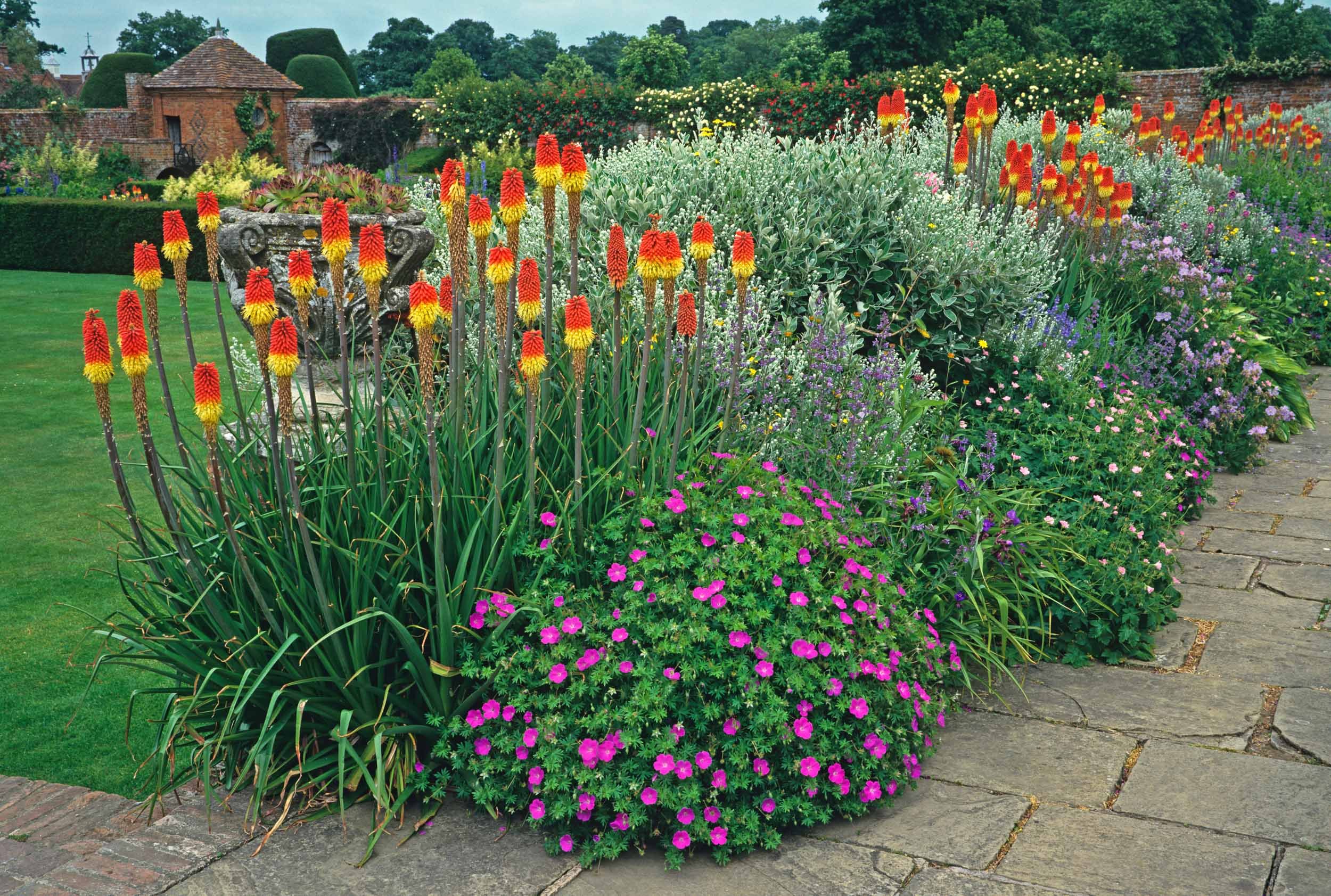
Knifophia Red Hot Poker ‘Fire Dance’ is an excellent drought and heat tolerant perennial in TN clay and steals the show in any bed!
What to know about Knock Out Roses: They grow here like weeds, which is both their virtue and their limitation. If you want easy, reliable color from May through frost with minimal fuss, Knock Outs deliver. They handle clay, they handle heat, they bloom on new wood so you can prune them hard in late winter and they come right back. But they're one note in a design: if every bed in your landscape is Knock Out Roses and monkey grass, you have a landscape that looks like every bank parking lot in Davidson County. They're a tool, not a design.
For the full cultivar-by-cultivar breakdown with design context, read the plant guide.
The Five biggest Mistakes Nashville Transplants Make
I've watched all of these happen multiple times. Each one costs hundreds to thousands of dollars.
1. Planting too deep in clay. When you dig a hole for a tree or shrub in Nashville clay, the temptation is to dig deep and fill the bottom with nice soil. Don't. Dig the hole twice as wide as the root ball but no deeper. The root flare, where the trunk widens at the base, should sit slightly above the surrounding grade. If you bury it, you create a bathtub that fills with water every time it rains. The roots suffocate. The plant slowly dies over 6–18 months and you blame the nursery.
2. Adding lime without a soil test. I've seen this more times than I can count. Someone buys a bag of lime because the gardening book said to, spreads it on their beds, and wonders why their acid-loving plants are yellowing. Nashville soil is already alkaline. Adding lime makes it worse. Get the $15 test.
3. Choosing plants based on where you came from. That rhododendron that was eight feet tall and gorgeous in Seattle? It can grow here in afternoon shade, with acidified soil, protected from wind, and with consistent moisture. It will never be effortless here the way it was in the Pacific Northwest. The same goes for many plants that are easy in other climates but high-maintenance in Nashville's clay and humidity. You can grow almost anything with enough effort. The question is whether you want a garden or a full-time job.
4. Ignoring drainage on a new build. Covered above, but it bears repeating: if you landscape a new-construction lot without addressing the compacted soil and grading problems first, everything you plant is living on borrowed time. Fix the ground before you put things in it.
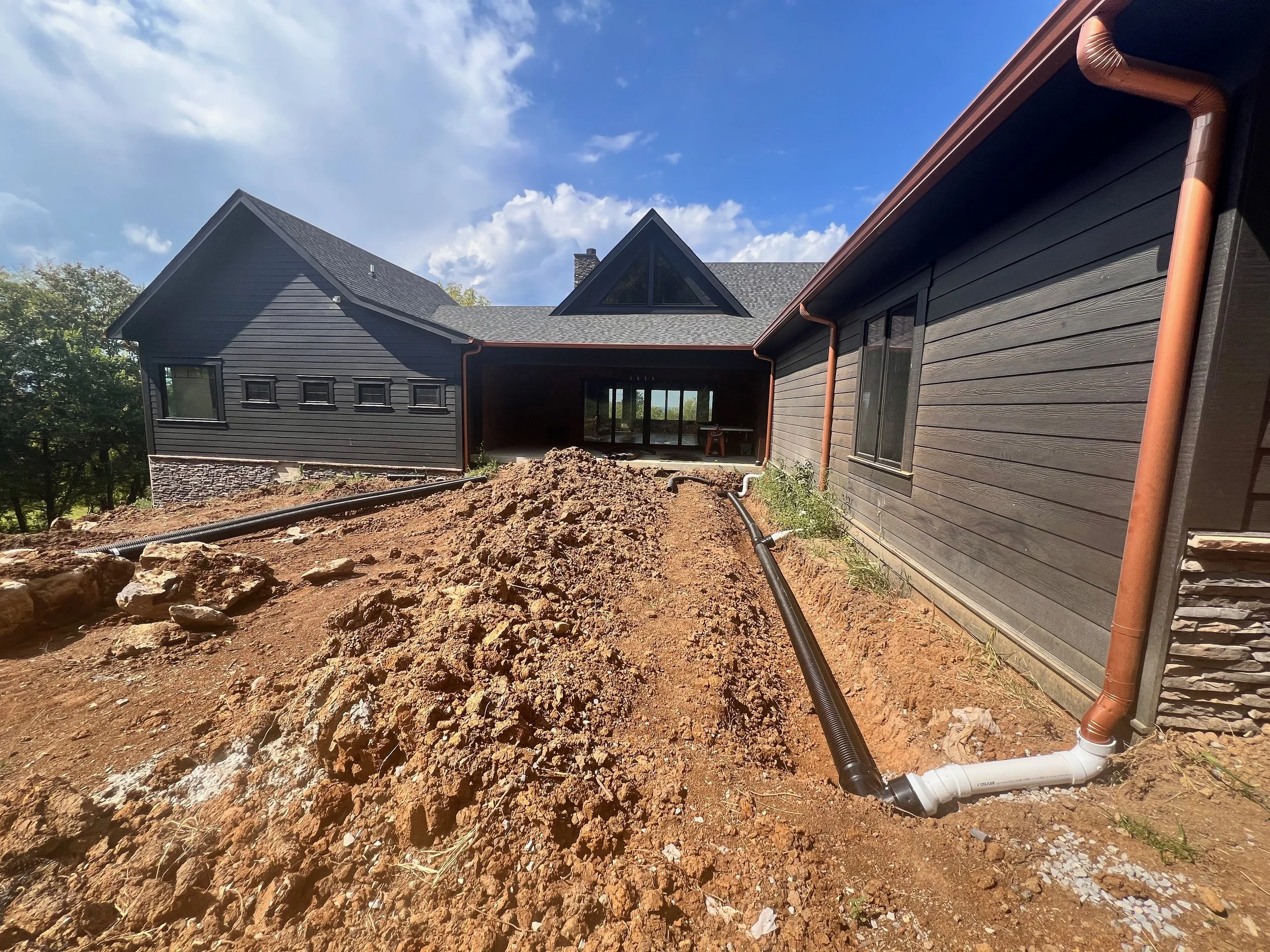
Connecting your home’s downspouts to a french drainage system is a must here in Tennessee clay. Without downspout drainage, the water from your downspouts will drown any of your foundational plantings and cause havoc for foundational moisture levels.
5. Hiring a crew that mows instead of a designer who thinks. Nashville has thousands of mow-and-blow lawn services and a much smaller number of people who actually design landscapes. There's a huge difference between a landscaper and a landscape designer, and the distinction matters most when you're starting from scratch on a new property. A crew will install whatever plants the nursery has in stock that week. A designer reads your site, your soil, your light, your drainage, your architecture, the way you actually live in your space, and composes a landscape that belongs on your specific piece of ground.
When to Do What: The Nashville Timing Cheat Sheet
Timing in Nashville is different from timing in most of the country. Here's the quick version:
Late February – Early March: The single most important maintenance window of the year. Cut back ornamental grasses and perennials, prune roses and summer-blooming shrubs, install plant supports. The spring playbook has the full week-by-week guide.
Mid-March – Early April: Compost, fertilize (based on your soil test), mulch after beds are cleaned and soil has warmed. Do NOT prune spring-blooming shrubs like azaleas, forsythia, or lilac; they're about to flower on last year's wood.
Mid-April – Late May (after last frost): The prime planting window for perennials, warm-season annuals, and container-grown trees and shrubs.
October – November: The best time to plant trees and shrubs. The soil is still warm, roots establish through our mild winter, and by summer the plant has months of root development that a spring planting doesn't. If you can wait until fall to plant your major woody plants, do it.
December – January: Plan. This is when you should be sketching ideas, getting consultations, and making decisions, so you're ready to execute when the windows open.
A Note on Nashville Nurseries and Where to Shop
Support local nurseries. They stock plants that are acclimated to our region, and their staff can give you advice specific to Middle Tennessee soil and climate. Big-box garden centers stock nationally; they'll sell you plants that are technically rated for Zone 7 but may not be suited for Nashville's specific combination of clay, humidity, and alkaline pH.
A nursery worth visiting: Wonder Gift & Garden in Kingston Springs focuses on native plants; if you're interested in building a pollinator garden or a more naturalistic landscape, start there. The owner, Joy, is actually a pure joy.
When you're at the nursery, here's a trick: check the root ball before you buy. Gently slide the plant out of its container and look at the roots. If they're circling tightly around the pot (root-bound), pass on it or at least plan to tease those roots loose before planting. A root-bound plant dropped into Nashville clay will continue circling instead of spreading into the surrounding soil, and it'll strangle itself over time.
What Nashville Gardening Is Really About
I've given you a lot of practical information. And all of it matters. But I want to be honest about something before you close this page.
The reason I love designing gardens in Nashville has almost nothing to do with any of that.
Here's what happens, over and over: someone calls me because they just moved here and their yard is a blank slate of builder-grade sod and a concrete patio pad, and they want it to "look nice." That's the starting point. Nice. Presentable. Better than the bare dirt the builder left.
But then a garden starts taking shape. And something shifts.
You start going outside, and not just to mow, but because the light is hitting the Muhly grass a certain way and you want to see it. You sit on the patio after dinner because the garden smells different at dusk. Your kids find a toad under the hosta and make it their project. You have conversations with your partner outside that you never seem to have inside the house, because something about being surrounded by living things changes the way people talk to each other.
A garden is not landscaping. Landscaping is a service category. A garden is a place where your actual life happens — where you breathe slower, notice more, feel the ground under your feet, and remember that you are a living thing in a world of living things. You moved to Nashville for a reason. Part of that reason, whether you've articulated it or not, is probably the chance to have more space, more room to breathe, more connection to the place you live. Your yard is that opportunity. Don't waste it on a row of Knock Outs and a layer of red mulch.
Make something worth walking into.
What Every Nashville Transplant Wants to Know
Is Nashville soil acidic or alkaline?
Alkaline. Almost always. Nashville sits on a limestone basin and our clay typically runs pH 6.5 to 7.5, sometimes higher. This is the single most important fact about gardening here and it's the opposite of what most national gardening advice assumes. Every book, every blog, every plant tag that tells you to "add lime in spring" is writing for New England. If you follow that advice in Nashville, you're making alkaline soil more alkaline, locking up iron and manganese and slowly starving your plants while thinking you're helping them. Get the $15 soil test from the UT Extension on Marchant Drive before you touch your yard. It takes a week to get results and it will save you hundreds of dollars in dead plants and wasted amendments.
I just moved from Portland / Denver / Chicago / the Northeast. What's going to be different about gardening here?
Everything. Your soil instincts are wrong. Your plant memory is wrong. Your timing is wrong. That's not an insult — it's a fact that saves you money if you accept it early. Nashville's clay is heavy, alkaline, and holds water like a bathtub. The plants that were effortless in your old climate may be high-maintenance or impossible here. Rhododendrons that thrived in Seattle need acidified soil, afternoon shade, wind protection, and consistent moisture in Nashville, and even then they'll never look the way they did in the Pacific Northwest. Lavender rots in our clay. Most Mediterranean herbs drown. And the timing is completely different; spring hits Nashville in about three weeks and if you miss the pruning window in early March, you're chasing the season all year. The best thing you can do is forget what you knew and learn this place on its own terms. The spring playbook gives you the exact week-by-week timing.
Why are my hydrangeas pink? They were blue at the nursery.
Welcome to Nashville limestone. Bigleaf hydrangea flower color is controlled by soil pH and aluminum availability, not by the plant variety. In acidic soil (pH below 6.0), aluminum is available and flowers are blue. In alkaline soil (pH above 6.5), aluminum is locked up and flowers are pink. Nashville's clay is alkaline. Your hydrangeas will be pink unless you actively and continuously acidify the soil around each plant with aluminum sulfate. This is not a one-time fix; it's an ongoing commitment every season. If you don't want that fight, plant Oakleaf Hydrangea instead. It's native, it handles our clay and pH without complaint, and its white flowers age to beautiful pink regardless of soil chemistry. Four seasons of interest with zero pH management.
Why do my plants keep dying even though I water them?
You're probably drowning them. This is the number-one way plants die in Nashville. Roots sitting in waterlogged clay. Nashville's clay holds water. When you dig a hole and backfill with amended soil, you create a pocket that fills with rain and has nowhere to drain because the clay walls are essentially impermeable. The roots suffocate. The plant declines slowly over six to eighteen months and you think it's a disease or a nutrient deficiency. It's water. The fix: dig the hole twice as wide as the root ball but no deeper. Keep the root flare at or slightly above grade. Amend the entire bed, not just the hole. And before you plant anything, walk your property after a hard rain and see where water pools. Don't put a $300 tree in a spot where water sits for two days after every storm.
I bought a new build. When should I landscape?
Not until you've addressed what the builder left you, which is almost always a compaction disaster. Heavy equipment drove across your lot for months during construction. The native clay is compressed to the density of a parking lot. The builder spread an inch of topsoil over it, rolled out some sod, and called it landscaping. It photographs fine for the listing. It starts failing within months because roots can't penetrate the compacted layer and water can't drain through it. Before you plant a single shrub, walk your property after a hard rain. If water pools and sits, you have a compaction and grading problem. Break up the planting areas, work in 3–4 inches of compost, and verify drainage. Fix the ground before you put things in it. Otherwise you're planting into a parking lot and hoping for the best.
What's the best time of year to plant in Nashville?
Fall. October through November. This surprises everyone but it's true. The soil is still warm, so roots establish through our mild winter. By the time the first Nashville summer arrives, the plant has months of root development that a spring planting doesn't. Trees and shrubs planted in fall have a dramatically higher survival rate through their first summer than the same plants installed in April. Spring planting works too, mid-April through late May, after last frost, but the plant has less time to establish before facing July and August. Avoid planting anything June through August. The stress on new plantings in Nashville summer heat is severe and the failure rate is high.
Do I need to amend Nashville clay before planting?
For new beds, yes. Work 2–3 inches of quality compost into the top 8–10 inches. This improves drainage during wet periods and moisture retention during drought. But there's a critical mistake to avoid: don't amend only the planting hole. If you dig a hole in clay, fill it with beautiful amended soil, and plant into it, you've created a bathtub. Water fills the amended pocket, hits the clay walls, and sits. Amend the entire bed so water can move laterally through improved soil rather than pooling in an isolated pocket. And don't over-amend. Native plants evolved in this clay. They don't want rich, fluffy potting soil. They want structure: air in the soil, reasonable drainage, and the nutrients the clay already provides.
What should I NOT plant in Nashville?
Bradford Pear: structurally weak, splits apart in storms within 15–20 years, Tennessee classifies it as invasive. Lavender in the ground in unamended clay: it needs sharp drainage and lean soil and our heavy wet clay is its worst nightmare. Most Mediterranean herbs directly in clay: rosemary, sage, and oregano need drainage they won't get. Any plant whose tag says "requires well-drained soil" if you're putting it in flat, raw clay; that phrase is polite code for "will drown in Nashville." And Bermuda grass if you can avoid it; it's the most tenacious, invasive turf grass you'll ever encounter and once it's in your beds it's nearly impossible to eradicate without chemical intervention or years of vigilance.
Are there good local nurseries in Nashville?
Support local nurseries over big-box garden centers. Local nurseries stock plants acclimated to our region and their staff can give you advice specific to Middle Tennessee. Big-box stores stock nationally; they'll sell you plants rated for Zone 7 that may not be suited to Nashville's specific combination of clay, humidity, and alkaline pH. Wonder Gift & Garden in Kingston Springs focuses on native plants and the owner, Joy, is a genuine joy. Bates Nursery has been here since 1932 and has a massive selection. When you're at the nursery, check the root ball before you buy; slide the plant out of the container and look. If the roots are circling tight, it's root-bound. Either tease the roots loose before planting or pass on it. A root-bound plant dropped into Nashville clay will keep circling instead of spreading out, and it'll strangle itself.
How much sun does my yard actually get?
Less than you think, and it changes dramatically between March and May. Many Nashville neighborhoods, Belle Meade, Forest Hills, Oak Hill, Green Hills, the established parts of Brentwood and Franklin, have enormous mature tree canopies. Oaks, tulip poplars, maples, hickories. In March, before those trees leaf out, your yard might get six or eight hours of direct sun. By May, the same spot might get one hour of dappled light. If you're reading this in late winter or early spring, walk your property now and observe where sunlight falls; this is the most accurate window for understanding your leafless-season light. But remember that what you see now is a lie by June. That sunny spot by the fence will probably be deep shade once the canopy fills in. A plant that needs "full sun" may technically get it in March and starve for it from May through October, which is when it needs the light most.
What's the deal with Nashville drainage?
Clay holds water. That's the short answer and the long answer. Nashville gets 47 inches of rain a year; we're a wet climate. But our clay doesn't let that water move through quickly. It saturates, it pools, it sits. Then during summer drought it shrinks and cracks. Your plants experience whiplash, drowning for three days after a storm, then baking in cracked clay two weeks later, without you changing anything. New construction sites are worse because the soil is compacted by heavy equipment. Before you invest in expensive landscaping, walk your property after a genuine Middle Tennessee downpour and observe. Where does water pool? Where does it sheet across the surface? Where are there muddy ruts that take days to dry? Those observations are more valuable than anything a landscaper will tell you, because they show you what the ground is actually doing. If you're not sure what you're looking at, that's exactly what a design consultation is for.
Should I design my landscape myself or hire someone?
It depends on what you're trying to do and how much you're willing to get wrong. If you're adding a few perennials to an existing bed, you don't need a designer; you need a soil test and a trip to a good local nursery. But if you're starting from scratch on a new property, or renovating a landscape that isn't working, or trying to solve privacy, drainage, or grading problems; that's where design matters. A designer reads your site in ways that aren't obvious. I bring a compass to every consultation. I look at where the sun tracks. I study the drainage. I look out your kitchen window. I consider what the garden looks like in January, not just May. There's a real difference between a landscaper and a designer, and the distinction matters most when the stakes are high and the clay is unforgiving.
I killed everything in my first year. Is there hope?
Yes. You killed everything because you gardened for the place you came from instead of the place you moved to. That's normal. Almost every Nashville transplant goes through it. The soil test you didn't get, the lime you added, the rhododendron you planted in full sun in unamended clay, the lavender that rotted, the tree you planted too deep — these are the tuition payments for learning Nashville. Now you know. And now you can do it right. Start with the soil test. Read the drainage. Learn what actually thrives here. The clay is difficult but it's also rich; it holds nutrients better than any sandy or loamy soil you've ever worked with. The plants that evolved here are gorgeous, resilient, and get better every year. Your second year in Nashville will be completely different from your first. The clay forgives. Eventually.
Where to Start
If you've read this far, you already have better information than most Nashville transplants get in their first two years. The soil test alone will save you money and heartbreak. The drainage observations will save you more. And knowing what actually thrives here, at the cultivar level, for Nashville clay specifically, puts you ahead of homeowners who've lived here for decades.
If you want to go deeper:
Designing a Low-Maintenance Landscape gives you a solid direction for creating a garden that fits your actual life.
My Nashville plant guide gives you cultivar-by-cultivar recommendations organized by what each plant does in your landscape: structure, screening, color, texture, groundcover.
The spring playbook walks you through every maintenance and pruning decision from March through May, week by week, at the cultivar level.
Inhabitation Design: Why the Hour, Not the Bed, Is the True Unit of Garden Design explains the life-based design thinking behind the way I approach every landscape, and why a designed garden feels different from a decorated one.
And if you want help, if you have a vision or need a partner in creating one, I'd love to hear from you. I'll walk your property, read your soil, study your light, and help you build something that actually belongs on your specific piece of Nashville ground.
Welcome to Nashville. Welcome to the clay. You're going to love it here.