
Presence Is the Luxury
You don't need a bigger patio. You don't need a fancier fire pit. You need a reason to go outside and stay there. That's what a garden gives you, and it's the most valuable thing money can buy.
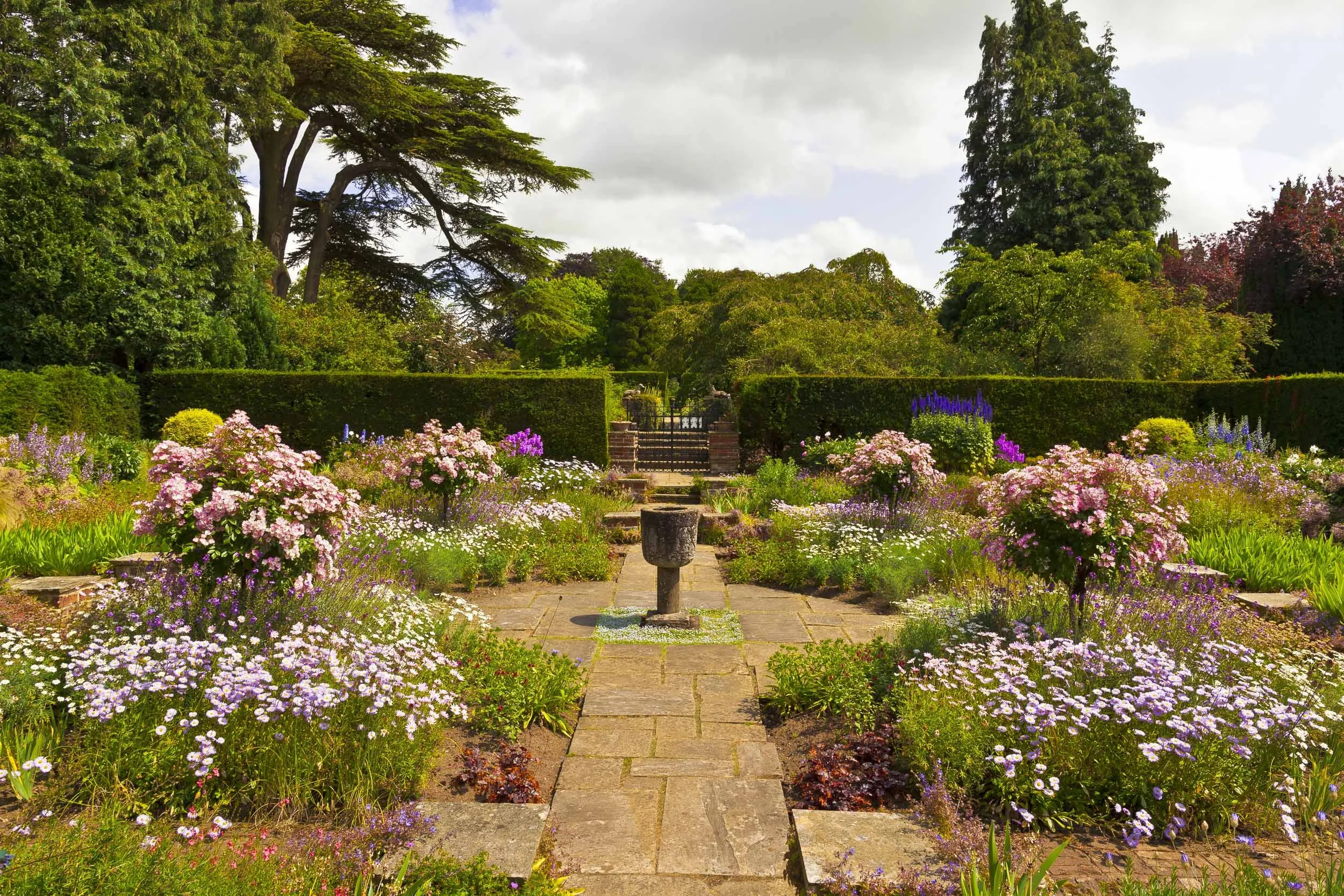
I want to challenge something about the way "luxury landscape design" gets talked about in Nashville.
Open any design magazine, any high-end landscaping website, any Instagram account with "luxury outdoor living" in the bio. What do you see? Outdoor kitchens with granite countertops. Fire features with gas lines. Pergolas with motorized louvers. Infinity-edge pools. Built-in speakers. Automated everything. The assumption is that luxury means more stuff: more features, more technology, more surfaces, more investment in the hardscape, and the more you spend, the more luxurious the result.
I don't believe that. I think most of it misses the point entirely.
Because here's what I've observed, over and over, working with clients across Middle Tennessee: the families who spend $200,000 on an outdoor kitchen and a pool and a fire pit and a pergola and a sound system don't necessarily spend more time outside. They have more to maintain. They have more to break. They have an impressive backdrop for the photos they post from outside. But the patio still feels like a showroom. The space is built for entertaining, for impressing, for performing, and when there's nobody to perform for, they go back inside.
And then I've watched families with a fraction of that investment, a well-designed garden, a simple stone patio, the right trees, the right light, who don't go inside. Who eat dinner outside three nights a week not because the outdoor kitchen is there, but because the space feels like somewhere they want to be. Who sit on the porch after the kids go to bed because the garden smells like Sweet Olive and the frogs are singing in the rain garden and there's nothing to do except be there. Who put their phone down, not because they decided to, but because the space made the screen feel irrelevant.
That's luxury. Not the features. The presence.

What Presence Actually Means
I'm using the word deliberately. Presence, the state of being fully here, in your body, in this moment, aware of what's around you. Not thinking about tomorrow's meeting, or scrolling. Just being somewhere that holds you.
Most of us spend our days in environments designed for productivity, offices, cars, kitchens, screens. Every surface is optimized for doing. Even our "relaxation" has become another form of consumption, streaming, scrolling, swiping. We've forgotten what it feels like to simply be in a place that asks nothing of us except to notice it.
A garden is the antidote. Not because it's pretty, although it should be. But because a living space does something to your nervous system that a built space cannot. The sound of wind through ornamental grasses. The smell of soil after rain. The warmth of stone under bare feet. A butterfly working the coneflowers. The way late light turns Muhly grass into a pink haze. These are not amenities. They are sensory experiences that pull you out of your head and into the physical world. They slow your breathing. They quiet the noise. They make you present.
The Problem with "Luxury Outdoor Living"
The outdoor living industry has convinced Nashville homeowners that the path to a better outdoor life is paved with products. And I understand the appeal; an outdoor kitchen is exciting, a fire feature is dramatic, a sound system is convenient. I'm not against any of these things. I've designed spaces that include all of them.
But here's what I've learned: features without a garden are furniture in an empty room. You can have the most beautiful outdoor kitchen in Williamson County, and if the space around it is a concrete patio bordered by a strip of boxwood and a fence, you'll use it when you have guests and ignore it the rest of the time. Because the space doesn't draw you. It doesn't hold you. It doesn't give you a reason to be there when there's nothing to do.
A garden gives you that reason. It gives you something to look at that changes every day. Something to smell. Something to listen to. Something alive, genuinely alive and responding to the same sun and wind and rain that you are. That living quality is what makes you want to sit down, stay, and be present. No feature does that. No product does that. Only life does that.
The most "luxurious" outdoor space I've ever designed had no outdoor kitchen. No fire pit. No speakers. It had a stone terrace surrounded by a layered garden: grasses, perennials, a specimen tree, and a small water feature. The homeowner told me six months later that she reads outside every evening now. Not on her phone. A book. She said she hadn't read a physical book in years, but the garden made her want to. She couldn't explain why. I could: the garden created a space where being present felt better than being distracted. That's the design working.
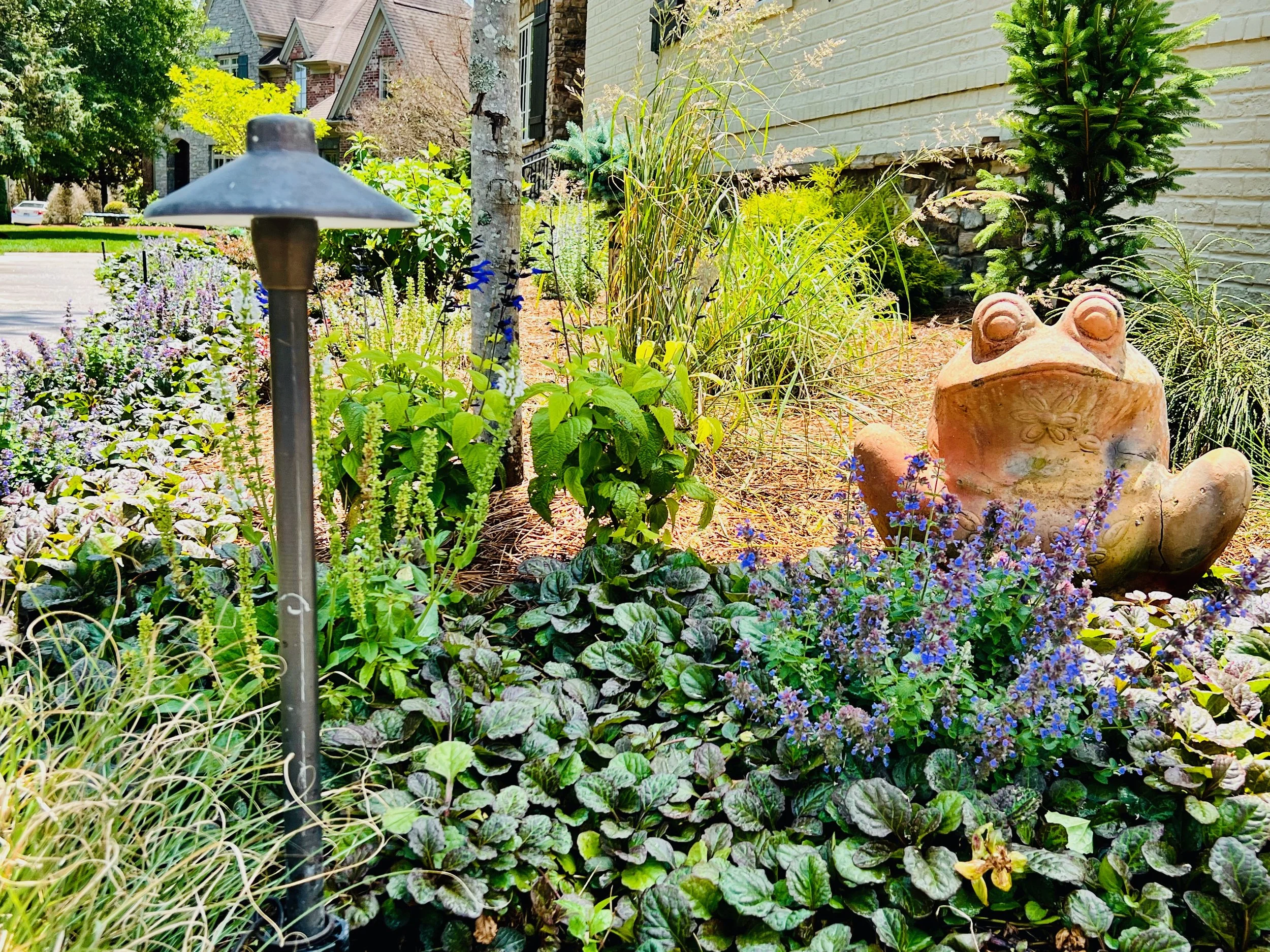
What a Garden Designed for Presence Looks Like
It's not minimalist. It's not bare. A space that creates presence is a space that has enough going on to hold your attention without overwhelming it. It's layered. It has texture you can see and fragrance you can smell and movement you can watch. It has sound from water, wind, birds, and the rustling of living things.
It engages your senses without demanding your attention. This is the design principle that separates a garden built for presence from a garden built for display. A display garden says "look at me." A presence garden says "be here." The difference is in the subtlety: the fragrance that reaches you without being overpowering, the sound of water that's audible but not loud, the color palette that's rich but not aggressive. You don't analyze it. You absorb it.
It changes. A built environment, hardscape, structures, features, is the same every day. A garden is different every morning. The light shifts. Something new blooms. A leaf turns. A bird arrives. This constant, gentle change is what keeps a space interesting over time. You never get bored in a garden the way you get bored with a patio, because a patio is finished and a garden never is. That aliveness is what keeps pulling you back outside.
It accounts for time of day. The garden at 7am is not the same garden at 7pm. Morning light comes from a different angle. Evening fragrance is stronger; Sweet Olive, night-blooming Jasmine, the cooling soil releasing the scent of the day. A garden designed for presence considers both, what draws you out with your coffee and what keeps you out after dinner. Nightscaping, warm, subtle lighting that reveals rather than floods, extends the presence into darkness. The garden doesn't disappear at sunset. It transforms.
It has a place to sit. This sounds obvious, but I walk properties all the time where there's no comfortable place to simply sit in the garden. There's a patio near the house, usually. But there's no bench under the tree. No stone seat at the back of the garden where the view is best. No spot where you can be in the garden, not just looking at it from the porch. Presence requires a place to land. A garden without a seat is a painting you can't enter.
It doesn't need you to maintain it constantly. A garden that demands weekly attention to stay presentable is not a garden that creates presence, it's a garden that creates anxiety. The plants should be chosen for Nashville's clay, heat, and humidity so they perform without being pampered. Native and adapted species that thrive in our conditions are not a compromise, they're the foundation of a garden you can actually enjoy instead of constantly tending.
Presence Is What Your Family Actually Needs
I work with a lot of families in Nashville's affluent neighborhoods who have everything: beautiful homes, successful careers, busy schedules, and kids whose lives are organized down to the half hour. These families are not lacking in resources. What they're lacking is unstructured time in a physical space that doesn't have a screen in it.
A garden provides that. Not as a programmed activity. Not as an "experience" that needs to be curated. Just as a place where you can go and be, and where your kids can go and be, and where time moves at the speed of a season instead of the speed of a notification.
The teenager who sits on the bench with a book instead of a phone. The six-year-old who finds a frog and watches it for twenty minutes. The couple who eats dinner outside and talks, actually talks, without the television as background, because the garden made the patio feel like a room worth being in. These are not hypothetical scenarios. These are things I've watched happen in gardens I've designed. They happen because the space was built for presence, not for performance.
That is the most valuable thing a garden gives a family. The ability to be together in a living space that asks nothing of them except to be there.
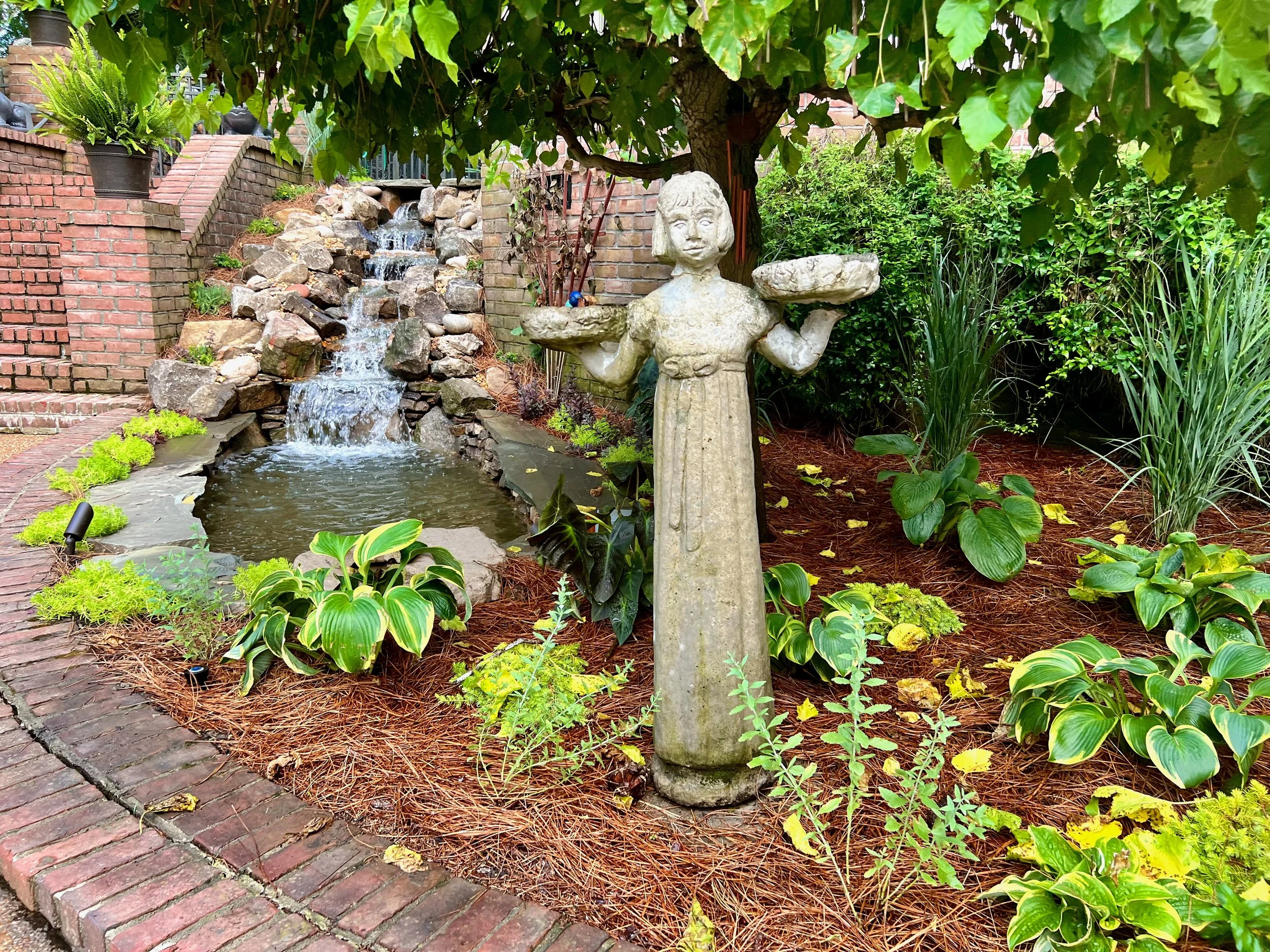
This Is What I Design
I'm a garden designer with an MFA. I approach every landscape like a composition — with the same attention to texture, rhythm, color, and emotional response that a painter brings to a canvas. But the composition isn't the end goal. The composition is the tool. The goal is the feeling you have when you step into the space. The goal is presence.
Every plant I choose, every sight line I frame, every fragrance I layer into a garden, every sound I introduce with water or grasses, it's all in service of creating a space where you want to be. A space that makes you put your phone in your pocket and stay outside for an extra hour because leaving feels like leaving somewhere good.
If that's what you want, not the biggest outdoor kitchen on the block, but a garden that changes the way your family lives, I'd love to hear about your property.
Presence is the luxury. The garden is how you get there.