
Choosing the Best Landscape and Garden Designers in Nashville
How to choose the best garden designer in Nashville and why most people don't know the difference until they've already spent the money.
Nashville has no shortage of people who will put plants in the ground for you. Lawn services, landscaping companies, garden centers with installation crews, pool builders who "include landscaping," general contractors who sub it out to whoever's available that week. Many of them do perfectly fine work. The plants go in. The mulch gets spread. The invoice gets paid.
And then there is design.
I'm not going to give you a checklist or a list of interview questions. I'm going to tell you what actually separates a designed garden from a decorated yard, because I've watched the same mistakes get made on Nashville properties for years, and the people making them are spending real money.
The Kitchen Window
This is the single biggest tell. If someone walks your property, takes measurements, talks about plants, and never once asks to look at the view from inside your house, they are thinking about your yard as a standalone project. And it's not. You experience your garden from inside your house more hours of the day than you experience it from outside. The kitchen window. The living room. The bedroom. The hallway you walk down every morning half-asleep. Those are the frames your garden lives in most of the time.
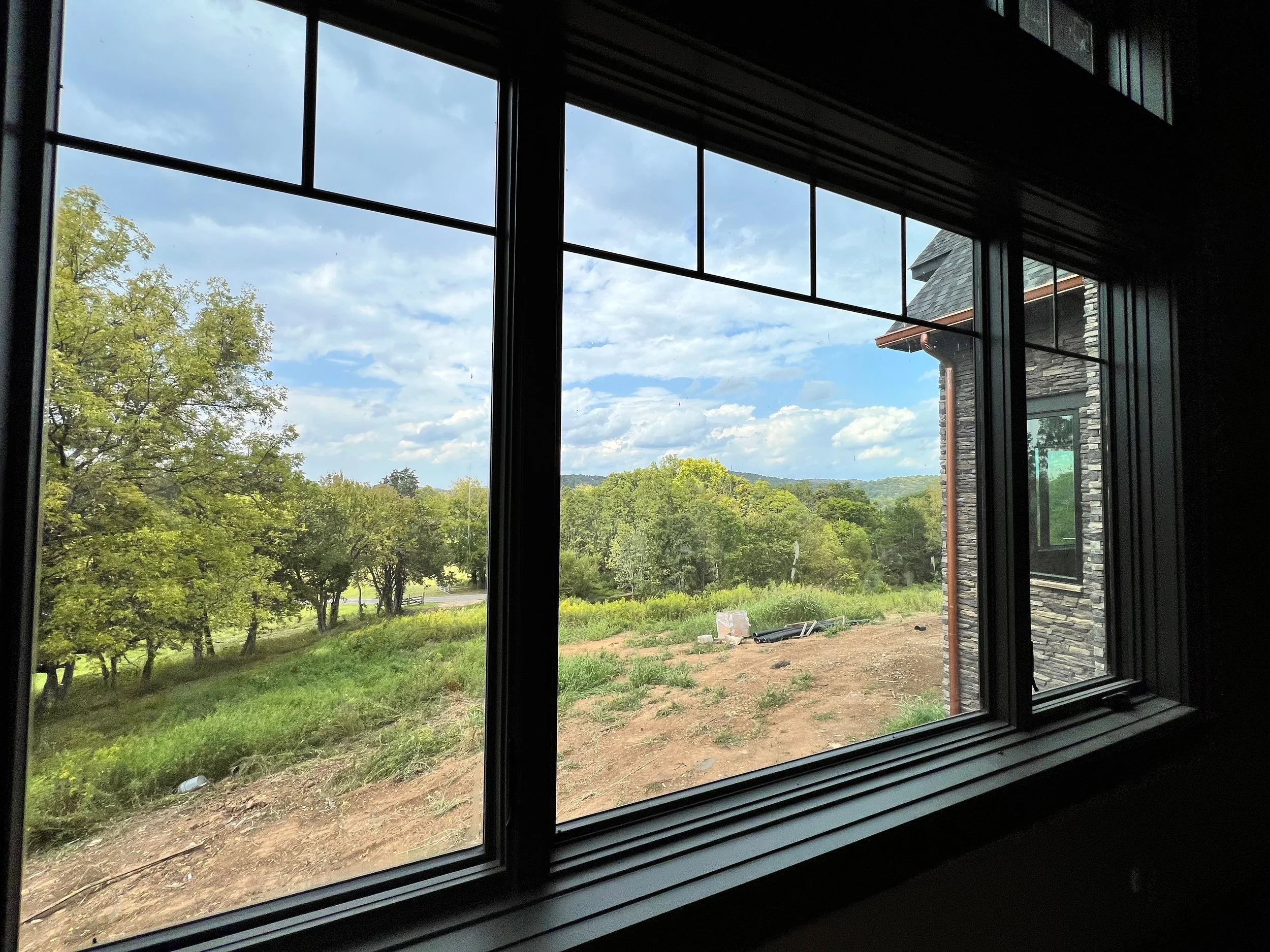
During our first meeting together, I document all of the major views of the property from inside the house.
When I walk a property for the first time, I spend as much time inside the house as outside. I want to see what you see when you're washing dishes. What you see when you're sitting on the couch at seven in the morning. What the bedroom window looks out onto at dusk. Because the garden I design has to compose beautifully from every one of those angles, not just from the patio.
A garden that looks gorgeous when you're standing in it but shows you the neighbor's HVAC unit from the kitchen window isn't a designed garden. It's a decorated yard with a blind spot.
They Read the Site Before They Pitch Ideas
I bring a compass to every consultation. Not because I'm old-fashioned, but because I need to know exactly where south is, how the sun tracks across your property, and which areas get morning light versus afternoon light versus full shade. That information determines everything. Where the perennials go. Where the shade garden goes. Where the patio should be if you want evening sun with your wine. Where a tree needs to go to block the brutal western exposure in July.
Someone who shows up, walks around, and starts suggesting plants without understanding your light, your drainage, your soil, and your microclimates is decorating. They are not designing. And they're going to cost you money in dead plants and redesigns two years from now.
Nashville properties are deceptively variable. The front of your house and the back can be entirely different growing conditions. The established neighborhoods under heavy canopy are different from the new builds in open subdivisions. A south-facing slope in Brentwood is a different universe from a north-facing hollow in Cheatham County.
The site tells you what the garden wants to be. You have to know how to listen to it before you start talking.
They Ask How You Live
Do you have kids, and how old are they? Do you have dogs, and do they run? Do you cook outside? Do you eat outside? Do you work from home, and if so, which room, and what does that window look at? Do you entertain, and is it twelve people or forty? Do you garden yourself, or do you want a landscape that looks beautiful and never requires you to touch it? Are you here year-round, or do you travel? Is anyone in the household dealing with mobility issues? Do you want to be seen from the street, or do you want to disappear?
Those aren't small talk. That is the design brief. Every one of those answers changes the plan. A garden that doesn't account for how you actually live is just a pretty picture that happens to be in your yard. A garden designed around your life becomes the place where your life happens. That gap is enormous, and it starts with someone caring enough to ask the questions that a landscaper would never think to ask.
They Know Tennessee Soil
This is where you separate the people who actually design in Middle Tennessee from everyone else.
Nashville's alkaline clay. Our limestone shelf. Our drainage nightmares. Our humidity. Our zone 7a timing with its late freezes and false springs. The soil compaction on every new build where a crew has been driving heavy equipment across the lot for eighteen months. These aren't footnotes. They are the foundation of every decision I make.
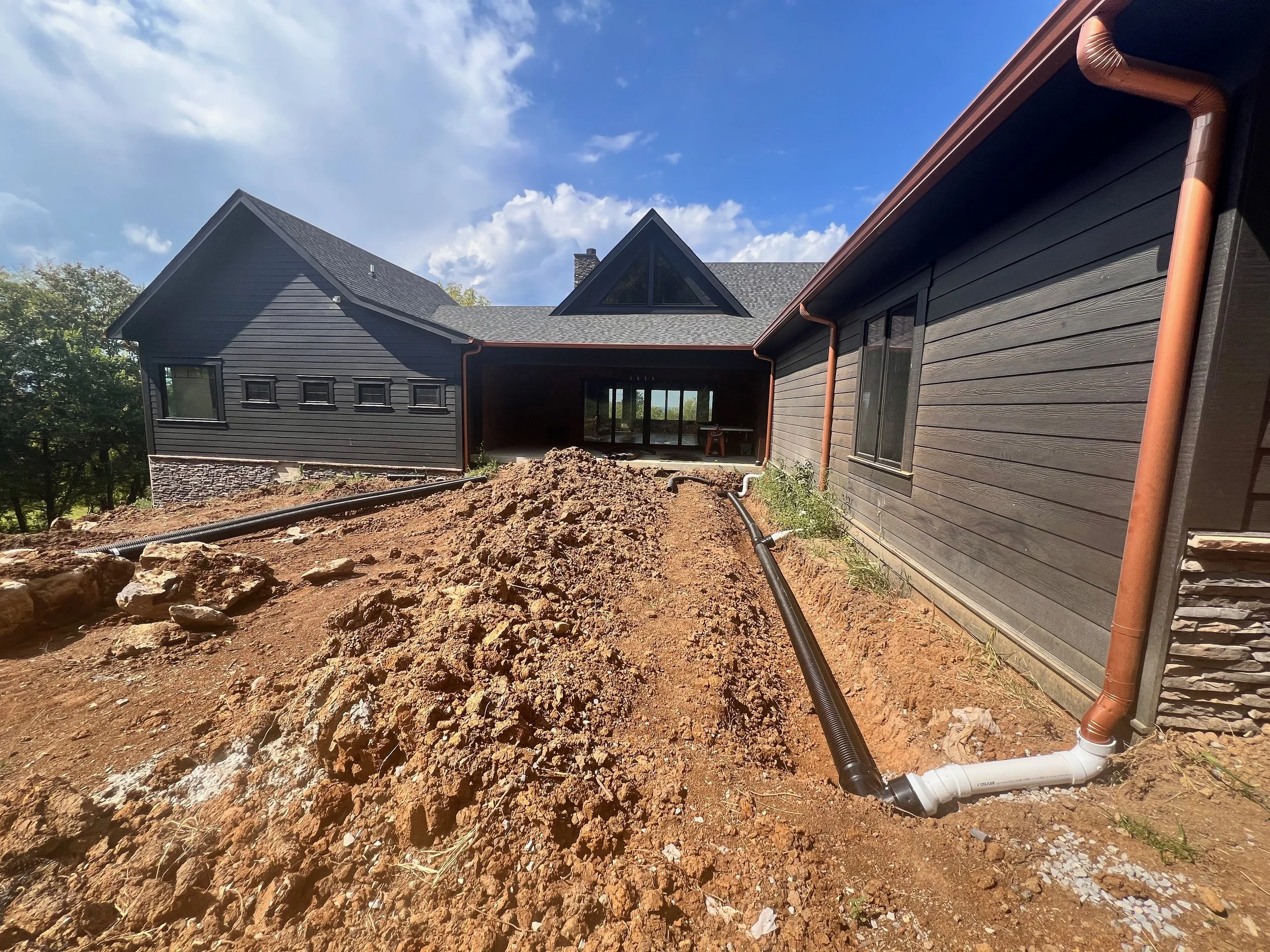
Documenting french drainage measurements within a new home’s planting areas prevents futures problems during the planting phase.
If your designer doesn't talk about soil pH, doesn't recommend or require a soil test, doesn't know the difference between what Nashville clay needs and what a generic gardening website recommends, they are going to put plants in the ground that look beautiful for six months and struggle for years. I've been called in to fix too many of these landscapes. Beautiful plant choices. Zero site understanding. Thousands of dollars in the ground, slowly dying because nobody bothered to read the soil before they planted in it. The soil is everything here.
They Think in Seasons, Not Snapshots
When someone shows you a garden design, ask them what it looks like in January. The answer tells you everything.
A garden exists in time. It is not a photograph. It is a film. What it looks like in April is different from August is different from December. A designer who only thinks about the spring show is giving you a landscape that peaks for six weeks and goes quiet for ten months. You are paying for twelve months of living on this land. You should get twelve months of a garden worth looking at.
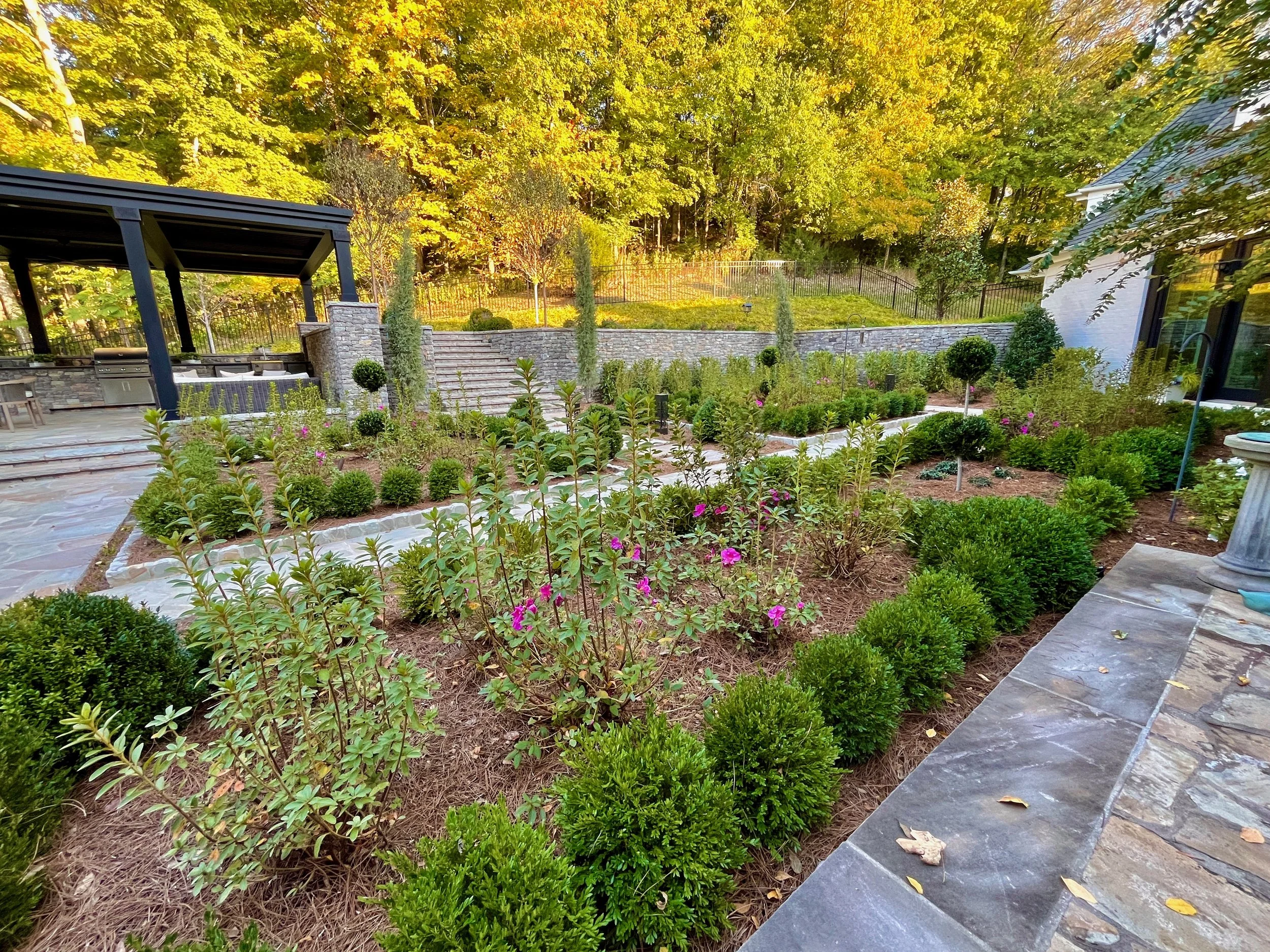
A garden in November should be as visually impactful as a garden in June.
The best design accounts for four seasons. Spring bloom. Summer performance. Fall color and texture. Winter structure. It uses evergreens for the bones. Ornamental grasses for fall and winter presence. Bark and branching pattern for the months when everything else is dormant. It layers bloom times so there is always something happening; not a single explosion followed by silence.
Most landscapers install a spring garden. A designer composes a year.
They Show You a Plan, Not a Shopping List
A plant list is not a design.
A flat layout with circles labeled "hydrangea" and "boxwood" is barely a design. A real garden design shows you the composition: the spatial relationships, the layering, the sight lines, the way the garden unfolds as you move through it. It accounts for mature plant sizes, not just what the nursery stock looks like the day it goes in the ground. It thinks about what the garden will be in three years. In five years. In ten.
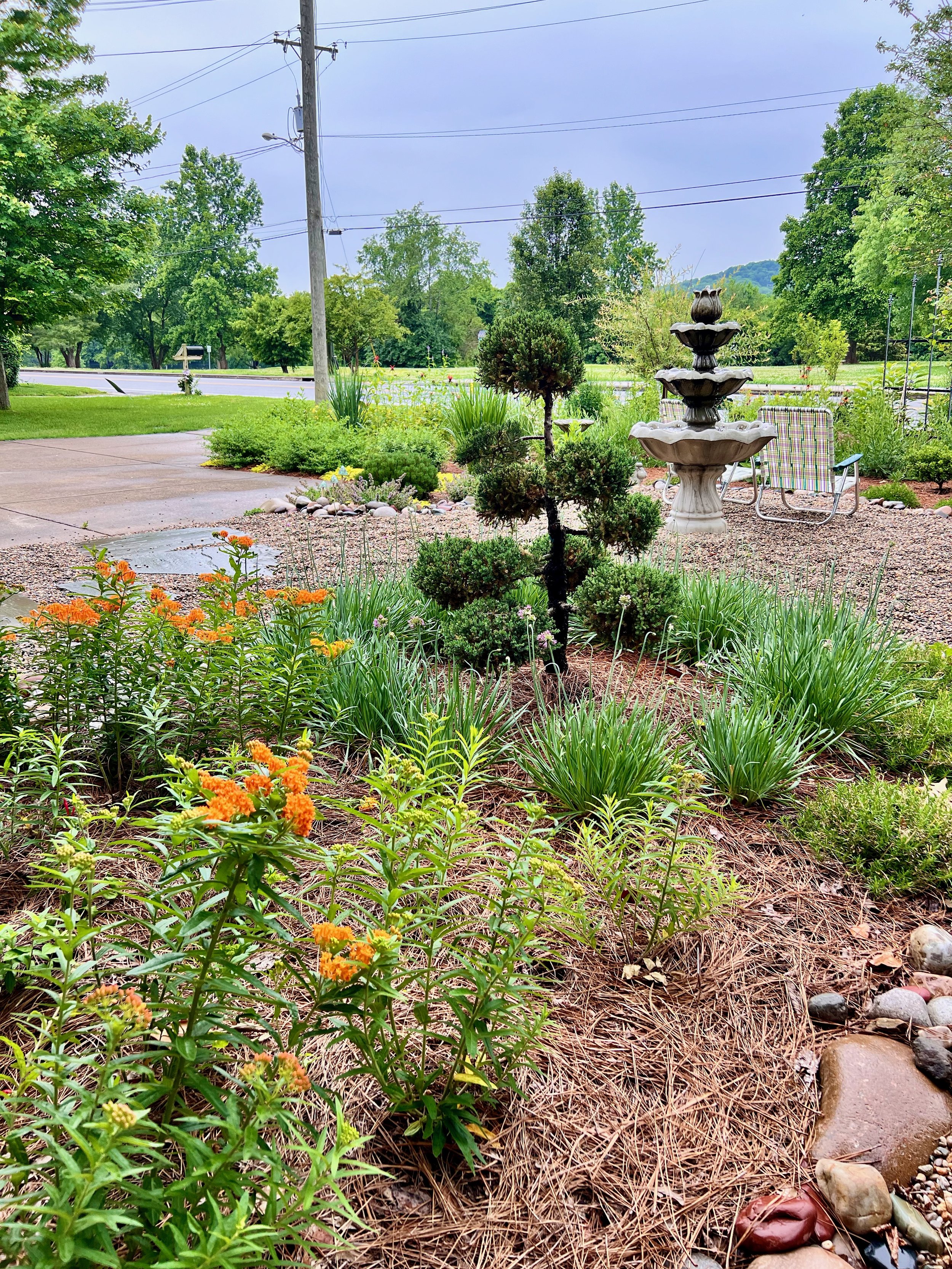
Each property demands a point a view, a style, a voice that is completelt unique to the home and the lives within it.
You should be able to look at the plan and understand the experience of being in the garden before a single plant is in the ground. If you can't, if it's just a list of species on a diagram, you're not getting design. You're getting installation with a markup.
A Distinct Point of View
This is the one nobody talks about, and it matters more than any credential or certification.
A real designer has a point of view. A philosophy about what a garden is for, what makes one beautiful, what makes one work. They are not assembling plants from a catalog. They are composing a space based on a set of ideas about how outdoor environments should feel; how plants interact with architecture, how texture and light and movement create atmosphere, how a place can hold you without you knowing why.
You should be able to look at their work and feel something consistent. Not every garden should look the same; that would be a formula, not a point of view. But there should be an underlying sensibility. An eye. A way of seeing.
I approach gardens through a fine art lens, because that's my training and that's how I see. Composition, contrast, rhythm, negative space, the way color and form create emotional response. Not every designer works this way. But you should know how yours thinks, because their thinking is what you're actually paying for. The plants are just the medium.
The best garden designer for your Nashville property is not the one with the most trucks or the biggest crew or the slickest website. It's the one who reads your site before they pitch you ideas. Who understands your soil. Who studies your light. Who learns how you live. Who thinks in seasons and designs with intention and creates a space that belongs on your specific piece of ground, not a generic landscape that could be pasted onto any house in any subdivision in any city in the South.
That is a short list of people. It is a much shorter list than the number of people who will happily take your money and put plants in your yard.
If you want to talk about what your property could become, with someone who brings a compass, looks out your kitchen window, and thinks about gardens the way an artist thinks about a canvas, I'd like to hear about it.