
land portraiture commissions
Some properties cannot be designed one garden at a time.
Acreage asks different questions. Where does the water go. Where does the wind come from. Which views are gifts. Which slopes refuse a mower. Where does the drive begin to feel like arrival. Where do animals belong. Where does the family go at dusk. What has the land already decided.
A Land Portraiture Commission is my work for farms, estates, acreage, and large properties where the design has to begin with the whole land.
The light. The water. The grade. The trees. The soil. The history. The practical life of the place. The private life of the people inside it.
Translated into a design that belongs there, and nowhere else.
I am a fine artist and garden designer. I read land the way a painter reads a subject before touching the canvas. My job is to understand what is already present, what is missing, what is trying to happen, and what order the work needs to happen in.
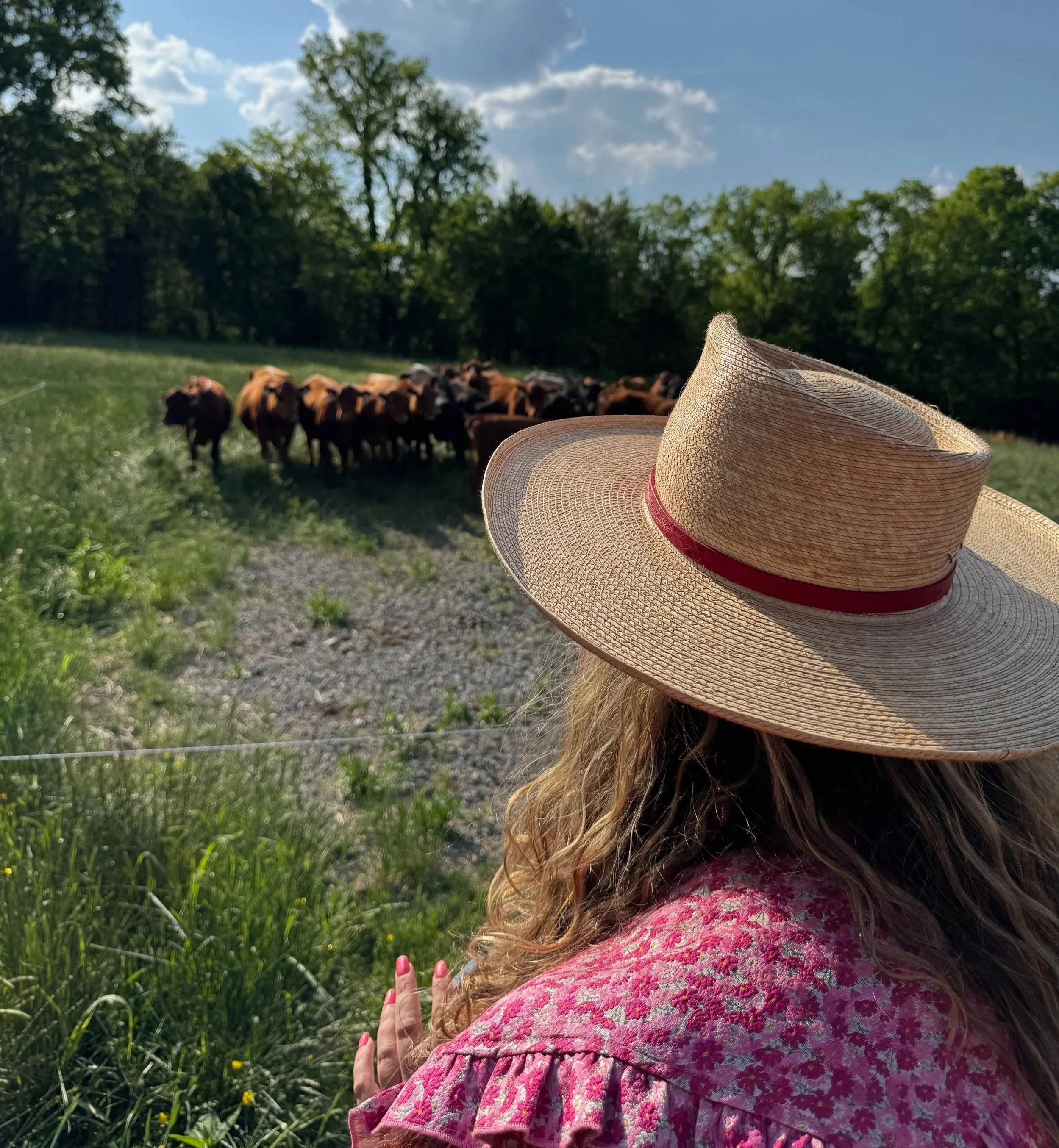
I farm my own land in Smith County, Tennessee. I know what limestone karst does to a drainage plan. I know what a wet hollow looks like in March versus August, and why that distinction changes what belongs there. I know where the light goes in October on a west-facing ridge, and what that means for a garden designed around the afternoon. I know what deer will ignore in a soft year and reconsider after a hard winter.
Some of that knowledge came from study. More of it came from living with land long enough to be corrected by it.
Most garden designs are drawn from above. This one starts on the ground.
What Is Land Portraiture?
Land Portraiture starts with observation.
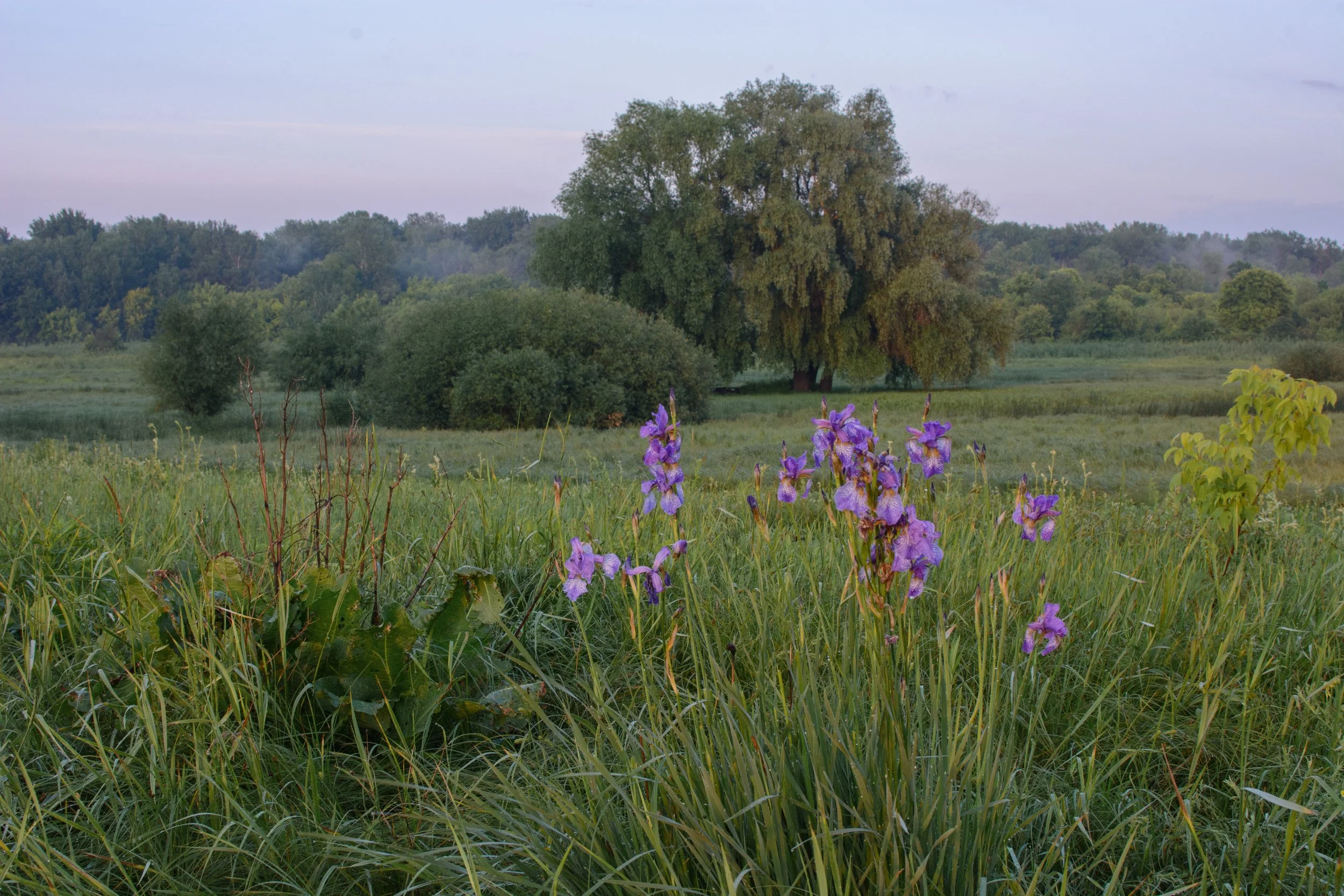
Before I draw anything, I walk the land. I study water movement, grade, wind exposure, soil type, tree canopy, access, views, animal pressure, and the places where the property is already doing something beautiful that most people have stopped seeing.
On larger land, that reading takes longer. Sometimes one visit is not enough. A property in February tells the truth differently than a property in June. A wet-weather creek, a shaded hollow, a ridge in late afternoon, a pasture after cattle have moved through it. Each one gives different information. Each one shapes what gets designed there and why.
The design comes from that reading.
I call this practice Land Portraiture. I call the larger approach to designing around the specific hours and rhythms of a place Inhabitation Design.
A large property does not have one view. It has many. The approach from the road. The view from the kitchen. The walk to the barn. The place where guests gather. The field edge at sunset. The back fence line on a cold morning. Each one is part of how the property is actually inhabited. And each one deserves to be considered.
That is the difference between designing scenery and designing a place.
What Large Land Teaches You
Large land punishes shallow design.
It exposes every assumption. It shows you quickly when something was chosen because it looked good through a bird's eye view on paper instead of because it belonged in the ground.
The black walnuts on your property are quietly running the show. Black walnuts produce juglone, and certain plants respond poorly near them. Pecan and hickory can produce smaller amounts too. The folklore around this is often overstated, but the condition is real enough to respect. I map root zones, leaf fall, drainage, and plant tolerance before I place an orchard, garden, or understory planting anywhere near those trees. Because an orchard sited correctly becomes the thing you walk through every morning. An orchard sited wrong becomes years of wondering why nothing thrives.
Forestry mulching is useful, but it is not innocent. What looks like cleanup can become damage if heavy equipment compacts soil or works too close to the root zone of mature trees. A beautiful old oak does not always die the year it is hurt. Sometimes it declines slowly, two or three years later, after everyone has forgotten what happened. On acreage, knowing what not to disturb matters as much as knowing what to add. The hundred-year-old tree you protect is the shade over the dining table in August.
Creek banks are living seams. The vegetation along them holds soil, slows runoff, filters water, and protects the shape of the stream. Designed correctly, a creek edge becomes the most beautiful part of a property. Ignored, it becomes the most expensive repair.
Water is usually the first question. Pond, spring, wet hollow, runoff, dry ridge, seasonal seep, livestock water, irrigation possibility. Each one changes the design. A pond that can support fish is a different thing than a pond that can water animals. A wet place in March is not always a wet place in August. The land has a water story, and I want to know it before I tell you what should be planted there.
Power matters too. Where power comes from affects water systems, outbuildings, greenhouse placement, orchard irrigation, livestock infrastructure, and how the property can grow over time.
A beautiful plan that ignores water and power is just a drawing.
If You Are Planning to Farm, Homestead, or Work the Land
A lot of people buy acreage with intentions.
A kitchen garden. An orchard. Chickens. Cattle. Horses. A pond. A greenhouse. A place for grandchildren. A quieter life. A more beautiful one.
Most have thought carefully about the house. Fewer have thought through what the land itself requires to support that life.
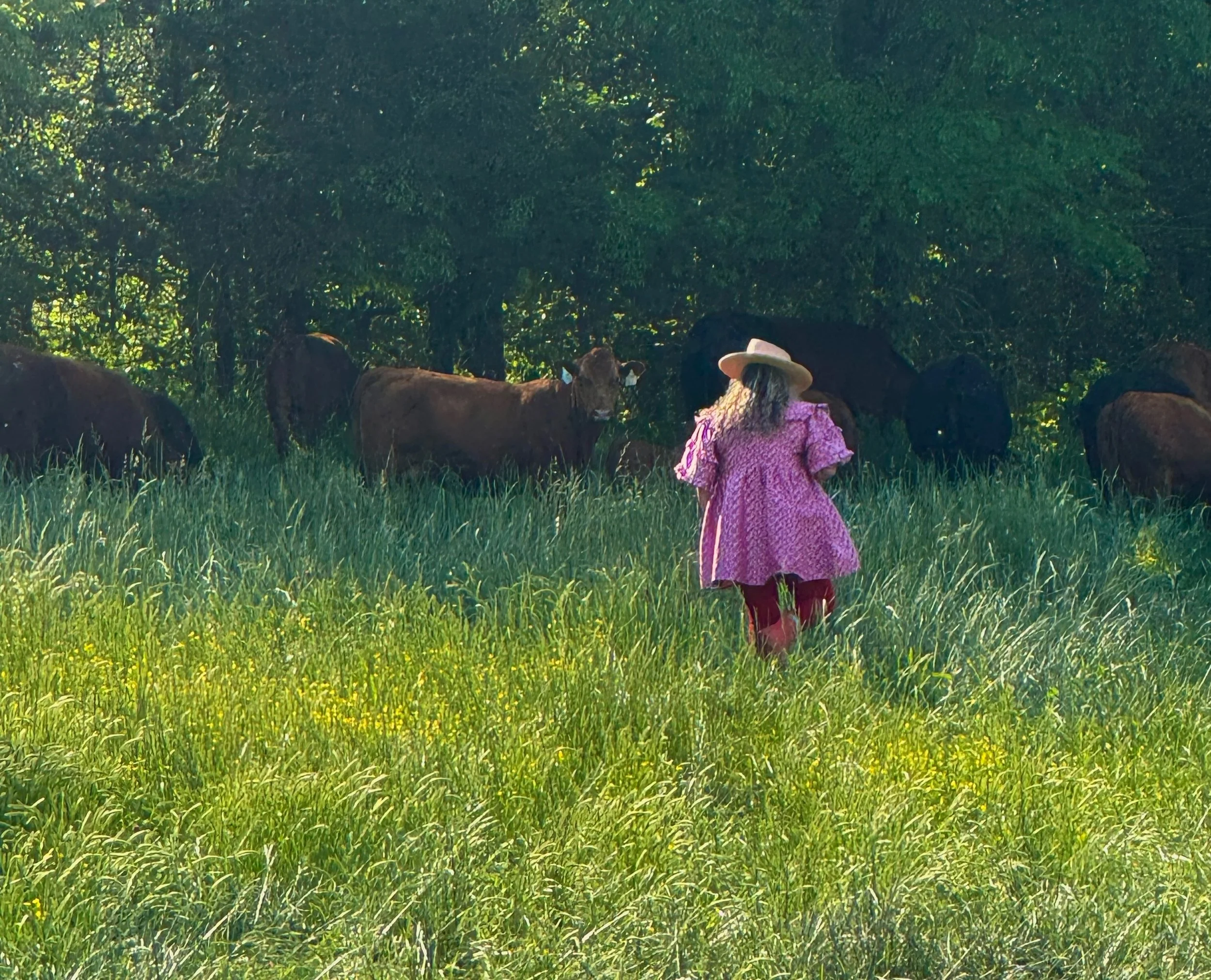
Livestock change everything. Chickens, goats, cattle, and horses all ask different things of soil, fencing, water, shade, access, pasture, and planting. Rotational grazing infrastructure and garden design have to be planned together or they fight each other. A fence line is a design decision. So is the paddock that doesn't become a mud problem in spring. So is the orchard that doesn't become a browsed and broken one because nobody thought about where the animals range.
The orchard question deserves patience. Fruit and nut trees are long investments. The first decisions matter. Slope, drainage, air circulation, frost pockets, deer pressure, soil depth, proximity to walnut family trees, and how the orchard will be watered and protected before it ever becomes the thing you imagined when you bought the land.
Nobody builds a working property in one season. The question is what comes first, what waits, and what order allows each phase to support the next. That is part of the design.
The Kinds of Properties I Work With
Working farms and properties where the design has to live alongside agricultural reality. Fencing, equipment paths, animal pressure, creek access, soil compaction, water systems. The garden cannot be precious. It has to be beautiful and built for the life actually being lived there.
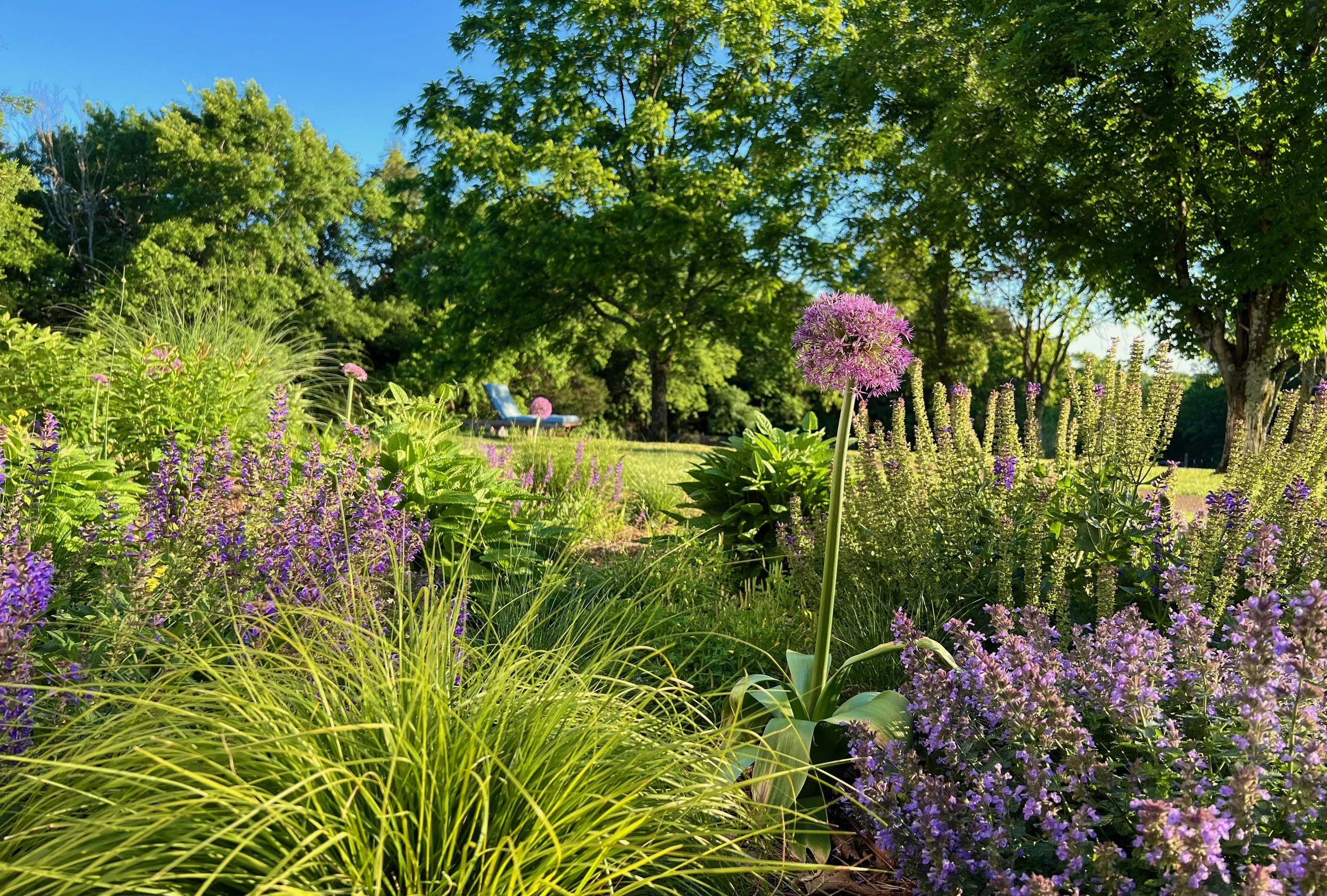
Multi-acre estates where the house needs an intentional surrounding landscape without making the rest of the property feel abandoned. There is a skill to knowing where the designed garden ends and the land begins, and how to make that transition feel deliberate rather than unfinished.
New builds on acreage, where a house has arrived on land with its own memory. The garden design determines whether the property begins to feel settled, or whether it always feels like a house sitting on top of someone else's field.
Phased properties where the full vision is too large to build at once. In those cases, the design has to establish what comes first and why, so each phase feels complete rather than partial.
What This Work Produces
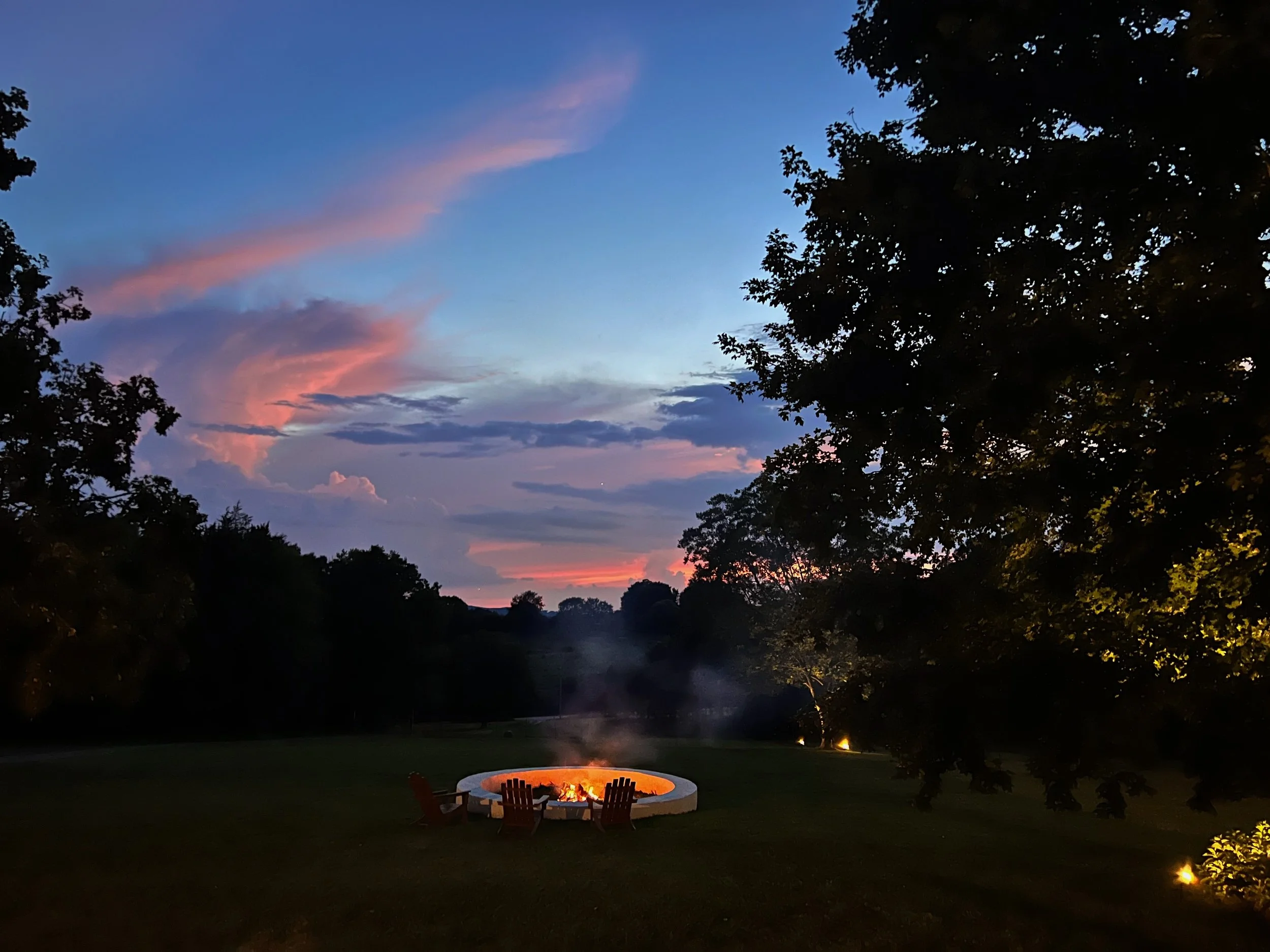
A terrace cut into a hillside where the grade always wanted one. A gate placed exactly where the animals go. A dining table under a trellis at the elevation where the light stays longest and the mosquitoes don't follow you to dinner. A storage shed that reads like a storybook instead of something built to hide an eyesore. Drive beds that tell your guests where to go before they have to ask. A creek edge that stops the bank from washing and becomes the most beautiful walk on the property. A fire pit placed exactly where the land opens up, so the last light of the sky has somewhere to land.
A cohesive place where nothing feels disconnected. Where the barn and the garden and the orchard and the fire pit and the kitchen door all belong to the same story. Where the fantasy you had in your head the day you bought the land finally has a shape.
Every view should inspire you. More than that, every view should make you feel at home.
That is what this work produces.
This work takes longer than a residential garden commission. The observation period is longer. The design process is longer. The decisions carry farther. On ten acres, a misplaced garden is not just a misplaced garden. It can become a maintenance problem, a water problem, a view problem, a circulation problem, or a mistake that shapes the next twenty years.
To understand the process behind designing for large acreage, read Large Property Landscape Design: How to Plan a Farm, Estate, or Acreage Before You Build Anything.
For the full philosophy behind this work, read Land Portraiture.
For what large land asks of a designer, read this.
Land Portraiture Commissions are taken for select farms, estates, and large properties across the United States. The Grass Girl is based on a working farm in Middle Tennessee, and travel to the property is part of every commission.
For defined garden spaces on residential properties, see Garden Commissions. For full residential properties and new builds, see Whole Property Commissions.
Land is read across seasons, not weekends.
The properties I begin walking now are the ones ready to become themselves next year.